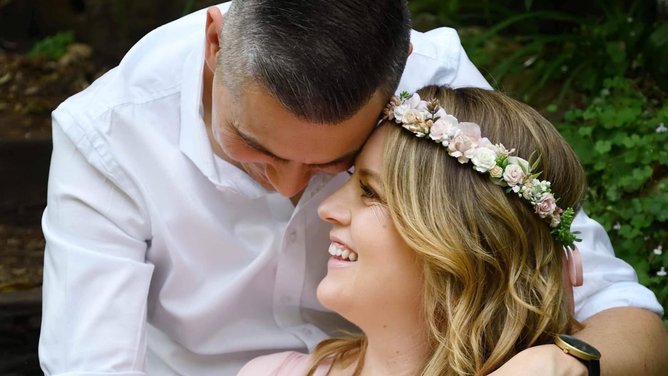
Source : Perth Now news
After six miscarriages in six years, discovering she was pregnant for the seventh time brought a mix of terror and fear for Marcelle Cooper.
She had come to accept that having children might not be part of her future.
Instead, she found comfort in a kitten and travelled the world with her husband as they worked through their grief.
“As a couple, we were absolutely broken. We were exhausted,” she said.
“I had my left fallopian tube removed, so that sort of further reduced our chances of conceiving.
“We just got to the point, and made the really difficult decision to stop trying.
“Perhaps a baby wasn’t part of our future.”
The couple had successful jobs and came to a place of contentment.
After grieving their losses, they felt okay with the future they thought was ahead of them.
Then almost a year after they stopped trying to conceive, “miraculously, completely unexpectedly” Ms Cooper fell pregnant naturally.
“I gave birth to my beautiful baby girl, but it wasn’t straightforward,” she said.
“The first 20 weeks of my pregnancy were extremely difficult, very full of fear.
“The word that springs to mind is terrifying.”
Marcelle’s only wish now is that she asked for help earlier.

The first 20 weeks of Ms Cooper’s pregnancy were full of fear and anxiety as she constantly monitored symptoms and questioned if she felt pregnant or if she would find blood when she went to the bathroom.
“We were scared to be hopeful,” she said.
Her emotions settled down, and the fear and anxiety turned into awe about the incredible miracle taking place inside her body after her 20-week scan.
She felt fortunate to embrace and enjoy the second half of her pregnancy, and the birth of her daughter.
But that happiness came crashing down when her healthy, thriving baby was just three months old.
“It was one of the lowest points of my life — there were lots of tears, numbness and really bad insomnia,” she said.
“I had anxiety, digestive issues and lost a severe amount of weight in a very short amount of time.”

When Ms Cooper’s daughter was six months old she remembered looking at her giggling, babbling and trying to engage with her, but she felt nothing but numbness.
“That really shook me and scared me, and it was at that point that I thought I can’t keep this can’t keep going,” she said.
“After battling with my own thoughts, I was finally brave enough to ask for help.”
Ms Cooper called her GP who talked through different options and the one that stood out was Gidget Foundation Australia, which had specialised clinicians that dealt with the peri-natal period.
The not-for-profit organisation was established to support the mental health of expectant, new and potential parents so they can receive accessible, timely and specialist care.
According to Gidget Foundation Australia, peri-natal depression and anxiety affects one-in-five mothers and one-in-10 fathers.
About 100,000 Australians are impacted by the mental health condition each year, and it is the leading cause of death in expectant and new mothers.

Ms Cooper said the referral was life changing.
“Once (my daughter) reached her first birthday, it was a turning point, and in that second year I really started to enjoy motherhood,” she said.
Ms Cooper said mustering the courage to ask for help and say the words that she was not coping was one of the most difficult things she had done.
“You don’t know what’s going to happen, you don’t want anyone to think that you’re not a fit mother, or you don’t want anyone to take your baby away from you,” she said.
“You’re on this tightrope of like, this could go either way.”

She said the foundation armed her with tools to manage her anxiety and to identify when she was spiralling.
Ms Cooper now wishes she had known she could access professional mental health support at every stage of her journey to motherhood, from preconception and IVF through pregnancy, the newborn period and early infancy.
“I wasn’t aware that that support was available,” she said.
“Had I known, and I had the support to grieve all of those losses as I was experiencing them, I think my outcomes after my daughter was born could have looked very different.
“That’s the main reason why I am a Gidget Angel and share my story, it’s to help raise awareness for other parents, and that they know that it’s available and that they’re not alone.”

Ms Cooper said she wanted other parents to know that they did not need to minimise their loss or losses just because there were other people who thought it could be worse.
She said she wanted them to know that what they had experienced was significant and mattered, and that it was okay for them to allow the time to grieve.
“We can be really hard on ourselves, and we often compare our situations and it shouldn’t diminish how we’re feeling,” she said.
“There’s free professional support through the Gidget Foundation, and asking for help is the hardest step, being brave enough to ask is when the wheels of change will be set in motion.”