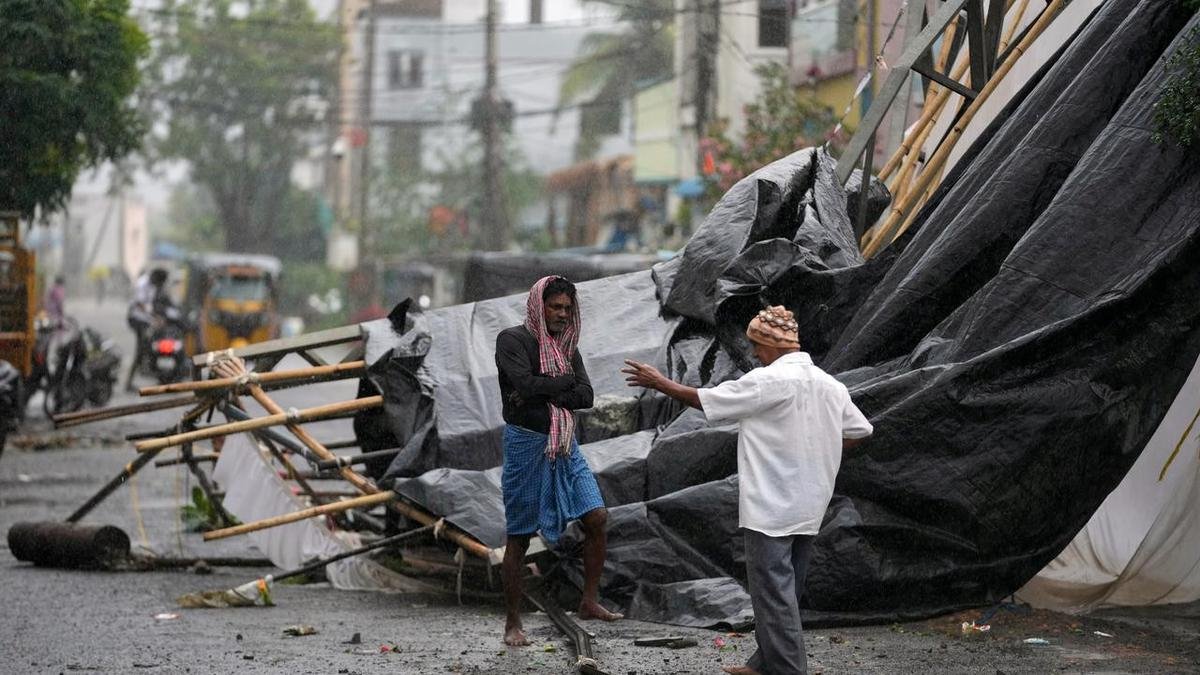
Source : Perth Now news
At least three people are dead, dozens of houses are damaged and crops destroyed after a powerful cyclone struck India’s eastern coast, bringing heavy rain and strong winds.
Cyclone Arnab, classified by the India Meteorological Department as a very severe cyclonic storm – the third-highest category on its scale – made landfall in Andhra Pradesh state early on Wednesday, with its centre then moving fully inland, the agency said.
“Andhra Pradesh has been most affected … three people have lost their lives,” Narendra Singh Bundela, a top official at the National Disaster Response Force (NDRF), told reporters.
Heavy rain and high winds destroyed at least 180 houses, brought down 220 trees and disrupted power supply in several areas, Andhra Pradesh Chief Minister N Chandrababu Naidu said in a letter to federal Home Minister Amit Shah, updating him on the situation.
Two of the deaths were caused by a tree falling and electrocution, officials in Naidu’s office told Reuters.
Neighbouring Odisha state was not as badly affected, Bundela said, adding that wind-speeds were expected to reduce as the cyclone moved inland.
More than 180,000 people had been evacuated in the states of Andhra Pradesh and Odisha before the cyclone’s arrival.
Some schools were closed and some train and flight services cancelled along the eastern coast.
Several NDRF and state teams were working in the affected areas, Bundela said, adding that some neighbouring states were also likely to be affected by heavy rain.
Winds of 125km/h to 135km/h and gusts up to 150km/h are forecast, with a storm surge of one metre to 1.5 metres above normal tide likely to inundate low-lying areas of Andhra Pradesh, it said.
In neighbouring Nepal, authorities suspended the issuing of trekking permits to high mountain areas for three days because of the risk of rain and blizzards due to the cyclone, Immigration Department information officer Gita Ghimire told Reuters.
This is peak trekking season in Nepal with about 750 hikers getting permits per day.
On Tuesday, Nepal warned tourists against venturing into high-altitude areas due to fears that Arnab could trigger torrential downpours, snowstorms and avalanches in the Himalayan region from Thursday night through Saturday.
Arnab formed over the Bay of Bengal, a major region for tropical cyclones that has spawned deadly storms on India’s east coast.
A super cyclone that killed nearly 10,000 people when it hit Odisha in October 1999 remains one of the country’s deadliest natural disasters.