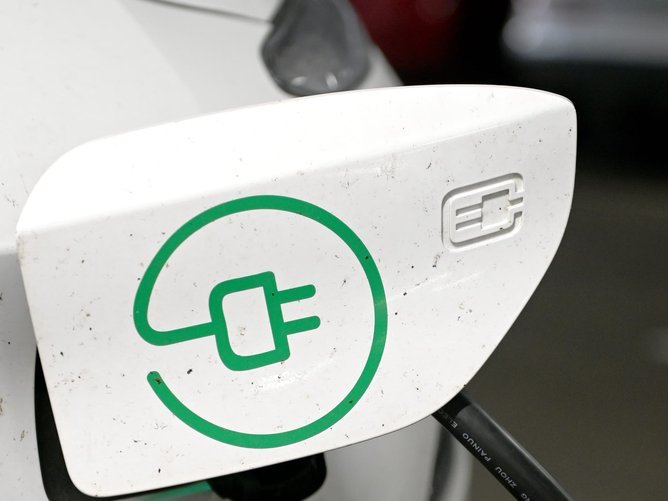
Source : Perth Now news
Energy Minister Chris Bowen has confirmed popular electric vehicle and home battery subsidies could be in the firing line as the federal government looks to cut back on spending to reduce inflation.
Government sources with working knowledge on December’s mid-year budget told The Sydney Morning Herald subsidies for household batteries and the EV tax break could be wound back further, but no final decisions had been made and could remain unchanged as ministers weighed up how it may impact achieving ambitious climate targets.
Mr Bowen said such measures were never going to be permanent, but he wanted the EV tax break to remain in place for longer despite Treasury forecasting a cost blowout for both.
“Obviously, all support is time-limited – and it is winding down (after) the decisions we made last year, but winding down appropriately and gradually,” Mr Bowen told The Australian Financial Review at the COP31 climate summit.

“Every fiscal event, whether it be a budget or a (mid-year economic and fiscal outlook), is not only an opportunity but an obligation to review every policy and say is this working exactly as we intended, or are there any changes that we should make.
“But if you’re asking me, is it time to get rid of the EV tax cut? No, it isn’t.”
The EV tax break applies to people who buy an electric vehicle valued at less than $91,000 through a novated lease.
It has driven up EV uptake and helped Labor move towards its climate targets, but Treasury estimates the EV tax break will cost $1.35bn this financial year – 15 times more than originally forecast.
The Cheaper Home Batteries scheme provides rebates to install home batteries and has helped bring down wholesale electricity prices by reducing demand on the grid during the evening peak.
It is budgeted to cost $7.2bn over four years, which is three times more than originally forecast.
Former prime minister Malcolm Turnbull told reporters on the sidelines of COP31 the subsidies should have always been means-tested measures.
“There is always a problem with subsidising worthwhile things (in) that you might actually be subsidising people to do something they would otherwise have done anyway,” Mr Turnbull told the AFR.
“The case for electric vehicles is overwhelming. It’s like the case for solar panels.
“The subsidies are important to get these things going, and then there comes a point when … they should either drop off entirely or be simply means tested.”

It comes as Labor has faced mounting pressure to ease pressure on households and help the RBA curb stubbornly high inflation after five interest rate hikes this year, which have been driven by the war in the Middle East, high domestic spending and weak productivity growth.
Anthony Albanese last week said the most recent interest rate hike confirmed the need to rein in government expenditure, and that the government would make “hard decisions”.
“We were always going to be fiscally responsible because my government is a fiscally responsible government, and we will take appropriate action,” the Prime Minister said.
“We won’t rip money out of health or schools. What we will do is take responsible action and take hard decisions. We’ve shown we’ve been prepared to do that.”