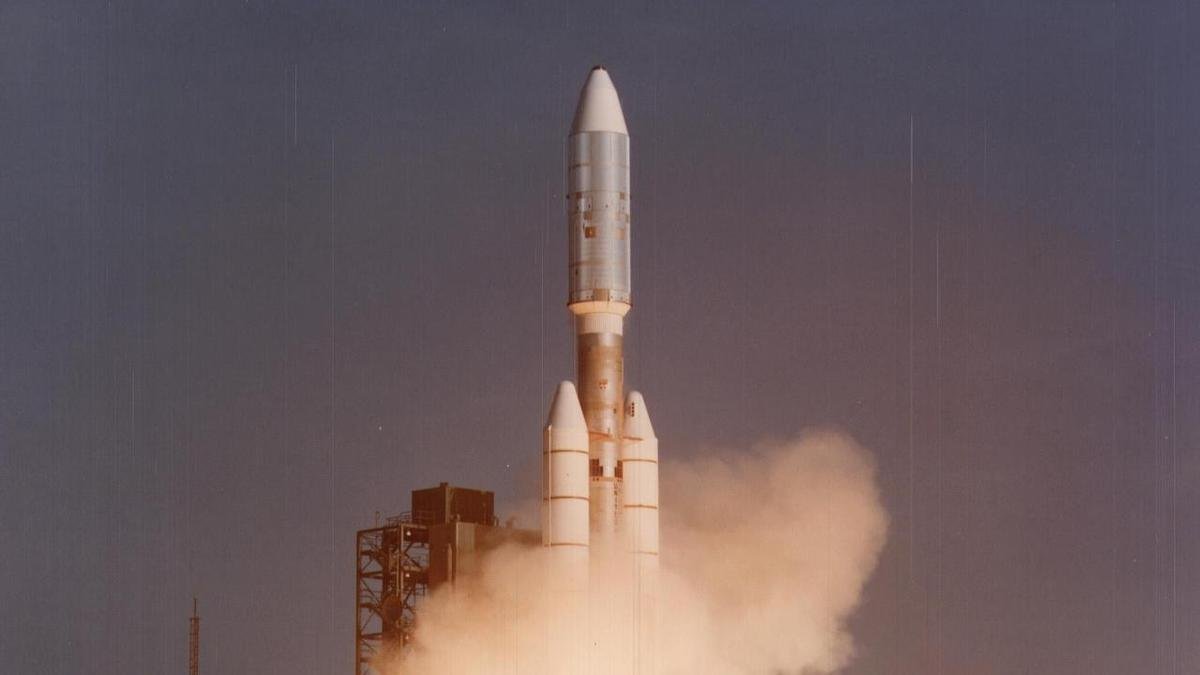
Source : Perth Now news
NASA’s Voyager 1 is about to become humanity’s first object to reach one light-day from Earth as it pushes ever deeper into interstellar space.
That’s a mind-blowing distance of more than 26 billion kilometres for the spacecraft launched 49 years ago.
When Voyager 1 reaches that remarkable milestone on Wednesday, its radio signals will take precisely 24 hours traveling at the speed of light to reach Earth – in other words, one light-day. NASA is looking at another 18,000 years before the spacecraft achieves a full light-year and more than double that before it comes near another star.
Project manager Suzanne Dodd sees Voyager 1 as Earth’s ambassador hurtling between stars while providing a “sense of wonder” on the home front.
“It’s a national treasure,” she told The Associated Press.
“Really extraordinary.”
To celebrate this moment, NASA is urging people from all corners to grab their phone or a flashlight to create a wave of golden light after sunset on Tuesday, using Morse code to spell the letters V-G-R, Voyager’s call sign, into the night sky.
Despite sporadic problems typical of old age, Voyager 1 and its twin Voyager 2 continue to send back science and engineering data as they zoom toward different points in space at 61,000 km/h. Although launched two weeks before its sibling in 1977, Voyager 2 won’t reach the one light-day mark until 2035.
Voyager 1 swept past Jupiter and Saturn to scientists’ delight in 1979 and 1980, respectively, before exiting the solar system. It reached what NASA defines as interstellar space – the expansive region between star systems – in 2012. Voyager 2 visited those two planets plus Uranus and Neptune, also sending back stunning photos, before entering interstellar space in 2018.