Source : INDIA TODAY NEWS
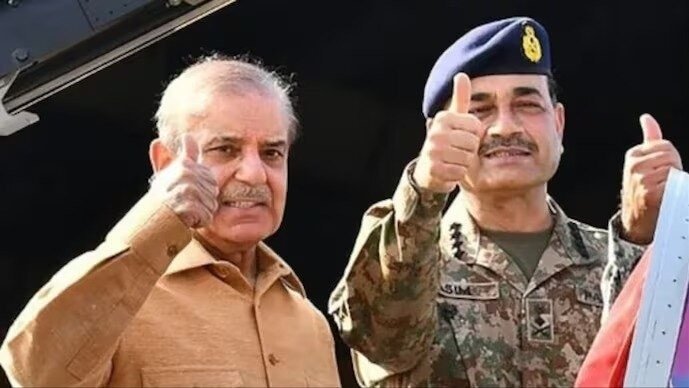
Pakistan’s army chief, Field Marshal Asim Munir, and its Prime Minister, Shehbaz Sharif, have been ranked among the world’s most influential Muslims, sharing the top spot with three other leaders. The 2027 edition of ‘The Muslim 500’ includes just one Indian in its top 50, Maulana Mahmood Madani, president of Jamiat Ulema-e-Hind. Madani is in 18th spot, slipping two positions from last year’s ranking.
advertisement
The annual report by the Jordan-based Royal Islamic Strategic Studies Centre (RISSC) gave five leaders the joint top spot, crediting their roles in forging the Makkah Joint Defence Agreement signed by Pakistan, Saudi Arabia and Turkey in August.
The 18th edition marks the first time the publication has named multiple leaders at the top. Munir and Shehbaz Sharif were previously among the unranked 450, making their elevation particularly significant.
The report lists 500 influential Muslims worldwide, of whom only the top 50 are individually ranked, while the remaining 450 are grouped into categories. Apart from Mahmood Madani, the 2027 edition includes several other Indians, including AIMIM chief Asaduddin Owaisi, Islamic preacher Zakir Naik (now in exile in Malaysia), businessman Azim Premji and Dawoodi Bohra leader Syedna Mufaddal Saifuddin.
Bollywood actors Shah Rukh Khan, Aamir Khan, Salman Khan and Shabana Azmi, along with music composer AR Rahman, also feature in the unranked list of Top 500.
Who is Maulana Mahmood Madani, the only Indian in the top 50 in the ranking by the Jordan-based RISSC?
WHO IS INDIA’S MAHMOOD MADANI?
Maulana Mahmood Madani heads Jamiat Ulema-e-Hind (JUH), a prominent socio-religious organisation established by Deobandi scholars in 1919. The organisation has historically advocated composite nationalism, opposing the idea that religion alone should determine national identity.
Madani graduated from Darul Uloom Deoband in 1992 and subsequently became active in the organisation.
His grandfather, Hussain Ahmad Madani, headed JUH until 1957. His father, Asad Madani, subsequently led the organisation until his death in 2006.
Mahmood Madani served as general secretary of the JUH from 2001 to 2021 before becoming national president. A leadership dispute following his father’s death had divided the organisation.
The report highlights Madani’s legal advocacy for minority rights, including citizenship, religious freedom and people allegedly falsely implicated in terrorism cases.
The report credits Madani with defending Waqf properties and combating Islamophobia.
Earlier this year, the Jamiat Ulema-e-Hind made Waqf protection a priority, with Madani describing it as a “collective religious obligation for Indian Muslims”, notes the report. It added that the cleric urged Waqf custodians to counter encroachments through “enhanced financial transparency, mandatory audits, total digitisation of legal records, and robust documentation”.
The publication also notes Madani’s criticism of Israeli military operations in Gaza and his support for Palestinian rights.
WHY ASIM MUNIR TOPPED THE RANKING
The 2027 rankings place Munir and Sharif alongside Saudi King Salman, Crown Prince Mohammed bin Salman and Turkish President Recep Tayyip Erdogan.
The report credits the five leaders with forging the Makkah defence agreement, under which an armed attack against one signatory is treated as an attack against all three.
In the report, Munir’s profile describes his influence as “Head of the military which de facto controls Pakistan”. It credits his military and diplomatic roles while also acknowledging criticism over political repression and former Prime Minister Imran Khan’s imprisonment.
The report said the Makkah Joint Defence Agreement was the “main reason for this historic decision”, as the pact brought together “the immense wealth of Saudi Arabia, the advanced tech and manufacturing of Turkey, and the powerful military strength of Pakistan” into a collective alliance based on a “one for all, all for one” approach to security.
Munir and Sharif jumped from the unranked 450 in the 2026 edition to joint No 1 in 2027.
On the second spot is Iran’s Supreme Leader Mojtaba Khamenei, followed by Jordan’s King Abdullah II and Qatar’s Emir Sheikh Tamim. Pakistan’s Mufti Taqi Usmani ranks seventh, while Yemen’s Houthi leader Abdul-Malik al-Houthi stands at the 17th spot.
Afghanistan’s Taliban supreme leader Haibatullah Akhundzada, Syria’s Ahmed al-Sharaa, and New York Mayor Zohran Mamdani are also part of the Top 50.
– Ends
(Written by Sushim Mukul)
SOURCE :- TIMES OF INDIA