

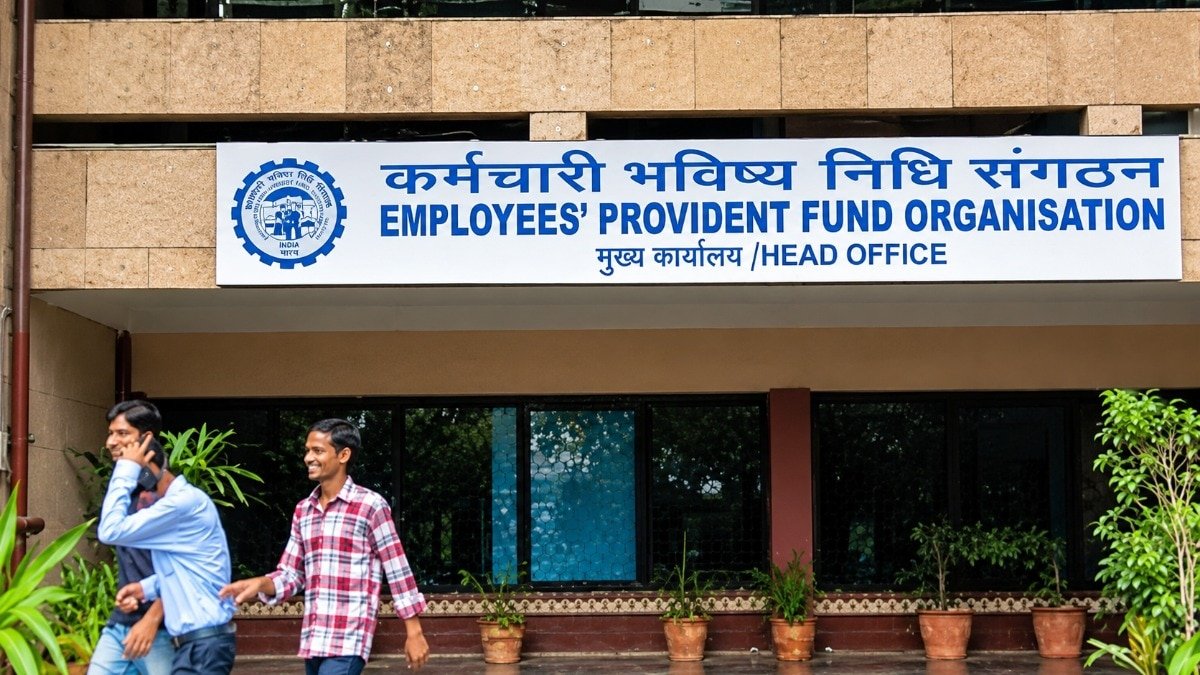
Source : INDIA TODAY NEWS
The Employees’ Provident Fund Organisation (EPFO) has eased access to retirement savings, allowing members to keep a smaller portion of their provident fund corpus with the EPFO while making it easier to withdraw money after exiting the workforce. It has also approved a new systematic withdrawal plan that will let retirees receive their PF savings in instalments instead of withdrawing the entire amount at once.
advertisement
The decisions were approved by the EPFO’s Central Board of Trustees, chaired by Union Labour and Employment Minister Mansukh Mandaviya, on Thursday (November 19). The changes reverse two key decisions taken in 2025 and introduce a new retirement payout option.
The Board has also proposed expanding retirement savings access to gig workers, platform workers and domestic workers through Universal Account Number (UAN)-linked voluntary contributions.
Around 6.32 lakh EPFO members above the age of 55, with provident fund savings exceeding Rs 5 lakh, are expected to benefit from the new facility, according to the Labour Ministry. The EPFO has more than 8 crore active contributing members and over 34 crore total members, managing a retirement corpus of nearly Rs 32 lakh crore.
Here are the five big changes that have been proposed you need to know and what they mean for EPFO members.
1. WITHDRAW MORE: NOW YOU CAN KEEP ONLY 10% OF AMOUNT AS YOUR MINIMUM PF BALANCE
The EPFO has reduced the minimum balance members must retain in their provident fund accounts to 10% from the earlier 25%. This means members will be able to access a larger portion of their accumulated PF savings, subject to applicable withdrawal conditions.
The decision reverses the earlier provision that required members to retain at least 25% of their PF balance. With the revised requirement, up to 90% of the eligible balance can be withdrawn while retaining the remaining 10%.
The move is aimed at providing greater financial flexibility to subscribers who need access to their savings, particularly during periods of financial uncertainty.
2. NO MORE 12-MONTH WAIT: YOU CAN NOW WITHDRAW THE PF AMOUNT AFTER TWO MONTHS OF UNEMPLOYMENT
The EPFO has also reduced the waiting period for final provident fund settlement after unemployment to two months from 12 months.
The 12-month waiting period was introduced in October 2025 as part of changes to the withdrawal framework. With the latest decision, members will once again be able to seek final settlement after remaining unemployed for two months.
This will allow people who have lost their jobs to access their accumulated PF savings without having to wait an entire year.
However, the waiting period for final pension withdrawal under the Employees’ Pension Scheme (EPS) will remain unchanged at 36 months.
3. GET PF MONEY IN INSTALMENTS: MONTHLY, QUARTERLY OR HALF-YEARLY OPTIONS
One of the biggest changes approved by the EPFO is the introduction of a systematic withdrawal plan (SWP) or instalment plan for retiring members.
Instead of withdrawing their entire provident fund corpus as a lump sum, members will be able to receive their accumulated savings in regular instalments. They can choose monthly, quarterly or half-yearly payouts, depending on their financial requirements.
The proposal also offers different withdrawal options. Members can opt for full systematic withdrawals, take a partial lump sum upfront and receive periodic payments on the remaining balance, or withdraw only the interest generated by their accumulated savings.
The facility will be voluntary, meaning members will not be forced to choose periodic payouts over a lump-sum withdrawal.
The proposed SWP is expected to come into effect in around two months, after the necessary amendments to the Employees’ Provident Fund Scheme are completed and notified.
At present, EPFO members can withdraw their entire accumulated PF balance on retirement at the age of 58. Those with at least 10 years of eligible service are separately entitled to a monthly pension under the EPS.
4. WITHDRAW PF MONEY, STILL GET INTEREST: YOUR BALANCE WITH EPFO WILL CONTINUE TO GROW
The new withdrawal plan of the EPFO will allow retirees to keep part or all of their accumulated PF savings within the system while receiving regular payouts.
The important benefit is that the unwithdrawn balance will continue to earn the prevailing EPF interest rate. This means retirees can receive periodic income while the remaining corpus continues to generate returns.
According to the Labour Ministry’s official statement, “the arrangement will provide members with a structured source of periodic income and help supplement their retirement pension”.
The proposed framework also gives retirees the flexibility to stop the systematic withdrawal plan at any point and withdraw the remaining balance.
In case a member dies while receiving periodic payouts, the spouse or nominee will be able to withdraw the remaining corpus or continue receiving the instalments.
5. GIG WORKERS LIKELY TO GET EPFO ACCESS: VOLUNTARY RETIREMENT SAVINGS PROPOSED
The EPFO has also proposed UAN-linked mechanisms that could allow workers outside the traditional employer-employee system to contribute directly to retirement savings.
The proposal envisages direct voluntary contributions and third-party micro-contributions, such as customer tips, without depending on conventional employer payroll systems.
This could potentially bring gig workers, platform workers, domestic workers and other informal-sector workers into a wider retirement savings framework.
For instance, a platform worker or domestic worker could potentially contribute small amounts towards retirement savings through a mechanism linked to their UAN, even without a traditional employer making monthly PF contributions.
The proposal is part of the government’s broader objective of expanding social security coverage to workers who are currently outside conventional formal employment arrangements.
However, the framework will require the necessary amendments and approvals before it can be implemented.
Therefore, the EPFO’s latest decisions go beyond easing withdrawals for existing subscribers. While the changes offer greater flexibility to people accessing their accumulated savings, the proposed systematic withdrawal plan seeks to make retirement income more structured, and the UAN-linked contribution mechanism could expand the reach of social security to a much wider workforce.
– Ends
Must Watch
SOURCE :- TIMES OF INDIA