

Source : the age
Jim Pilmer
Happy new year! Today is New Year’s Day in the Western Christian calendar, the first Sunday of Advent.
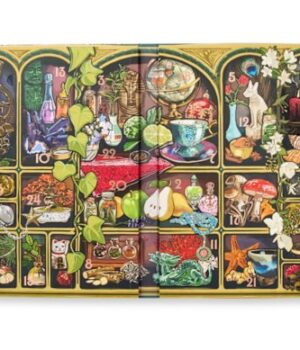
Advent (from the Latin word adventus, meaning coming) is a season of preparation for celebrating the birth of Christ. The intention of the Advent calendar, now heavily commercialised as part of pre-Christmas marketing, goes beyond being a countdown to Christmas.
It actually launches the church year, walking us each day towards the birth of Christ and all that follows through the various seasons.
The characteristics of calendar and diary combine and overlap. I confess to still being a paper-diary person. An annual activity I enjoy is preparing next year’s diary for the family birthdays, anniversaries and other not-to-be-forgotten activities. I realise that I could handle this electronically, but I continue to resist losing track of important anniversaries in the cloud, and hold out against the broad hints of some to change my ways.
Diaries, in whatever format, help us to recall the past, manage today and plan tomorrow. They may also record financial or verbal transactions, or even be used as evidence in certain circumstances. The diaries of Anne Frank were of a very different type, a testimony to history, recording two years of Nazi occupation of the Netherlands.
Diaries and calendars have an almost symbiotic relationship. One overlays the other. The use of calendars goes back thousands of years. Religious calendars are particularly interesting in this regard.
The remembrance of holy days and saintly people provides a framework for prayer and reflection across all major religions. Many universities and major hospitals now produce multi-faith calendars as an aid to respecting and understanding religious and cultural diversity in our community.
They show that not a day goes by without a significant religious event or devout life being recalled and respected. The Faith Communities Council of Victoria provides a readily accessible multi-faith calendar online. Others are available online too.
My Anglican calendar reminds me not only of the great festivals of the church year, or the saints of long ago, but sets aside days to remind us that such people as Frances Perry (died December 2, 1892), founder of the Royal Women’s Hospital in Melbourne, are worthy of our ongoing gratitude. As is English prison reformer Elizabeth Fry, who died on October 12 in 1845.
While we travel along this road, the followers of Judaism, Islam and other religions keep their own observances, using lunar and solar calendars to track their sacred days and enrich their faith.
Through seemingly secular days, there runs a network of spiritual threads. Often our faith journeys are more interwoven than we realise.
Jim Pilmer is an Anglican priest.