
Source : the age
If you ask anyone across the world to name a ship, including children, almost all of them would say the Titanic.
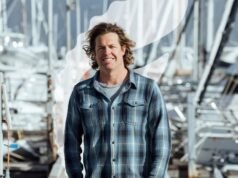
That is a statement Swedish historian Claes-Goran Wetterholm makes with pride.
From the Hollywood blockbuster starring Kate Winslet and Leonardo DiCaprio, to movies diving into what occurred in the aftermath including the weird yet somewhat entertaining spinoffs (we’re looking at you Thumbtanic), the story of the infamous ship has retained its relevance across generations.
Wetterholm says it’s the human element of the 1912 disaster – the stories of those on board and their families – that keeps people’s attention.
He has dedicated his entire life to studying the Titanic, spending time in archives, reaching out to shipyards, and writing to authors and newspapers starting from when he was a teenager back in the 1960s.
“It’s really the drive behind everything, to meet people, to talk to people – stories keep coming up all the time,” he said.
“You come to know people, and then you have a connection with other Titanic buffs – it connects people all around the world.”
His lifelong passion has been the force behind multiple exhibitions over the years, with Perth next on the list.
Titanic: The Human Story will open to the public on December 17 at the Northbridge Centre, after exhibits in both Sydney and Brisbane.
“We wanted to tell not only the actual story, but also the story before the Titanic sailed – about the time, the lives of people and, of course, migration. Then also what happened afterwards, the inquiry and the results of the inquiry,” Wetterholm said.
“We have this sea of different types of stories.”
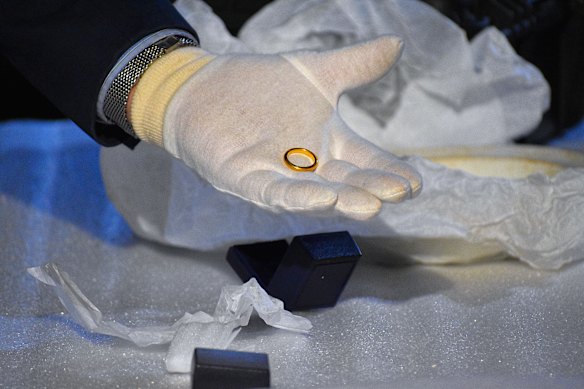
The ring belonged to Esther Hart, a second class passenger, who survived with her daughter Eva, who was 7.Credit: Holly Thompson
Transporting the exhibition across the country was no mean feat and Wetterholm said he had been worried – “nothing is unsinkable, so to speak”.
But the team, comprising technicians, historians and conservators from around the world – and their precious items – made it in one piece.
Those items are varied, from a dress Winslet wore in the film adaptation to a nightgown worn by a real passenger, rings and a letter written by First Officer William Murdoch (Wetterholm’s favourite piece).
“He died while trying to release Boat A (one of the four lifeboats) – not at all as is shown in Cameron’s movie. That’s a lie,” he said.
“He was the one who saved most people, and thanks to him so many men survived as well. It’s an ongoing myth that the majority of the people saved were women and children.”
More than 200 pieces from Wetterholm’s personal collection are also included in the exhibition, alongside an ‘iceberg’ – a sculpture covered in ice – that people can interact with to feel just how cold it would have been.
A replica of one of the hallways on board and how the rooms in each class would have looked also feature.
Wetterholm said he was hopeful those who attended the exhibition in Perth would gain a greater understanding of the story leading to – and in the aftermath of – the disaster and the people involved.
“It is a story that speaks to mankind. It is a story that unites, and it is a story that moves our hearts,” he said.
“So I hope that the story speaks to them – each visitor here – and that they are moved by it, and that it might spark kids’ interest in history.
“Without history, we are nothing.”
Titanic: The Human Story will run until June 2026.
Start the day with a summary of the day’s most important and interesting stories, analysis and insights. Sign up for our Morning Edition newsletter.