

Source : INDIA TODAY NEWS
A lot of conversation is going on about E85 fuel. Do we have vehicles that can run on this fuel? What happens if an E20-compliant vehicle is filled with E85? Is it safe? And with higher ethanol blends already notified by the government, is buying a regular petrol car still the right decision? Here’s everything you need to know.
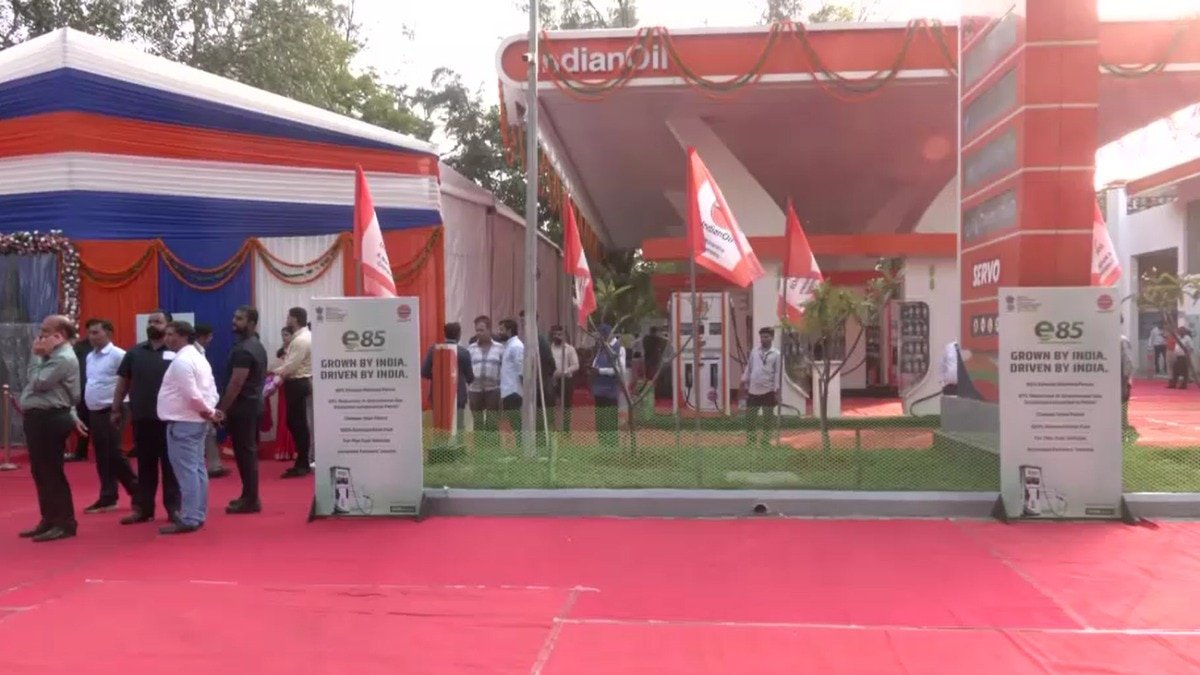
India’s ethanol-blending programme has entered a new phase with the official rollout of E85 fuel. On June 5, Union Petroleum and Natural Gas Minister Hardeep Singh Puri inaugurated Delhi’s first E85 fuel dispensing station at Indian Oil’s Pusa Road pump, marking the commercial launch of the high-ethanol fuel in the national capital.
advertisement
Priced at Rs 82.12 per litre in Delhi, E85 is exactly Rs 20 cheaper than the E20 petrol currently being sold in the city. To prevent confusion at fuel stations, dedicated E85 pumps will feature separate branding and distinct labelling.
However, the arrival of E85 has also triggered a major question among vehicle owners: can existing E20-compliant cars and motorcycles run on this new fuel?
Can E20 vehicles use E85 fuel?
The simple answer is no.
Vehicles designed and certified for E20 fuel are engineered to safely operate on petrol containing up to 20 per cent ethanol. E85, on the other hand, contains up to 85 per cent ethanol, making it a completely different fuel from a compatibility standpoint.
Filling an E20 vehicle with E85 can lead to several issues, including poor engine performance, fuel system damage, corrosion of fuel lines and seals, starting problems and long-term reliability concerns. Ethanol behaves differently from petrol and requires specific engine calibration, fuel injection settings and material compatibility that standard E20 vehicles simply do not possess.
In short, vehicle owners should not attempt to use E85 fuel in E20-compliant vehicles.
Who can use E85?
This is where Flex Fuel Vehicles (FFVs) come into the picture.
FFVs are specifically designed to operate on a wide range of ethanol-petrol blends, typically from E20 all the way up to E85 or even E100 in some cases. These vehicles use ethanol-resistant components, specialised engine management systems and fuel mapping that automatically adjust according to the blend being used.
The biggest advantage is flexibility. Owners can fill up with regular petrol blends when needed or switch to higher ethanol blends whenever available, making these vehicles more future-ready as India’s ethanol programme evolves.
What flex-fuel options are available today?
India’s flex-fuel vehicle market is still in its early stages, but the first products have already arrived.
On June 3, Hero MotoCorp launched the flex-fuel versions of its popular Splendor+ and HF Deluxe motorcycles. The HF Deluxe flex-fuel is priced at Rs 72,792 (ex-showroom Delhi), while the Splendor+ flex-fuel costs Rs 82,710 (ex-showroom Delhi). Sales will begin in Delhi and selected regions of Maharashtra from July 2026, followed by a wider national rollout.
Suzuki also has a flex-fuel version of the Gixxer motorcycle, capable of operating on higher ethanol blends.
In the passenger vehicle segment, Maruti Suzuki recently unveiled the WagonR flex-fuel. The model marks a significant milestone because it is India’s first passenger car capable of running on E100 fuel, which consists entirely of ethanol. While the car has been showcased, it is yet to be launched commercially.
The point to note here is that the government is pushing mass-market vehicles so that more and more people can adopt them, thereby making the project a success.
Why is E85 being introduced now?
The rollout of E85 is part of the government’s broader strategy to reduce crude oil imports, support domestic ethanol production and lower carbon emissions.
According to Minister Hardeep Singh Puri, the initial rollout will cover around 50 to 100 dispensing stations across the Delhi-NCR and Mumbai-Pune-Nagpur corridors. The network is expected to expand to roughly 500 outlets by December 2026 and further grow to nearly 5,000 stations across major cities by the end of 2027.
E20 may not be the end goal
An equally important development took place in May when the government officially notified fuel standards for higher ethanol-petrol blends, including E22, E25, E27 and E30.
Subscribe to Auto Today Magazine
– Ends
SOURCE :- TIMES OF INDIA