

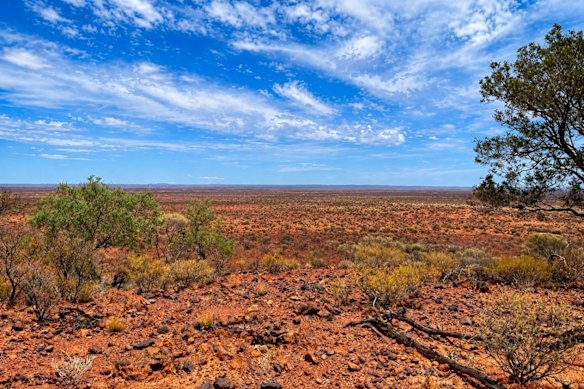
Source : THE AGE NEWS
PLC Resources is looking to keep the exploration momentum rolling at the company’s Abbotts North gold project in Western Australia’s Murchison region, launching a high-resolution airborne geophysical survey while market watchers wait for results from the first drilling campaign at its project.
The company has begun flying a magnetic and radiometric survey across a largely unexplored section of the Abbotts Greenstone Belt, about 35 kilometres north of Meekatharra. The program is expected to take about five days to complete and has attracted almost $36,000 in co-funding from the WA Government’s Co-funded Geophysics Program.
For junior explorers, high-resolution magnetic surveys are often one of the most effective ways to peer beneath surface cover and identify geological structures that can host gold mineralisation. In simple terms, the survey should help PLC map the rocks and faults hidden below the surface and generate the next round of drill targets.
And surprisingly, this portion of the Abbotts Greenstone Belt has, until now, largely escaped the scrutiny of modern exploration.
Securing government co-funding to fly this survey means we are expanding our exploration footprint.′
PLC Resources executive director Simon Phillips
Importantly, the company is not starting from scratch. PLC’s early exploration work at Abbotts North has already uncovered the Rochefort gold prospect through nothing more than mapping, rock-chip sampling and soil surveys. Those programs delivered encouraging signs of mineralisation, including rock-chip assays grading up to 11.7 grams per tonne gold and a sizeable gold-in-soil anomaly.
The company recently wrapped up its maiden reverse-circulation drilling campaign at Rochefort, punching five holes for just over 1000 metres. Assay results are expected within weeks.
The timing of the survey is deliberate. PLC is effectively running two tracks in parallel, waiting on drill assay results while simultaneously using the survey window to build out the next generation of drill targets across ground that currently has no equivalent magnetic dataset.
That matters because the existing open-file magnetic data available from WA government records has already proven its worth at Rochefort, where it helped refine the drill targets that led to the inaugural RC program.
One of the key attractions of the new survey is that much of the target area has never been covered by comparable modern magnetic data. Rochefort itself benefited from existing government magnetic datasets, but the broader project area remains largely unsurveyed and lightly explored.
And the company’s survey isn’t being flown in a geological vacuum. Just to the south, New Murchison Gold has been racking up high-grade hits at its Lydia prospect and mining the nearby Crown Prince deposit, which hosts 2.2 million tonnes at 3.9g/t gold for 279,000 ounces.
Mineralisation in the area is hosted within highly fractionated quartz dolerites, a fertile setting seen across major Yilgarn gold camps. But despite the belt’s strong track record for high-grade gold, swathes of the mineralised corridor remain lightly tested with modern exploration.
PLC is now searching for the northern continuation of the same structural corridors that have already delivered ounces elsewhere in the belt.
PLC Resources executive director Simon Phillips said: “Securing government co-funding to fly this survey means we are expanding our exploration footprint across a largely untested portion of the Abbotts Greenstone Belt with minimal cost to shareholders. We are moving quickly, and we look forward to reporting results from both programs to the market in the near term.”
For punters, that combination of limited historical work and a recent grassroots discovery can be an enticing recipe. The fact Rochefort emerged from relatively simple surface sampling suggests there may be additional opportunities hiding elsewhere along the belt. The new airborne magnetics survey is the tool that will start answering that question.
Is your ASX-listed company doing something interesting? Contact: mattbirney@bullsnbears.com.au


