

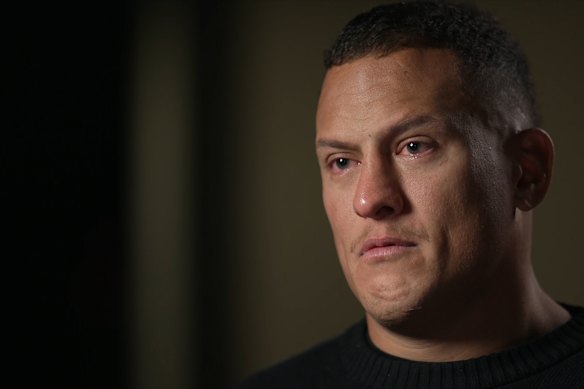
Source : the age
Our society can and should be challenged to learn from Kane Evans’ decision to reveal that he is a gay man. His bravery should remind us that difference and diversity can be a source of strength.
Being your real and authentic self can be difficult when you are told that you don’t and won’t fit in – especially for people from the LGBTQ community. Being part of this community, as I am, highlights that you are different. You are not the “norm”. But none of us choose to be this way. What we can choose is if, when and how we share this with the world.
Kane Evans did this last night and provided a sincere and deeply personal insight into being gay. For him, coming out confronted his whole sense of who he was, how he accepted himself and his perceived understanding of how others would feel and interact with him. The fear he was carrying negatively impacted on his wellbeing, leading to concerns with his mental health alongside problematic substance use. But he has now provided an opportunity for us all to be challenged, while also celebrating and sharing in this win collectively.
Queerness is all but invisible in men’s sport, especially rugby league. His coming out tackles the idea that people can play and participate without judgment. Such sharing within the game promotes opportunities for differences to be made visible.
For our Pasifika cultures, Kane has given us a challenge and a win on how we enact pro-social and positive masculinity. According to my own research, Pasifika men struggle with identifying as being queer due to persistent fears of stigma and shame from family and friends, further perpetuated by religious and faith-based expectations. They may participate in sex with other men but often do so in highly risky situations, leading to intimate partner violence, psychological trauma and physical health implications such as STIs, including HIV.
This stigma and shame was further highlighted in 2022, when most players who refused to wear the rainbow jersey for the Manly Sea Eagles Pride match against the Roosters were Pasifika men. We need more stories about diverse sexualities from Pasifika men such as Kane.
At the same time, his coming out celebrates the reality that such identities exist and reminds us that they have harmoniously existed in our Pasifika communities from before colonisation.
For the NRL, it’s a challenge and a win as the industry continues its development towards inclusive playing cultures and spaces. In my work with the game, I’ve undertaken a workshop with players which discussed the importance of celebrating sexual diversities. Most players said they wouldn’t care if a fellow teammate was gay. They saw their teammate as part of the club. It was the fear of the wider community outside of the club that they were worried about. By having more players come forward to share their own lived experience of being queer, we can challenge the NRL community, while also celebrating such individuals as being valued members of their footy club.
Only two professional male rugby league players in 30 years have come out, so clearly there’s a cultural impediment at the NRL. Players feel constantly pressured to perform on and off the field. The additional stress to feel accepted by the club’s community of fans can have a negative effect. The NRL can now work to change this. By encouraging each club to intentionally celebrate gender and sexual diversities, it can help fans to be part of an inclusive club culture.
For our mental health and substance use services across the community, Kane’s coming out is a challenge and a win. Such services promote the importance of recovery but can be at times siloed and under-resourced. Governments need to continue their funding and workforce training to provide sustainable solutions and care.
Kane’s coming out compels all of us to have critical conversations on the impact of being your authentic self and the potential benefits on your wellbeing. Enabling individuals to feel comfortable and confident in who they are can help create connections with others. This may include family, friends, the workplace and the wider community.
As a result, we can challenge the status quo to create scope for gender and sexual diversities to be normalised, to be the “norm”. We can celebrate these attributes as being accepted across all parts of society, from the classroom to the footy field. Now that’s a challenge and a win for all.
Professor Jioji Ravulo is chair of social work and policy studies at the University of Sydney and has worked across the NRL since 2010.
 Professor Jioji Ravulo is of Fijian Indigenous heritage and is Chair of Social Work and Policy Studies at University of Sydney.