
Source : the age
For some families, their child’s formal education was once considered to start at school. But the years before prep (foundation) can have a direct impact on a child’s future success, spanning academics through to emotional development.
The research is clear that rapid brain development occurs in the first five years of life.
Kinder plays a pivotal yet sometimes underestimated role in a child’s early growth and learning.
A Victorian government report, Two years of early childhood education — what the evidence, reveals how a child’s experiences during these years can make a significant difference to their future cognitive, social and emotional outcomes, including how they manage their feelings and relate to others.
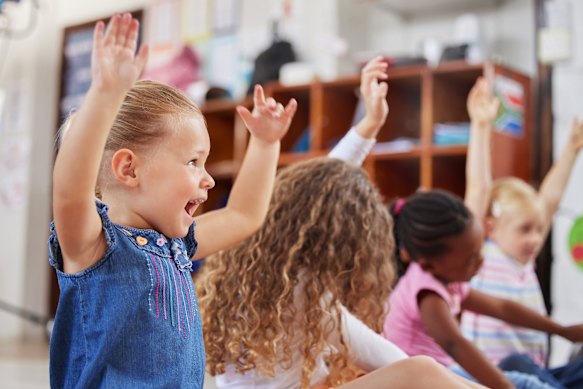
Alongside learning to count and recognise numbers and letters, children build their confidence, independence, and ability to problem solve, socialise and make new friends.
It’s why the Victorian government has expanded its Free Kinder program to provide children with more teacher-led, play-based learning during a critical period of development.
In 2019, most Victorian children had access to 600 hours of funded kindergarten in the year before school. That was 15 hours per week of 4-Year-Old Kinder.
From 2025, the roll-out to offer more hours of 4-Year-Old Kinder began. This means, by 2026, children attending 4-Year-Old Kinder will have access to up to 30 hours per week. This is part of the Free Kinder offering, supporting families where the cost of early childhood education is a barrier.
By 2029, there will be 15 hours per week of funded, teacher-led 3-Year-Old Kinder available. In 2026, the hours on offer are between five and 15.
In 2036, at full roll-out, Victorian children will have access to up to 1800 hours of funded kindergarten before school: 600 hours of 3-Year-Old Kinder and 1200 hours of 4-Year-Old Kinder.
Early childhood consultant Heather Barnes says research shows that the more time young children have in high-quality kindergarten services, the better. “The benefit of having those longer hours is that it deepens the learning opportunities for children.”
“The program is based very much on play-based learning that allows children to lead the learning, where teachers can observe and be responsive to children’s interests and guide them in a way that extends on and supports further learning.
“It also provides opportunities for teachers to do more intentional, teacher-led learning, which obviously supports language, literacy and all of those other important parts of their cognitive development.”
Barnes also points out that having access to qualified teachers during that period of rapid brain development greatly benefits curious young minds.
“Children who have enriched opportunities for play, as well as qualified teachers in a high-quality setting, can extend on their thinking and their inquiry and their curiosity and their problem solving,” she says.
“It’s the intentional, responsive relationships that teachers have with children during that time that can make all the difference.
“Of course, families can do this too, and they do in many, many families. But the reality of life these days is that many families are working, and/or if they’re home, they’re distracted by other responsibilities that don’t allow them time to sit on the floor and play with their child to follow up all those ‘why?’ questions.
“It’s why, in an early learning service, the quality of the service is the key. Teachers who are well qualified, who respond to children and who are tuned in to make the most of every learning opportunity with children are the ones who really promote that brain development.”
And the benefits of kinder go well beyond the transition to school.
Research shows that two years of kinder sets a foundation that lasts, with children achieving stronger literacy and numeracy results even at age 16.
More time allows for more opportunities for growth, including one-to-one support and quality play-based learning that counts.
Learn more about kinder in Victoria at www.vic.gov.au/kinder.