SOURCE :- SIASAT NEWS
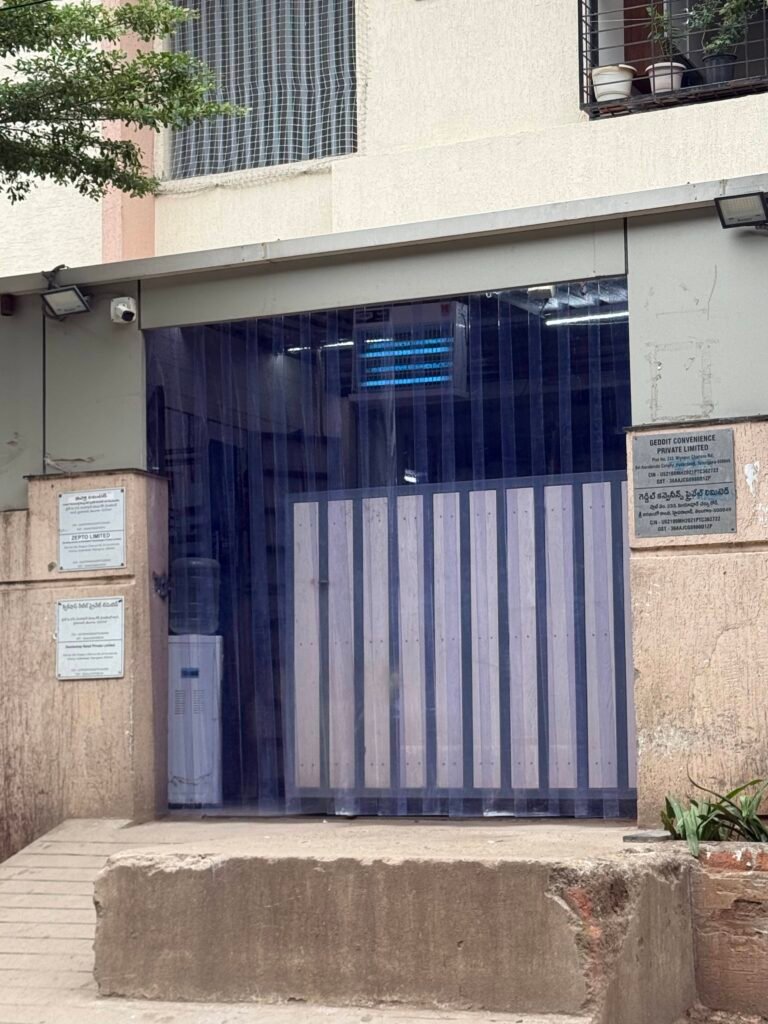
Hyderabad: Nikhil fills paper bags for orders at a Zepto store in Hyderabad’s Miyapur. One afternoon he lay down during his break. “I took a nap during my break, and my manager deemed that reason enough to suppress my ID,” said Nikhil.
Suppressing an ID means a worker’s login stops working. No login, no shifts, no earnings. Nikhil was, for practical purposes, out of the job. He still turns up. “But they still let me do flex work,” he said, referring to the flexible, part-time option Zepto offers in its parcelling section.
He was taken off the rolls and kept on the floor.


At the store, Sanjay, a human resource (HR) representative at the grocery delivery app, rejected the account outright. “Nikhil is misguided. There is no such thing as an incentive,” he said. He did not address the suppression.
A network error and Rs 5,000 gone
Kotapalle Vedavathi is 50 and works for Urban Company in the city, putting in shifts of nine to 12 hours. She described the work as thankless and high-stakes.
“The money here is good, but it’s always a struggle to get it regardless of how much you work,” she said. “They control you a lot with this rating system. Most of the time, you get a good rating, but there’s always one bad apple who wants too much out of you and there’s nothing you can do about it,” she added.

In August, the app failed her.

“There was one instance in August when I had a network issue, which meant I couldn’t really log the work I did. Because of that, I had to lose my payment. When I complained to HR, there was no one who helped, and because of that I had to lose Rs 5,000,” Vedavathi told Siasat.com.
Vedavathi receives up to Rs 30,000 a month, paid out twice. In a month where a single unlogged job can cost her a sixth of her earnings, there is no room for error.
The lives of these workers are governed by an application built and maintained by engineers they will never meet.

Under a tree, outside the tower
How workers are treated is its own set of problems. Service lifts are now standard. Beyond that, workers who provide domestic help through platforms such as Snabbit say they are made to wait outside under the shade of a tree, whatever the weather, rather than in apartment lobbies.

Outside My Home Towers in TNGO Colony in Gachibowli, a group of Snabbit workers sat resting on rocks. They had two different takes on the work they do. The migrants said they were satisfied with what they were paid. The local workers complained about both the money and the treatment.
“If you do good work, you will have a good rating, and if you follow the training instructions well, there is no problem,” Sama, a migrant from Bihar, told Siasat.com.

No means to complain
Nikhil’s experience has a name in the trade, said Shaik Salauddin, a trade unionist and president of the Telangana Gig and Platform Workers Union (TGPWU).
“ID suppression is when the gig app suppresses a user’s ID without any plausible cause. Most instances of ID suppression are arbitrary and they severely affect the worker, as there is then no means to complain or take the issue up anywhere,” he said.
He offered a reason for it. “This ID suppression happens because a lot of these platforms offer incentives for hiring new people and that prompts HRs to fire older employees who have grown too comfortable and know their way around the store. It creates a constant churn of fearful, submissive workers who are easier to control,” Salauddin said.
In the end, the gig workers can’t do anything about it, said Sai Reddy, a former Zepto worker. “The HRs, the store managers, all the higher-ups, even the main office, they’re all on the side of the app and no one is on ours. So I had to find work elsewhere,” he said. Other workers across multiple platforms gave Siasat.com the same account.
Gig work was sold as a way to earn on one’s own terms and spend the rest of the day as one wished. Incentives, ratings and the threat of suppression have narrowed that. Workers are pushed to perform month after month with no promotion and no raise at the end of it, however much they work.

Three kinds of worker, one platform
The workforce splits three ways – the casual part-timer, the local full-timer and the non-local full-timer. What each says about the job differs sharply.
Local full-timers are the most openly resentful. Nikhil said a Zepto worker can make Rs 20,000 without incentives and up to Rs 24,000 with them.
“And that too isn’t without its troubles. The HRs and store managers always exist to make life as difficult as possible for you to work,” he said. “There was an instance when, after work, we were drinking chai nearby and we got reprimanded by my manager the next day for unprofessional behaviour. It made no sense to me,” Nikhil recalled.
Part-timers take what the day gives them.
“I get about Rs 1,000 a day and more if I work on Sundays,” said Zubair Ahmed, a BTech student at Maulana Azad National Urdu University (MANUU). “It’s not really a job or anything. It’s just so I don’t put a burden on my family back home and avoid wasting time,” he told Siasat.com.

Several part-timers said voluntarily that the work was temporary.
“I’m doing this because I’m bored at home,” said Satya, when asked whether he worked full-time for the grocery delivery app. “I’m just doing this after graduating from a BTech, for my expenses. It’s nothing permanent,” Pawan, a Rapido captain, told Siasat.com, answering the same question.
11 hour shifts leave no time to upskill
Srimanth, a Zepto worker, recounted a full-timer’s hectic day. “Full-time shifts vary quite a lot. You have day shifts, night shifts and of course the flexible shifts too,” he said. “Each shift runs about nine hours if you work full-time. Add an hour to travel and another to get ready, and that’s almost 11 hours of your day gone,” he said.
Non-local full-timers, as Sama’s answer suggests, tend to be grateful for the income and slower to complain.
Still, 11 hours leaves little room to learn anything else. Last-mile delivery, grocery and food delivery and household services have become fixtures of urban life in Hyderabad, and the convenience is paid for by the people providing it. The hours leave almost no time for upskilling or for moving into steadier work.
Mohammad Siddiqui, a Rapido captain working full-time, came to the job the long way round.
“I have previously worked in Dubai. I couldn’t bear being away from my family, so I came back here to find work. Construction work paid less for the labour I put in, so I decided to work in Rapido,” he told Siasat.com.
“It does pay me enough (Rs 20,000 a month) to get my daughter through college, but that’s only because of institutions like the Telangana Minorities Study Centre and Career Counselling Centre in Nampally. Otherwise, it’d be hard to sustain a whole family.”

What the law says
The Telangana Assembly passed the Telangana Platform-Based Gig Workers (Registration, Social Security and Welfare) Bill on March 30 this year. It is now Act no 21 of 2026. Telangana is the fifth state to legislate for gig workers, after Rajasthan, Karnataka, Jharkhand and Bihar.
Every gig worker gets a unique registration ID. Platforms must give seven days’ notice and a written reason before suppressing an ID. They must disclose how their algorithms set fares, allotments and ratings, and must pay fairly, with penalties if they do not. Companies must file electronic returns every three months.
A welfare fund, built from a levy of one to two per cent on platform transactions, will pay for insurance, pension and maternity benefits, and an NPS option is included. The Department of Labour oversees dispute resolution.
Penalties also escalate, with Rs 50,000 for a first violation, Rs 1 lakh for the second, Rs 1.5 lakh for the third and up to five times the arrears after that.
Introducing the Bill, Labour, Employment and Mines Minister G Vivek Venkataswamy told the Telangana Assembly that gig workers had no job security, no minimum wages and no health protection. He put their number in Telangana at around 4 lakh. Many work 10 to 12 hours a day, seven days a week, without insurance or bargaining power.

The gig workers don’t know about the law
Salauddin welcomed the law but pointed what is missing. “The Act still needs a functioning welfare board, which is on its way, as promised by the Telangana government. Short of that, this Act is quite comprehensive and addresses a lot of the issues raised by gig workers.
“The government also made sure the issue was thoroughly researched, so it covers job security, social security, dispute resolution, and levies fair punishment on offenders,” he said.
Rajasthan passed the country’s first such law in 2023 and has still not brought it into force, because the rules were never framed. After the Telangana Bill was passed, minister Venkataswamy said a second committee would draft the rules in consultation with gig workers and aggregators.
For now, the rules have not been framed. Until that happens, a platform can still switch off a worker’s ID whenever it chooses.
Almost none of this has reached the people it was written for. Most of the workers Siasat.com spoke to said they had never heard of the Act. Those who had could not say what it contained.
Manikanta, who drives for Uber, was doing his own arithmetic. “I don’t understand how it’s fair for the app to take a cut when I’m the one putting in all the effort, and yet I get paid so little and still remain poor no matter how hard I work,” he said.
(Some gig workers quoted in this report asked to be referred to by his first name only for fear of repercussions)
SOURCE : SIASAT