

Source : THE AGE NEWS
For more than half a century, the Liddell power station, near Muswellbrook in the Upper Hunter, burned mountains of black coal to generate electricity that powered the state of New South Wales.
Liddell closed in April 2023. Its owner, energy giant AGL, said its ageing equipment had become increasingly unreliable and prone to sudden breakdowns.
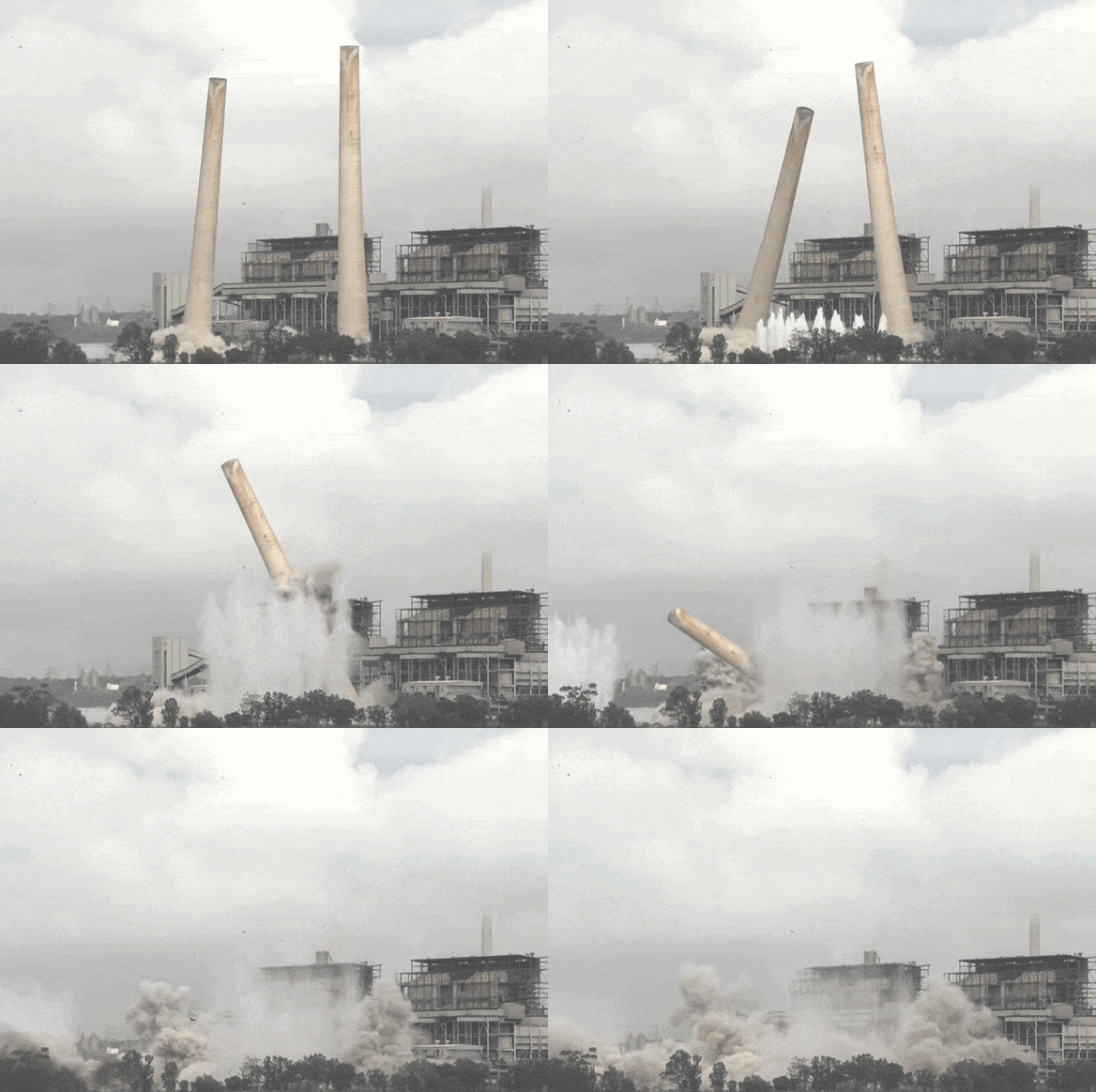
On Tuesday, AGL detonated explosives to bring down the power station’s two concrete chimney stacks, each towering 168 metres tall.
The demolition, in which hundreds of individual charges were placed into predrilled holes to carefully weaken the base of each chimney, was carried our safely and successfully, AGL chief operations officer Matthew Currie said. Explosives were used to remove a section at the base, allowing each stack to fall in a planned direction, he said.
“We know that the Liddell power station holds deep significance for the local community, employees and families, who worked at or were connected to the site,” Currie said. “The demolition was not just a technical event, but an opportunity to acknowledge its important legacy.”
It would also now open up new opportunities to repurpose the site so it could support future jobs, regional growth and long-term economic development, he added.
The site is earmarked to become one of the company’s lower-carbon “energy hubs”, which aim to leverage former coal sites’ land, water and grid connectivity to support new projects and industries. AGL switched on a 500-megawatt, two-hour grid-scale battery system at Liddell earlier this year, and has plans to develop an eight-hour pumped hydro storage project nearby.
“The demolition will pave the way for the continued transformation of the site,” Currie said.
While coal has been the backbone of Australia’s electricity market for decades, its years left powering the grid are numbered. More than half of the remaining coal-powered generators on the eastern seaboard are scheduled to close by 2035, as their old, emissions-intensive equipment becomes less reliable and competitive against cheaper renewables.
AGL has brought forward the retirement dates of its two remaining coal-fired power stations. It intends to close its Bayswater generator in NSW no later than 2033, while the shutdown of the Loy Yang A generator in Victoria was fast-tracked by up to 10 years to 2035.
To ready the grid for the future, energy companies and governments have been pouring billions of dollars into building wind and solar farms, batteries and transmission lines to stitch together a bigger and more complex grid. AGL has a target to build 12 gigawatts of backed-up renewables over the decade.
There are early signs the energy transition is having a positive impact on prices: over the past six months, renewables and batteries supplied more than 50 per cent of the nation’s main grid for the first time in history. On Tuesday, the Australian Energy Regulator said this had helped drive steep falls in the wholesale electricity costs, which would begin flowing through to cuts to retail bills paid by households and businesses from July.
However, the renewable rollout is still lagging the speed that experts say is necessary to compensate for further coal closures without worsening the risk of energy price spikes or blackouts. Wind, solar and transmission projects have been running into problems including years-long permitting delays, soaring construction costs, equipment shortages and significant pushback from rural and regional communities worried about impacts on farming practices, property values and the environment. The Australian Energy Market Operator and industry leaders warn an urgent uplift in investment remains critical.
“Australia is at a pivotal moment,” said Jackie Trad, chief executive of the Clean Energy Council, representing renewable energy builders and investors. “Concerted action from all stakeholders is required, and it is required now.”
The Business Briefing newsletter delivers major stories, exclusive coverage and expert opinion. Sign up to get it every weekday morning.
 Nick Toscano is a business reporter for The Age and Sydney Morning Herald.Connect via X or email.


