

Source : THE AGE NEWS
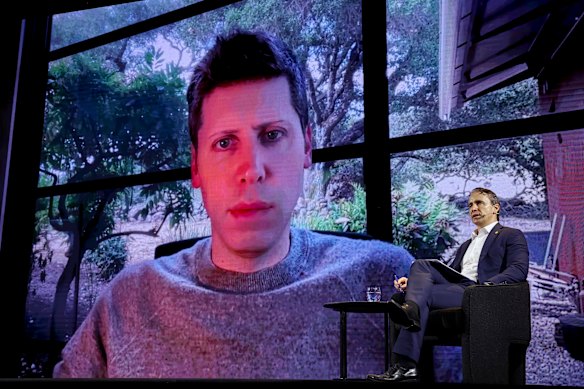
OpenAI chief executive Sam Altman downplayed the threat of AI killing jobs just days after WiseTech informed the police of “threats of violence” against its CEO, who is using the technology to replace thousands of its workers.
“The jobs picture is likely to be very different than we thought,” Altman told Commonwealth Bank boss Matt Comyn in a virtual appearance at an AI event in Sydney hosted by the bank.
“I don’t think we’re going to have the kind of jobs apocalypse that some of the companies in our space advocate, or talk about.”
Nvidia boss Jensen Huang was the first prominent AI executive who derided talk of a jobs apocalypse and the “God complex” AI executives who have pushed these predictions.
The scare hit fever pitch last year when Anthropic boss Dario Amodei bluntly warned that AI could wipe out half of all entry-level white-collar jobs and cause unemployment to spike to as much as 20 per cent in the next one to five years. Altman has made similar comments in the past, suggesting entire job categories such as customer support roles could vanish.
However, on Tuesday the OpenAI boss was “delighted to be wrong” about the impact on entry-level white-collar work jobs, but said it was better to be open with the public and occasionally get things wrong.
‘I don’t think we’re going to have the kind of jobs apocalypse that some of the companies in our space advocate, or talk about.’
OpenAI boss Sam Altman
“I think it’s always important to point out: We don’t really know, and many of the next jobs will be difficult to predict, and many things won’t go the way that we think,” he said, “but I think we really owe it to people to give them the best sense … of where we see the technology (is) likely to go at this moment and explain to people we may be wrong.”
He acknowledged the difficulty in predicting what new jobs will be created as workers and businesses adopt AI, but hinted that, as AI takes over more processing tasks, high-level human supervision could be a “significant part” of what most people do in the future.
Altman’s mea culpa comes as WiseTech starts sacking one-third of its workforce, as announced in February, when new chief executive Zubin Appoo declared that the era of manually writing code as a core job activity is over.
“We’re halving the human capacity, but we’re significantly increasing the overall capacity through agentic AI,” he said, referring to AI that not just reacts to prompts, but acts on its own.
As reported in the Australian Financial Review, WiseTech had to report “threats of violence” against Appoo to police this week, while increasing security at its Sydney headquarters as the internal turmoil over the job losses led to violent threats.
“These measures were implemented because of the serious nature of the threat, and further escalation over the weekend,” WiseTech’s executive chairman Richard White said in a note to staff on Sunday.
White acknowledged the “real concerns” many employees had about their roles, their teams and the future.
Comyn, who has been an aggressive adopter of AI in Australia’s biggest bank, acknowledged these issues in an opinion column in the AFR on Tuesday before the bank’s AI conference.
“AI will have workforce consequences throughout the economy, and they should be faced directly. No one knows exactly how work will change over the next three years, let alone the next decade,” he warned.
“An employer of our scale has a responsibility to avoid false reassurance and give people the best possible chance to adapt.”
Commbank is treading more carefully after having to reverse a decision last year to sack call centre staff who were meant to be replaced by AI.
But when it came to AI’s threat to current workers, Altman issued what may have been a warning at the conference.
He noted that despite the AI advances, and corporate adoption of AI tools, the technology has yet to deliver an equivalent economic return.
“The question is, where is the revenue? Where are the actual productivity gains?” Altman admitted.
“And my best answer to that is, it’s all still very new, and it’s just going to take a little bit longer to figure out how a company actually does run more efficiently, and to make these great new products.
“But if a year from now we’re still talking about that same question, I’d be more concerned,” he said.
This goes back to the warning from many in the industry, Anthropic’s Amodei among them, that the only way to recoup the massive investments on AI is through job losses.
The Market Recap newsletter is a wrap of the day’s trading. Get it each weekday afternoon.
 Colin Kruger is a senior business reporter for the Sydney Morning Herald and The Age.Connect via email.


