

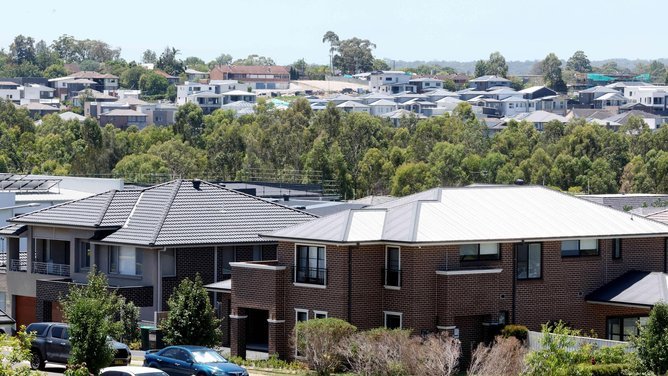
Source : Perth Now news
A damning new report has exposed the financial anxiety gripping NSW public sector workers, with one in five spending more than half their pay on housing.
The latest Housing Affordability Survey prepared by the Public Service Association (PSA) found workers skip meals, delay medical treatment and fear homelessness despite working full-time government jobs.
More than 5100 members were surveyed and 65 per cent met the threshold for housing stress, spending more than 30 per cent of their income on rent or mortgage repayments.
Four reported they were homeless.
One woman – known only as Elena – moved back into her parents Newcastle home with her partner so they could save for their first home.
The move meant she faced a seven hour commute just to get to work in Sydney and back each day, but the sacrifice paid off.
Elena and her partner finally found a home they could afford after searching for months and bought a place, in Lake Macquarie.
People advised Elena not to buy in Sydney, to move back in with her parents to save money on rent and avoid any personal debt, but being able to afford a home of her own also meant not getting married, putting off children and a seven-hour commute.
And she’s not alone, Elena said the 5.55am train is packed every morning by the time it reaches The Central Coast.

“It is still such a struggle, it felt like we did everything that people said to me,” she said.
“In committing to Newcastle I had to come to the position that I would just have to accept the longer commute times to work.
“It’s scary, I suppose, because with that comes a sense of feeling like you have to make career sacrifices.”
The home they could afford needed the kitchen replaced and leaked water but they could not afford the repairs to move in.
“People say reduce your expectations, don’t try and buy your forever home, that kind of thing, and we had done all that and it was still like we were really up against it,” she said.
“I feel like it’s just reached a point that’s so unfair for everyone, and it’s not even a generational thing anymore, people of all different age groups going through similar things.”

PSA General Secretary Stewart Little said the housing crisis was no longer confined to low-income earners.
“Public sector workers are doing everything society asks of them, they are working hard, serving their communities and keeping essential services running, yet thousands are being pushed to the financial brink,” he said.
A quarter of respondents did not feel secure in their housing, while 94 people said they were at imminent risk of losing their homes.
The crisis hit older women particularly hard, with more than 1000 women over 45 paying more than 30 per cent of their income on housing costs.
Many respondents feared they would retire into poverty and lifelong renting.

Mr Little said governments could not continue ignoring the impact of the housing crisis on the public sector workforce and the communities they serve.
“These are the people we rely on every day,” he said.
“The government must urgently invest in more public and affordable housing and develop housing initiatives for essential workers before this crisis gets even worse.
“No worker serving the public should be wondering whether they can afford dinner, a doctor’s appointment or a roof over their head.”