

Source : Perth Now news
A Curtin University health specialist has warned that social media misinformation about the recent hantavirus outbreak on a cruise ship could be dangerous.
Professor of international health Jaya Dantas said online chat that conflated the outbreak with the COVID pandemic could cause unnecessary fear and anxiety.
Online chat has linked the two viruses together, but Professor Dantas said this was not helpful.
“Misinformation gets spread so easily, and it can lead to unnecessary fear or anxiety,” she said.
Six people who arrived in WA two weeks ago after disembarking the hantavirus-stricken cruise ship have tested negative for the virus.
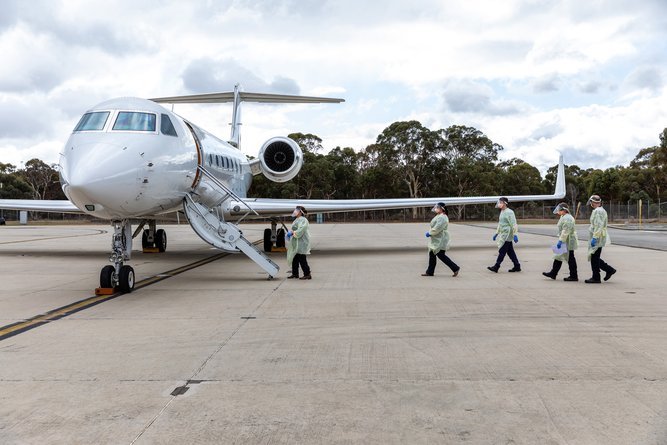
Four Australian citizens, one permanent resident and one New Zealander will isolate for at least 42 days in the Bullsbrook quarantine centre, and will only be retested if they develop symptoms.
“(The Bullsbrook group) didn’t land at the airport, they went to the Air Force base, which is very near the biosecurity facility. There wasn’t any contact with the population, and those who have contact will be in full PPE gear,” Professor Dantas said.
“Most of the passengers are not showing any symptoms.”
Professor Dantas said this indicates that unlike COVID, the hantavirus had a low pandemic risk.
“The WHO recommends a quarantining of 42 days if you are infected, but they’re not infected,” she said.
“This has been ongoing since April, so it’s already five weeks in — if there were other positive cases of the virus coming up, they should come up this week.
“(Australia) has very good prevention, biosecurity and surveillance measures in place. The two tests that are done, the PCR testing and the serology testing, we have undertaken throughout Australia, so we are really on top of things.”
The hantavirus is not a common virus, and is typically carried by infected rats through saliva and faeces.
Eleven of the 170 passengers on the affected cruise ship contracted the Andes virus strain after allegedly going birdwatching in Argentina, when they were exposed to infected rodents. Three deaths were reported on the ship.
Symptoms can include feeling unwell, fever, general pain and possible breathing difficulties. The mortality rate is low, as deaths only occur in extreme cases when the lungs or kidney get infected.
The incubation period is typically between four to six weeks, with the World Health Organisation recommending an isolation period of 42 days for those who test positive.
Professor Dantas said the virus hadn’t necessarily transferred between humans on the ship.
“It didn’t spread to all, although they were in close contact with each other on the cruise,” she said.
“It’s important to monitor all 170 passengers and where they’ve gone, because some of them have travelled back to their home countries before they knew of the outbreak. We need to see if anyone else develops the symptoms.
“As of now, it’s only 11 people, but we are not sure (if the virus is passing between people yet).”

Professor Dantas said the situation was very different to COVID.
“It occurs when there’s exposure to environments that are contaminated by infected rodents, and like all viral infections, it can spread. But it’s very rare to spread from human to human, unlike COVID,” she said.
“In the (COVID) pandemic, the virus not only spread at an unprecedented rate, but it also mutated. We had the really brutal delta strain, then we had the omicron – it was mutating really fast.”
Professor Dantas said managing global landfills was important to reduce the risk of future outbreaks.
“In many countries, you don’t have these mass rodent outbreaks, so we really need to monitor that situation and our landfill management,” she said.


