
Source : INDIA TODAY NEWS
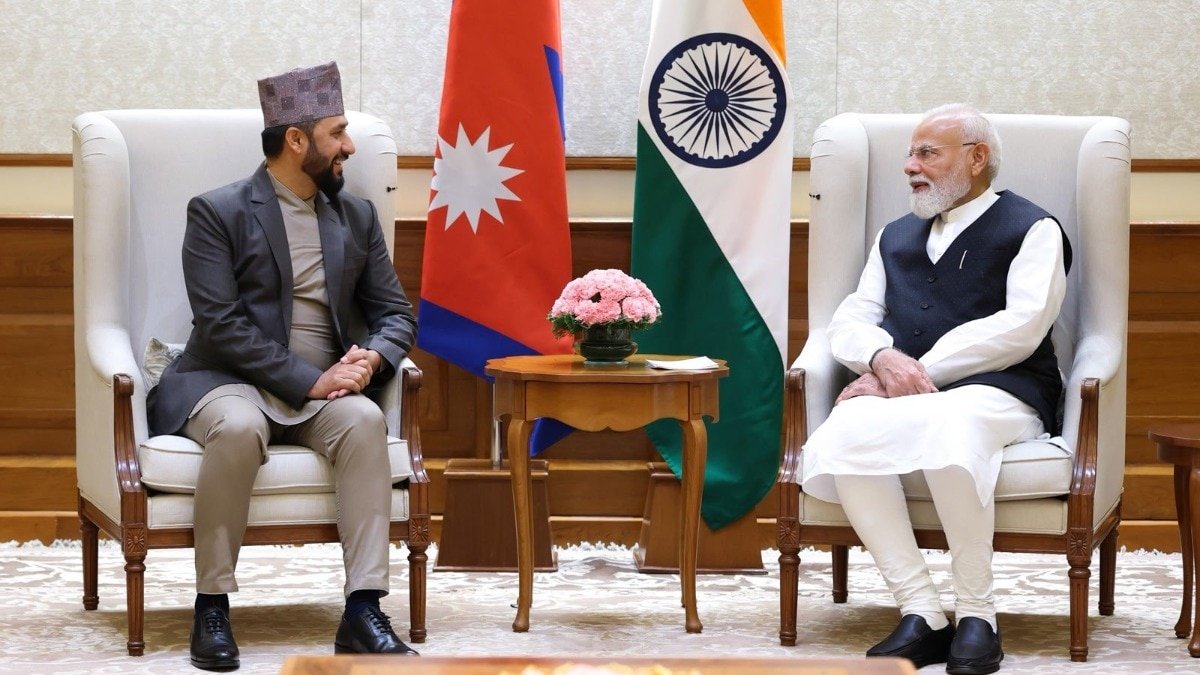
Prime Minister Narendra Modi on Wednesday met Rabi Lamichhane, the chairman of Nepal’s ruling Rashtriya Swatantra Party (RSP), and described Nepal as a “priority partner” under India’s Neighbourhood First policy. The meeting is a significant outreach effort amid recent strain in ties between the two neighbours.
The meeting also assumes importance as India-Nepal relations have faced turbulence in recent months over the long-running Kalapani-Lipulekh-Limpiyadhura territorial dispute and remarks by Nepal Prime Minister Balen Shah on border encroachments. The friction resurfaced after Nepal objected to India using the Lipulekh route for the Kailash Mansarovar Yatra, claiming that the area falls within its territory. India has rejected the claim, maintaining that Nepal’s position is not supported by historical facts and evidence.
advertisement
Against this backdrop, Lamichhane’s visit is being viewed as an attempt to reopen political channels between the two sides and stabilise ties under Nepal’s new leadership.
“Delighted to meet the Chairman of the Rashtriya Swatantra Party of Nepal, Mr Rabi Lamichhane. I welcome and fully share his desire to work closely together for a shared and prosperous future. Nepal is a priority partner under our Neighbourhood First policy and we look forward to collaborating with the new government to elevate the special and multifaceted relationship between our two countries to greater heights,” PM Modi wrote on X.
Lamichhane, a former journalist, described the interaction as a productive hour-long conversation and said he shared PM Modi’s vision of taking bilateral ties into a new phase driven by development and connectivity.
“I share your vision for a future where Nepal and India transcend past constraints to embrace a new era of development diplomacy. By focusing on shared civilisational bonds, digital corridors and seamless connectivity, we can truly build a partnership defined by progress and mutual trust,” he tweeted.
RSP DELEGATION IN INDIA, MEETS BJP CHIEF
Lamichhane’s meeting with PM Modi came after an RSP delegation arrived in Delhi on Monday following an invitation from BJP president Nitin Nabin. On Tuesday, Lamichhane was accorded a warm welcome at the BJP headquarters, where he met Nabin and other senior party leaders. The visit marked the first formal interaction between the BJP and the RSP since the Nepalese party came to power in March after a Gen Z movement brought down the government led by pro-China leader KP Sharma Oli.
Officially, Lamichhane’s India visit is part of the BJP’s ‘Know BJP’ initiative aimed at fostering party-to-party engagement. However, its strategic significance has drawn attention as it comes at a time when communication between the ruling establishments in New Delhi and Kathmandu has been limited after Balen Shah came to power.
The BJP is expected to view the engagement as an opportunity to establish a regular political channel with Nepal’s ruling party, particularly as Balen Shah has largely stayed away from direct engagement with foreign delegations.
Despite periodic tensions, Nepal remains deeply interconnected with India through trade, infrastructure, energy cooperation and people-to-people ties. The two countries share an open border stretching nearly 1,800 kilometres, making stable relations crucial for both sides.
The recent strain in ties has centred on the disputed Kalapani, Lipulekh Pass and Limpiyadhura region. While Balen Shah had earlier adopted a firm nationalist position on territorial issues, he recently acknowledged in Nepal’s Parliament that border encroachments were not a one-sided issue, saying both India and Nepal had “encroached” upon each other’s land in certain areas. The remarks marked a departure from his earlier stance and sparked a huge debate within Nepal, with many asking him to quit.
Against this backdrop, Lamichhane’s visit and his meeting with PM Modi are being seen as a signal from both sides that, despite political differences and unresolved disputes, there remains a willingness to preserve the broader strategic partnership and keep channels of dialogue open.
– Ends
SOURCE :- TIMES OF INDIA