
Source : the age
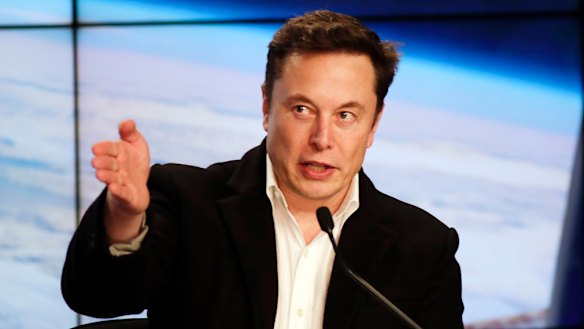
Elon Musk’s SpaceX is planning to raise up to $US75 billion ($105.2 billion) when it goes public this month, setting the stage for the largest-ever sharemarket debut and putting Elon Musk on course to becoming the world’s first trillionaire.
The company, formally known as Space Exploration Technologies Corp., said it will sell 555.6 million shares at $US135 a piece. The offering would give SpaceX a market value of $US1.77 trillion. Only six companies in the S&P 500 are currently worth more, with Nvidia top at $US5.2 trillion.
Musk isn’t selling any of his shares in the offering, and he would have 82.4 per cent of the voting power in SpaceX.
The government’s tax reforms handed down in last month’s budget have passed the House of Representatives unamended.
The package combines into one bill the $250 income tax offset and $1000 instant deduction for workers, as well as curbs on negative gearing and capital gains tax concessions.
Labor has a 94-seat majority in the House, so passing the legislation was not a difficult task.
It will now progress to the Senate, where Labor is in minority and reliant on either the Coalition or the Greens to pass legislation.
The government wants its major budget bills passed by the end of the month, but the Coalition, Greens and crossbench are negotiating to force longer inquiries that will scrutinise the government’s changes to tax and the NDIS.
You can read more about the delays the legislation may face in the Senate here.
Some complex horse-trading over Labor’s agenda is under way between senators in parliament today.
The Coalition, Greens and crossbench are all negotiating to force longer inquiries that will scrutinise the government’s tax changes and NDIS reforms.
This threatens to throw off Labor’s plans to push its major budget bills through parliament by the end of June.
The government is hoping to pass its budget tax package through the House of Representatives later today. This combines into one bill the $250 income tax offset and $1000 instant deduction for workers, as well as curbs on negative gearing and capital gains tax concessions.
Almost one in 10 Australians say they or a family member have been unable to reach Triple Zero from a mobile phone during a network outage in the past year, new research from peak consumer body ACCAN has found.
Eight per cent of Australians reported the experience, in findings that land in the shadow of Optus’s fatal Triple Zero outage last September when a botched firewall upgrade left customers across four states and territories unable to make emergency calls for about 14 hours.
The failure was linked to several deaths and prompted a Senate inquiry and an independent review.
The research also found overwhelming public support for strong minimum standards for emergency calling reliability.
Australia has just imported a record dollar amount of oil while managing to export a record amount of gold.
Just hours after Treasury secretary Jenny Wilkinson warned there is a real risk that oil prices will soon start climbing again, new figures showed the impact of oil on the nation’s trade balance.
The Australian Bureau of Statistics reported that in April, the country imported $8.2 billion worth of crude. It was a 64 per cent increase on March and 134 per cent up on April last year.
It was the single most expensive month for oil imports and well above the previous record, of $5.9 billion, that was recorded in the early stages of Russia’s war against Ukraine.
Foreign Minister Penny Wong has criticised the Trump administration’s proposed 12.5 per cent tariff on Australia for failing to take enough action on slavery.
“Australia continues to assert our view that we are not supportive of tariffs, and we continue to value open trade that has benefited both Australia and the United States,” Wong told Senate estimates hearings.
“It is the government’s position that we do not believe there is a basis for these additional trade measures, and that is what we will continue to robustly put.”
The US Trade Representative proposed tariffs of between 10 and 12.5 per cent on dozens of countries on Wednesday after an investigation into forced labour.
Greens senator David Shoebridge said this morning it was “about time” road laws were reformed to account for drivers with medicinal cannabis prescriptions, following a major change that will see NSW introduce a medical defence model.
Drivers with lawful cannabis prescriptions will be offered a medical defence and subjected to a three-strike impairment test under the new laws.
“I mean, about bloody time. People have been getting prescription cannabis, just like they get other prescription drugs. And now, and the law, as it currently stands, is if you have the tiniest amount of prescription cannabis in your system, not impairing your driving, just the tiniest amount, you might have had some prescription cannabis the day before, or two days before, you lose your licence,” Shoebridge told Sky News.
“Now, I can’t believe that getting these reforms has taken years. I’ve been campaigning for this, my party, the Greens, have been campaigning for this for years and years. This is like a tiny little commonsense reform, no doubt.”
Under the scheme, people with a valid cannabis prescription will register with Transport for NSW. The defence will only apply to unrestricted licences. Learners, provisional and commercial drivers will be excluded.
Treasury secretary Jenny Wilkinson said the government’s tax changes will encourage people to invest in more productive parts of the economy.
Pressed by Nationals’ leader Matt Canavan on the reforms and their impact on productivity, Wilkinson said her department’s view was that they would change financial incentives across the economy.
Wilkinson noted that apart from the areas which have attracted the most attention, such as capital gains and trusts, the budget also contained reforms in areas such as research and development and loss carry-back that would assist the business sector.
She said in total, the changes would improve productivity.
Nationals leader Matt Canavan has called on the Albanese government to oppose US President Donald Trump’s new tariffs, just months after calling for a similar regime of taxes on imports to Australia.
Trump has proposed new 12.5 per cent tariff on Australia and other countries for allegedly failing to take action to prevent slavery.
Canavan said today that the new tariffs would be a breach of the spirit of the US-Australia Free Trade Agreement.
“I hope the Australian government pushes back on this decision,” he said.