

Source : ABC NEWS
Over the last few years Formula 1 has evolved from a niche fanbase into surging viewership in the Philippines, driven by Netflix’s docuseries Drive to Survive.
But in the middle of this male-dominated industry the Philippine motorsport scene is seeing a major shift: women are moving from being spectators to pursuing seats as drivers or jobs as engineers or mechanics.
In the early 2000s, Filipina drivers like Michele Bumgarner and Gaby Dela Merced made names for themselves locally, while more recently, Bianca Bustamante has turned heads by making it to the F1 Academy and being the first female member of the McLaren Racing Driver Development Programme.
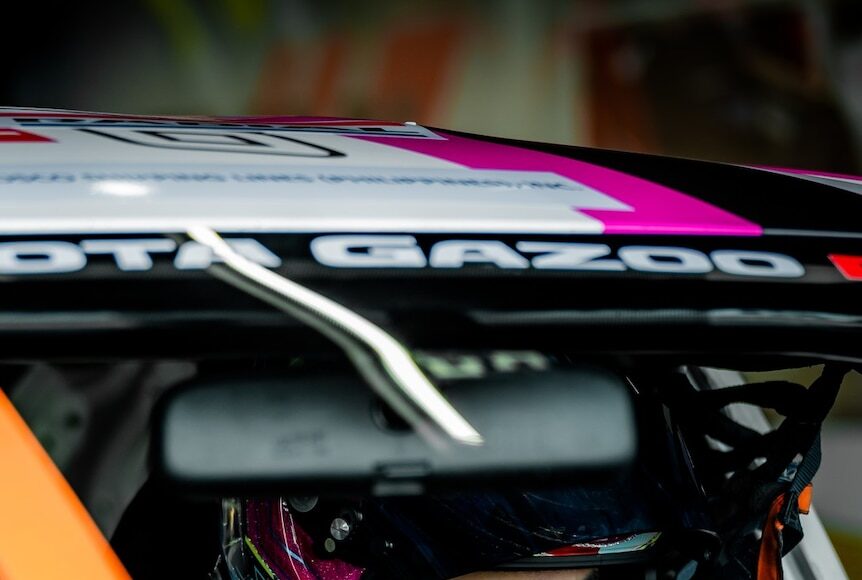
All three have inspired more women to pursue careers in motorsport, including Angie Mead King, who has blazed a trail for the participation of trans women in the industry, and driver Julia de los Angeles, a household name competing in the Toyota Gazoo Racing (TGR) Philippine Cup.
Women feel pressure to perform

de los Angeles has learnt to embrace the pressure that comes with motor sport. (Supplied: Dennis Barrion)
De los Angeles started competing at the age of 16 and is one of only four women on the grid of TGR Philippine Cup.
“Usually I’m the only girl on my grid,” she said.
“There are only four girls in the entire series. We’re all in different classes, [and] each class is represented by a female. We share the same experience [that] it’s really hard for us sometimes.”
She argues that, contrary to common perception, the playing field is not equal in motorsport.
“It’s different being a woman in motorsport because, for the men, it seems so natural for them,” she said.
“It feels like that’s what they’re made to do. As for me, I think that I have to put in more effort. I have to really take the time to learn things that aren’t so hard for them.”
de los Angeles channels her energy into what she can control. (Supplied: Dennis Barrion)
De los Angeles recalls one race day when she felt like a target because she was leading the points.
“There was some banter with the other racers [like], ‘Oh, are you going to lose to a girl? You’re going to get beaten by a girl?'”
she said.
“I don’t want to think that that was really their intention. Maybe it was just a joke. But then, the fact that statement alone was said [made me feel maybe it was about my gender].
“In the grid, there’s this vibe of ‘yes, I’m supportive of you, but at the same time I don’t want to be beaten by you’.
“I think that’s something that’s hard to change. Especially since there are so little women in the sport.”
Despite feeling the gender differences in the grid, De los Angeles embraces the pressure and shifts her mindset to doing what is within her control.
de los Angeles wants more support for women and girls in motor sport. (Supplied: Dennis Barrion)
“Ever since I started noticing the reality that there really is a [gender] difference I wanted to push myself more,” she said.
“I’m not just a girl here in motorsport. I want to win also. It doesn’t mean that it’s impossible, it’s just a little bit hard.
“I’m willing to put in the work to get to where I want to be. If you know in yourself that you can do something then subconsciously that’s where your actions will lead you.
“It’s hard to push for something if you, yourself, don’t think you can do it.”
Angie Mead King redefining racing binary
King was worried the industry wouldn’t accept her, after coming out as a trans woman in 2016. (Supplied: Mazda Philippines)
While De los Angeles has faced barriers because of her gender, King has a unique perspective having come out as a trans woman in 2016.
Despite being an icon in the Philippine automotive and motor sports industry, King almost thought of giving up her motorsport career when she transitioned, worried that the industry would not accept her.
“I didn’t think that the acceptance would be high, that I could be true to myself and still remain in the automotive industry. So I was ready to give it up, literally,” she said.
King credits another trans woman with inspiring her bravery to stay in the industry.
“There’s this trans woman from the UK named Charlie Martin who I saw was openly transgender and racing in the motorsport community,” she said.
Loading Instagram content
“I reached out to her, asked her for her experience, and then I found courage in what she was doing.”
That courage took her to places. Aside from racing for Mazda, King was also able to work behind the scenes.
From designing parts and building components to fixing engines, she is involved in every step of the racing car process.
King is just as proud of being a mechanic as she is a driver.
“Just having one description is such a narrow scope of what I do for the Philippine automotive industry,” she said.
King believes it was her skills, regardless of gender, that ensured her success in the industry.
“It is possible to be different, be female, be feminine, and still succeed and excel in this industry,”
King said.
Fuelling girls and women’s participation in motorsport
Despite both women’s efforts to etch their names in Philippine motorsport they agree that more could be done to support girls and women to pursue the sport.
De los Angeles says that the expensive nature of the sport is holding back some girls and women.
“It’s hard if you don’t have sponsors to back you up,” she said.
“It gets financially draining sometimes because you can’t really earn from the sport, at least here in the Philippines.”
Nonetheless, De los Angeles believes the increasing popularity of F1 has given women greater confidence as drivers.
De los Angeles wants to see more Filipina women competing in motor sports.
(Supplied: Dennis Barrion)
“It’s nice to see how [Formula 1] evolved from something that people didn’t know of to now it being such a huge thing,” De los Angeles said.
“It feels like suddenly I’m seen.”
King, however, argues motorsport is still lagging behind other sports when it comes to women’s participation.
She compares motorsport to basketball, with the women’s national team recently experiencing an increase in popularity due to their historic silver-medal finish in the FIBA 3X3 Asia Cup last April.
“Compared to basketball we’re an outlier,” King said.
“There’s interest, but it’s not mainstream.”
King has become an influential figure on breaking down barriers in male dominated industries. (Supplied: Mega Asia)
Both King and De los Angeles hope to see the emergence of more Filipina women pursuing motorsport, with De los Angeles arguing that it is important younger girls have people like her and King to look up to.
“If the young girls see [us] pushing these boundaries, then what’s there to say that they can’t do it?” she said.
King and De los Angeles said that having the support of other women in the community was critical to their success.
“Because it’s a small group where almost everyone knows everyone, support within the community feels like we’re one big family,” De los Angeles said.
“That’s something I love about it.
“Having a support community guarantees that you’ll come back. Finding a community to reach out to, to go with always, is a huge, huge help,” King adds.
As the Formula 1 craze grows, these women are showing up and proving that women are not only watching races, but winning them.
Jaslyn Dela Cuesta is a digital and broadcast storyteller who strives to amplify the presence and impact of women in sport.
She is a member of ABC International Development’s Women in News and Sport Initiative, funded by the Australian Department of Foreign Affairs and Trade through the Team Up program.