
Source : Perth Now news
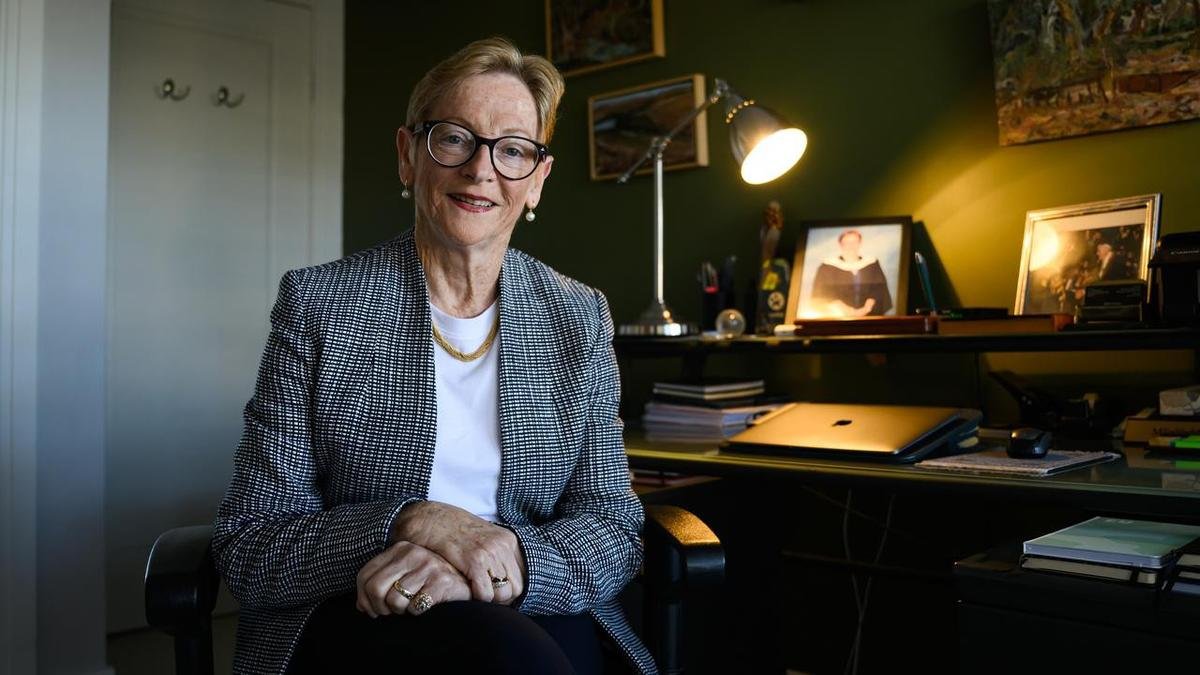
Growing up in a family of five girls and one boy, Helen Conway saw no differentiation between the expectations set for herself and her siblings to get an education and be financially independent.
“I thought the world was pretty equal until I got into the workplace and I found out that, actually, it wasn’t very equal at all,” she told AAP.
The former head of the Workplace Gender Equality Agency is reflecting on her career as she is appointed an Officer of the Order of Australia in the King’s Birthday Honours.
Ms Conway is receiving the award for her service to business and legal governance, youth social welfare, gender equity and the not-for-profit sector.
Her experience advocating for workplace gender equity started when she landed her first job following law school and quickly realised her male colleague was earning much more than her.
“I went to the managing partner and said I wanted to understand why, if we were both articled clerks, that the male articled clerk was earning more than me,” she said.
“I didn’t speak aggressively to him or be very combative, I just asked if he could please explain to me why this is so.”
Her manager agreed to match her pay and Ms Conway realised the importance of advocating for yourself, something she continued to do throughout her career.
“You’ve got to maintain the rage a bit (because) if you’re doing the same work, if you’re contributing in the same way, then you should be paid the same way and be treated with respect,” she said.
It was somewhat of a full-circle moment when Ms Conway was headhunted to lead the Workplace Gender Equality Agency, established by the Gillard government to improve workplace gender equality.
Ms Conway describes the role as a “tough gig”, particularly following the election of the coalition government led by Tony Abbott in 2013.
One of her greatest career achievements was ensuring the agency survived and was effective, despite hostility to its work.
“There were very strong advocates seeking to have the agency disbanded or neutered so that reporting would have been ineffective,” she said.
“The fight to keep the agency alive was probably the biggest achievement, rather than just setting it up.”
In addition to her gender equity advocacy, Ms Conway feels the most proud of her work in the not-for-profit sector.
She now chairs four not-for-profit organisations alongside her role as president of Chief Executive Women, which aims to address the under-representation of women in leadership.
“The not-for-profit sector makes an enormous contribution to the economic and social fabric of our society and it’s really important that we do what we can to increase its capability,” she said.
“The people in that sector work so hard, often in very resource-constrained circumstances, so if I can make some contribution there, I think that’s the very least I can do as I finish up my career.”