

Source : BUSINESS NEWS
PLS is preparing to bring its mid-stream demonstration plant online at its flagship Pilgangoora mine site, aiming to prove up lithium phosphate production from a project conceived during the depths of a market downturn.
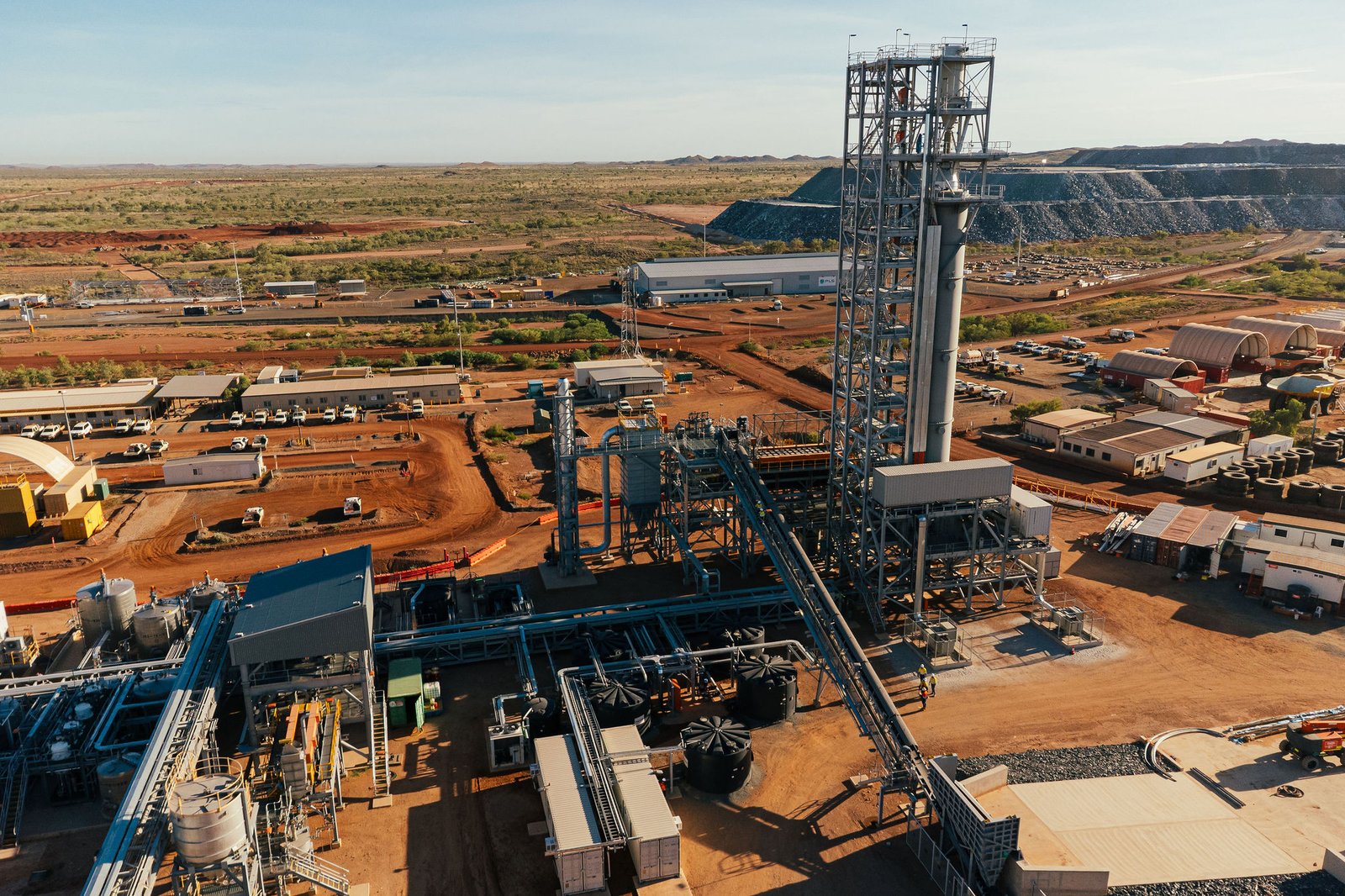
The Pilbara lithium miner on Friday officially opened its $104 million mid-stream demonstration plant to produce an intermediate lithium product on home-soil, before export.
Premier Roger Cook and Mines Minister David Michael flew in for the occasion, which marks a step forward in WA’s onshore critical minerals processing ambitions following a stuttering start to the state’s downstream hopes, headlined by Albemarle’s Kemerton refinery closure.
Currently in the commissioning phase, PLS’ mid-stream processing plant aims to prove up the production of the lithium phosphate from spodumene using electric calcination technology developed by Calix Limited.
That technology has been billed as being able to decarbonise one of the most carbon-intensive processes in the battery materials supply chain.
PLS says the plant marks the world’s first commercial-scale application of the technology in primary lithium processing and it now hopes to further deploy and sell the technology to fellow miners.
But its hasn’t been a straight road to commissioning.
PLS and former joint venture partner Calix – before the plant’s ownership was consolidated – made the call to halt construction on the plant due to the lithium price collapse in late 2024.
At the time, PLS told the market the project would remain on ice until market conditions improved or further government support was secured. Three months later, the premier announced PLS had been awarded a $15 million grant to support the future of the project.
And the following month, PLS and Calix announced they were restarting construction following the state government’s grant.
“Projects like this are never straight forward,” Mr Henderson said speaking at the Pilganoora mine site on Friday.
“There were times when market conditions forced us to pause, and there were times when the easier option would have been to walk away, but we didn’t, the team didn’t.
“[That’s because] we believed in the potential opportunity this technology could unlock, and how it serves our mission to enable the energy transition.”
The mid-stream processing plant at the Pilgangoora mine site in the Pilbara. Photo: PLS
With first production tipped for the September quarter, PLS is aiming to produce 3,000 tonnes of lithium phosphate from 27,000t of spodumene from the Pilgangoora operation, which currently produces some 1 million tonnes per annum of spodumene.
Lithium phosphate is an intermediate product refined from spodumene concentrate and is a key ingredient used in the manufacturing of lithium-ion batteries in electric vehicles and energy storage systems.
Producing the mid-stream product on-site enables PLS to capture more of the lithium resource locally, rather than exporting the entirety of its Pilgangoora product.
Mr Henderson said the mid-stream project was born from the depths of the 2020 lithium downturn.
“We said to the team, ‘How can we save money and how can we set ourselves up?’, so we survive these down cycles in what is such a volatile market for lithium,” he said.
Mr Cook said the mid-stream demonstration plant was a big step for processing in the Pilbara.
“It will allow local businesses to capture more value from materials mined here in WA, creating more jobs and keeping investment here in the Pilbara,” he said speaking on-site.
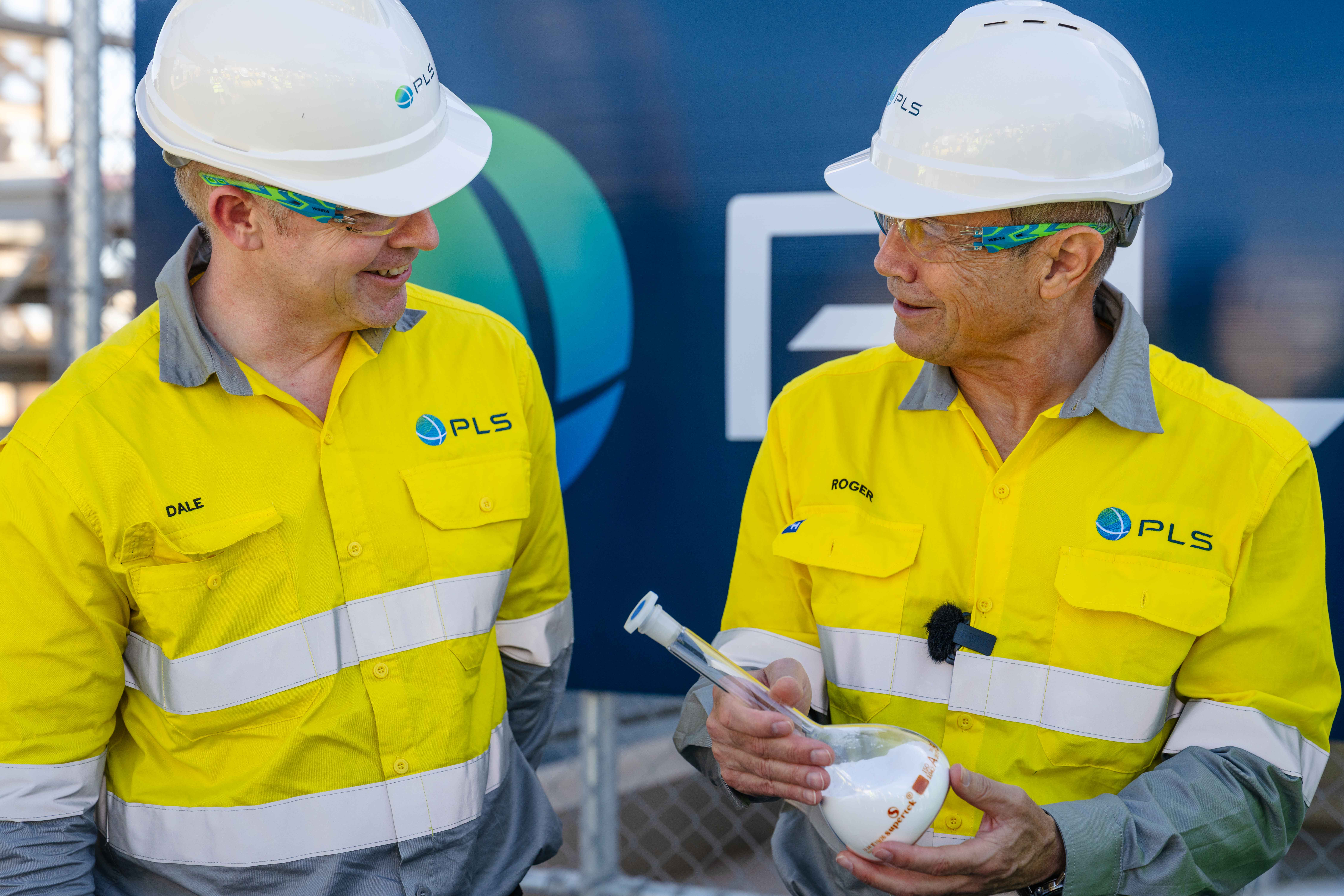 PLS managing director Dale Henderson and Premier Roger Cook at the Pilgangoora site. Photo: PLS
The project is backed by both the state and federal government funds, amid a unified onshore critical minerals processing ambition.
The federal government, through the Australian Renewable Energy Agency, granted $38.1 million to the project to support operating costs during the validation phase.
The mid-stream plant’s progression marks a step-forward in lithium processing in WA, after Albemarle Corporation’s Kemerton closure represented a major setback.
The US major moved its downstream processing operation on to care and maintenance, citing challenges facing Western lithium operations and the cost gap between operating in Australia and China for the decision, which cost 250 local jobs.
Meanwhile, IGO and Tianqi Lithium are still grappling with ramping up their plant in Kwinana, while all eyes are on Wesfarmers and SQM’s Covalent Lithium as it ramps up its Kwinana refinery to produce lithium hydroxide.
A strengthening spodumene price over the course of this year has spurred PLS and fellow lithium miner Mineral Resources to restart their mothballed assets as the price sit above $US2,000t.
But that price point is still a far cry from the $US6,000/t peak in 2023 which helped build PLS’ cash coffers – now at $1.5 billion – which then buffered the subsequent downturn.
For the PLS board to greenlight any further development of the mid-stream plant, it would need to see technology performance, product market development and prevailing market conditions for the mid-stream product, the market has been told.
It has shaken hands on an offtake deal with Chinese lithium-ion battery cathode materials suppler Ningbo Ronbay New Energy Technology Co, which PLS says gives it exposure to that market.


