

Source : the age
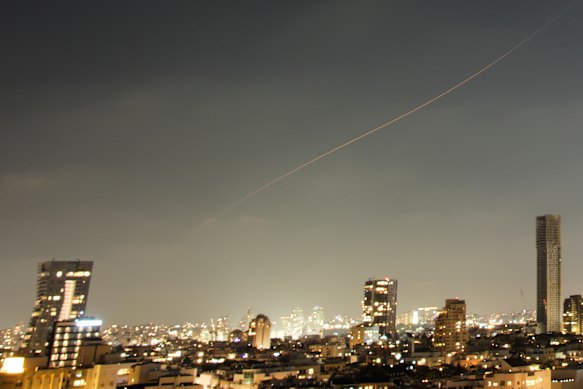
Beirut/Dubai/Jerusalem: Israel and Iran traded fire early Monday in their first attacks since the US struck a ceasefire with Tehran two months ago. Hours later, Iran’s military said that it would stop offensive operations.
The renewed hostilities threatened to drag the Middle East back into a full-scale war as officials continue efforts to turn an April ceasefire into a deal to permanently end the conflict.
During the truce, Iran has maintained its stranglehold on the Strait of Hormuz – a crucial passage for the world’s oil and natural gas whose closure was the primary reason global fuel prices skyrocketed. Israel has continued to strike Hezbollah, Iran’s ally in Lebanon, and pushed deeper into that country. And on Monday, Yemen’s Houthi rebels, another Iranian ally, fired at Israel and warned they would target Israel-affiliated ships in the Red Sea.
With little apparent progress in peace talks, Israel and Iran exchanging fire, and the Houthis joining the fight, the risk of the war fully erupting again appeared higher than at any point since the ceasefire.
In the wake of the new attacks, US President Donald Trump wrote online: “Israel and Iran must immediately stop ‘shooting.’”
Shortly after, the Iranian military’s joint command issued its statement. It said that if Israel or its supporters carried out any further “aggression and hostile acts,” including in southern Lebanon, then “much more severe and crushing measures than before will follow.”
Iran’s paramilitary Revolutionary Guard said it had targeted two military bases in Israel, describing the attack as being part of Operation Nasr, or “Victory”. The Guard said it launched the missiles after Israel targeted radar sites in three areas of Iran.
Tehran had warned of retaliation on Sunday after Israel struck Beirut’s southern suburbs without warning in defiance of Washington’s request days ago to stand down.
Iran said Israel’s actions in Lebanon, whether carried out with US knowledge and consent or not, were aimed at sabotaging diplomacy and warned that the US would be responsible for any escalation.
“No one believes that the Israeli regime would take any action without co-ordination with the United States,” Iranian Foreign Ministry spokesman Esmail Baghaei said during a briefing with journalists in Tehran. “The United States bears responsibility for the Israeli regime’s aggression, and it will also be responsible for the consequences of any escalation in tensions.”
Monday marked the 100th day of the Iran war, launched on February 28 when Israel and the United States killed Supreme Leader Ayatollah Ali Khamenei and other senior Iranian leaders.
The war raged until reaching a nominal ceasefire on April 8, but a permanent end to the hostilities has been challenged by Iran’s chokehold on the Strait of Hormuz, through which a fifth of all traded oil and natural gas passed in peacetime.
With global energy supplies threatened, Iran still holding a vast stockpile of highly enriched uranium and even Yemen’s Houthi rebels apparently getting involved in the fighting on Monday, the risk of the war fully erupting again appears to be rising.
Iranian state television reported the sound of explosions being heard in Isfahan, Karaj, Tabriz and Tehran, without elaborating. A witness in Tehran described hearing at least one large blast somewhere to the west of the country’s capital. Iran closed the airspace around Tehran’s Imam Khomeini International Airport, the country’s main airfield, after the Israeli attack.
Officials offered no details on what had been struck, nor any information on damage. Iran’s paramilitary Revolutionary Guard said that Israel used air-launched ballistic missiles in its attack on Monday morning, without elaborating.
The semiofficial Fars and Mehr news agencies said Israeli strikes had hit a petrochemical factory in the city of Mahshahr in Khuzestan province. It did not elaborate on damage. The Israeli military later confirmed the strike on the petrochemical plant.
Earlier on Monday, sirens sounded across Israel after its military said a missile launched from Yemen targeted the country, without elaborating. Israel’s rescue services said there were no reports of casualties nor impacts from the launch from Yemen.
Yemen is home to the Iranian-backed Houthi rebels. The Houthis have fired missiles at Israel during the Israel-Hamas war and later, but haven’t been fully involved in the Iran war. The Houthis did not immediately claim responsibility for the attack, though it can take them hours or even days to acknowledge their assaults.
In Saudi Arabia, missile alert sirens sounded on Monday morning in an area home to an air base that hosts US forces. Saudi state media reported the alert around its Al Kharj governorate, home to Prince Sultan Air Base. Saudi Arabia said shortly after that the missile danger in the area had passed, without elaborating.
The White House did not respond to messages about the Israeli strikes and whether they were done in co-ordination with the US.
A senior US official on Sunday said US President Donald Trump had called Israeli Prime Minister Benjamin Netanyahu to urge him not to retaliate immediately for the Iranian missile attack. The official, who spoke on condition of anonymity to describe a private phone call, said that Trump believed he had convinced Netanyahu to wait.
Trump “got Bibi to hold off for the time being”, the official said. The official would not offer any other details of the call, and there was no immediate comment from Netanyahu’s office.
Earlier, Trump told Axios he would press Netanyahu not to retaliate.
“Israel had its strike and Iran had its strike. We don’t need another one,” Trump said. “We are very close to a final deal with Iran. It is going to be a good deal. I don’t want it to blow up because of what is happening now,” he told Axios.
He also told a Fox News Channel reporter that he wanted the Iranians to stop firing missiles and return to the negotiating table. He also said that Israel’s strikes in Lebanon earlier on Sunday were not co-ordinated with the US and “I’m not happy about it.”
Speaking to The Financial Times before the Israeli strikes on Iran, Trump insisted he dictated terms to Netanyahu on how the war should be prosecuted.
“He won’t have any choice,” Trump told the newspaper in a telephone interview. “I call the shots. I call all the shots. He [Netanyahu] doesn’t call the shots.”
For days, negotiations between Iran and the United States over the fragile ceasefire in the war had been stalled by the fighting between Israel and the Lebanese Shiite militia Hezbollah. Israel now occupies southern Lebanon and has moved into areas of the country it hadn’t held in a quarter of a century – leading to fears about it further widening its campaign.
On Sunday, Israel launched airstrikes in Beirut’s southern suburbs. Iran retaliated with its own strike on Israel, which led to Monday morning’s attack by Israel on Iran.
Trump has leaned on Israel to stop its attacks in Lebanon to allow room for a peace deal with Iran, including rebuking Netanyahu with obscenities in a phone call last week. After that call, Netanyahu appeared to abandon plans to strike Beirut.
But Israel has never fully halted its Lebanon campaign. Hezbollah, which did not take part in the truce talks, has also continued its attacks and says it will not give up its weapons unless Israel halts its attacks and withdraws from Lebanon.
On Sunday night, Hezbollah claimed responsibility for firing at Israel earlier in the day.
Hezbollah wants direct talks between Lebanon and Israel to end, instead supporting Iran’s stance that an overall ceasefire deal between Tehran and Washington include the situation in Lebanon.
Mediation efforts on that larger deal continued on Sunday as Pakistan’s interior minister visited Iran to talk to officials, and Egypt said its foreign minister and his Qatari counterpart discussed “proposed elements” of a potential agreement, with no details.
Netanyahu said the Israeli strikes on Sunday on Beirut’s southern outskirts, a district known as the Dahiyeh that has long been a Hezbollah stronghold, were ordered in response to Hezbollah firing towards Israel.
More than 3500 people have been killed in Lebanon since the war began on March 2 when Hezbollah fired rockets at northern Israel, two days after Israel and the US began attacking Iran. More than 1 million people in Lebanon have been displaced. The fighting has killed at least 31 Israeli soldiers and three civilians.
AP, Reuters
Get a note directly from our foreign correspondents on what’s making headlines around the world. Sign up for our weekly What in the World newsletter.