

Source : Perth Now news
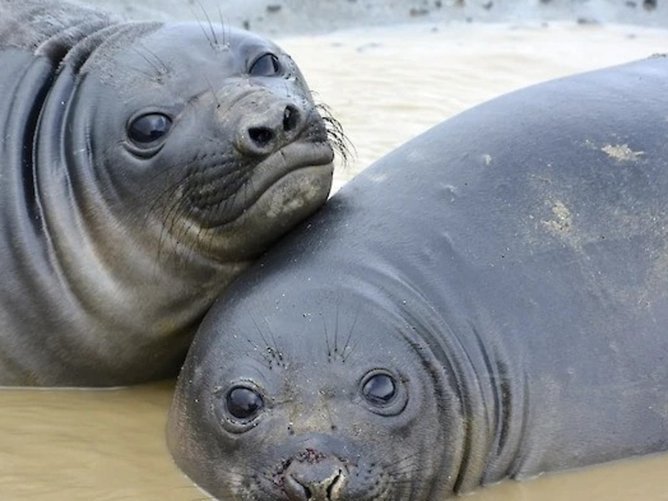
More than 13,000 baby seals have been wiped out by a deadly flu outbreak across two Australian islands, scientists have discovered.
Heard Island and McDonald Islands, both Aussie territories in remote sub-Antarctic locations, have been rocked by the H5 bird flu strain in recent months that has caused devastation among their seal population.
Scientists from the Australian Antarctic Program have been assessing the damage of the deadly outbreak, which has torn through the elephant seal populations.
And they estimate that a staggering 13,359 seal pups have succumbed to the disease.
With a total estimated population of 17,354, it means that almost 80 per cent of the numbers were wiped out.
Lead author of the report, Julie McInnes, said the results followed a similar pattern to other sub-Antarctic islands where elephant seals had been hit the hardest.
“These observations of H5 bird flu at Heard Island and McDonald Islands are the first detection in an Australian external territory and show the continued eastwards movement of the virus around the sub-Antarctic,” Dr McInnes said.

When researchers first visited the region in October, they were met with hundreds of dead pups on Heard Island.
However, after returning in January, they found an even bleaker picture, with thousands upon thousands having perished.
The researchers believe the virus first made its way to the islands in August last year and was likely spread by wildlife that arrived from Crozet Islands about 1700km away.
The study was carried out through a variety of methods, including examining the islands using drone footage, which helped to reveal the extent of the devastation.

And it found the outbreak was not only tearing through seal numbers but also king penguins.
Several hundred of the regally-named flightless birds were estimated to have been wiped out by the outbreak.
“Drones were essential to survey Heard Island’s coastline so we could accurately quantify mortality in breeding southern elephant seals,” said co-lead author Jarrod Hodgson.
“These drone studies detected king penguin carcasses dispersed through their dense breeding colonies, which could not have been observed on foot without causing significant disturbance.”
Across the two excursions, 120 done flights were carried out, covering more than 1600km.