

SOURCE :- THE AGE NEWS
Caracas: Back-to-back powerful earthquakes have struck Venezuela, causing buildings to collapse in the capital, Caracas.
There is no official information yet on deaths or injuries, but the US Geological Survey (USGS) said that “high casualties and extensive damage” were probable, and gave an estimated possible death toll of between 10,000 and 100,000.
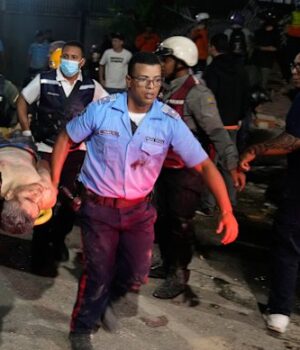
Local officials and witnesses reported collapsed buildings, rescues and a growing number of injured.
The first quake hit just after 6pm on Wednesday evening (Thursday AEST) with a magnitude of 7.1. The epicentre was west of the community of Morón, about 168 kilometres west of Caracas, and it had a depth of 13 kilometres.
Minutes later, the USGS reported an even larger, 7.5-magnitude earthquake. The second quake had a depth of 10 kilometres and its epicentre was 16 kilometres south-west of Morón.
The Venezuela quakes were followed almost immediately by a 6.9-magnitude quake in northern Japan, which rattled buildings in Tokyo.
The US Pacific Tsunami Warning Centre issued tsunami alerts for Puerto Rico and the Virgin Islands.
“Some buildings have been brought down [in Caracas], houses have collapsed,” Venezuelan Interior Minister Diosdado Cabello said on state television. He did not give any initial estimates of deaths or injuries and said protocols were being followed to gather more information.
Cabello said that states including Trujillo, Carabobo, Miranda, Aragua and La Guaira were also affected.
People evacuated swaying buildings in Caracas and remained outside, many visibly shocked as they saw entire walls that had collapsed, making furniture visible from the street.
Dust columns could also be seen in two districts of the capital, where restaurants and other businesses are typically busy.
According to the BBC, June 24 is a public holiday in Venezuela, meaning more people than usual may have been at home when the quakes struck.
Josefina Hernández, 48, an administrator from Valencia, west of Caracas, told the New York Times she heard a deafening noise before the electricity went out and everything inside her home started moving.
“You tried to run, and you couldn’t,” she said. “People were frantic, screaming – I mean, it was terrifying because people were just pouring out, saying, ‘What is this?’”
Cabello said the quake was felt in several states, adding that the Altamira district in Caracas had “alarming situations” with collapsed homes and buildings.
He urged people to remain outside as aftershocks could cause further damage and told motorists to clear roads for ambulances and other emergency vehicles.
“We understand that some people may be desperate, but we are acting according to protocols to activate aid and rescue efforts to help those who need it most,” Cabello said.
“Be very careful with children and the elderly; call each other and check that no one has been harmed.”
The USGS said many people in the affected area live in buildings made of unreinforced brick masonry and adobe block construction, which are vulnerable to earthquakes.
Some older residents said the quakes brought back memories of the massive 1967 earthquake that killed more than 200 people in Caracas.
There were no immediate reports of damage to Venezuela’s oil facilities, according to people familiar with the situation.
The country’s refining hub in Paraguana, 225 kilometres west of the epicentre, continued operations as usual. Work at the Port of Jose complex and at the Puerto La Cruz refinery was unaffected, one of the persons said.
The disaster will further strain the nation’s crisis-hit economy. The country is reeling from one of the world’s fastest inflation rates and rolling power outages.
President Nicolás Maduro was captured in a raid on Caracas by US forces in January, leaving the government in a state of transition.
AP, Bloomberg
Be the first to know when major news happens. Sign up for breaking news alerts on email or turn on notifications in the app.