

Source : Perth Now news
Calls are mounting for an inquest into the death of a baby girl who died at a regional WA hospital after a delayed medical flight allegedly prevented her from receiving specialist care.
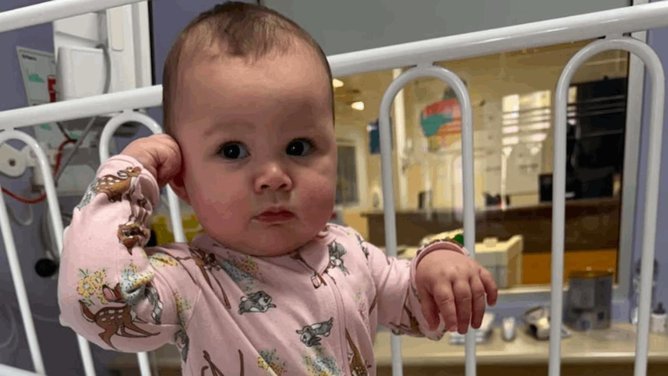
Willow Horne was eight months old when her parents rushed her to Kalgoorlie Health Campus after she started suffering respiratory issues in September last year.
She was treated for pneumonia and mild dehydration, but her condition deteriorated over two days and plans were made for the Royal Flying Doctor’s Service to fly Willow to the Perth Children’s Hospital, about 600km west of Kalgoorlie.
Willow’s flight was delayed when another patient was given priority, but the baby girl died before she could be transferred to Perth.
A clinical investigation found Willow most likely died from myocarditis, a heart condition, rather than the respiratory illness she initially received treatment for, although her cause of death is still unknown.
The review found the only realistic treatment available to her was at the Perth Children’s Hospital.
A number of recommendations from the review into her death have been implemented by WA Country Health Service.

Her parents Kaydence Sutherland and William Horne have requested an inquest into their daughter’s death.
Ms Sutherland told ABC Perth a clinical investigation gave her some clarity about what occurred at the hospital, because she was in a state of shock when it was happening around her.
“Having someone go through that report with me really helped me understand, it was quite emotional for me to read through all of that, you know, seeing in the report how many times things could have been different,” she said.
“I wish I could go back in time and advocate for those things to be different, but you know, I was in a situation where I didn’t know any better.”

Ms Sutherland said she believed what was reported in the review, but there was a chance if things had gone differently Willow could still be alive.
“We will never know, though, we never got to have the chance of getting her to Perth,” she said.
“There was treatments they could have tried that likely would have saved her life if she got there in time.
“I would hate to hear a story just like mine. I hope that these changes they want to make in the hospital really do make a change. I wouldn’t wish this on another family.
“It’s a horrible experience, and it’s, it’s not fair.”

Shadow Health Minister Libby Mettam said the latest revelations were deeply disturbing and that an inquest could independently examine what happened, hear evidence under oath and provide Willow’s family with answers they deserve.
“Kaydence and William have already been let down by the health system,” she said.
“They have endured the unimaginable loss of their child and, ever since, have been left waiting for answers instead of receiving the transparency, accountability and support they deserve.
“My thoughts remain with them, and I hope every possible support is being provided as they continue to navigate this heartbreaking ordeal.”

WA Country Health Service executive director of clinical excellence Helen Van Gessell said following the clinical review they believed Willow’s death was caused by an inflammation of the heart muscle usually related to a viral infection.
“While we know nothing can replace their loss, it was important that we undertook a thorough and detailed examination of what happened,” she said.
“It is very rare, difficult to diagnose, and unfortunately, when it causes heart failure, so failure of the heart muscle, it has a very high fatality rate, especially in young children, even in cases where the care is through specialist pediatric hospitals.
“Unfortunately, children with myocarditis sometimes die.
“That finding does not, of course, diminish our responsibility to examine every aspect of care, so we can strengthen our systems and processes, and support our hardworking healthcare staff to provide the very best care they can.”

Dr Van Gessell said they made multiple recommendations aimed at improving the way they deliver care following Willow’s death.
She said the recommendations related to additional staff training, standardising communication, streamlining ways to liaise with pediatric intensive care and improving patient transfers.
“It unfortunately may not have changed the tragic outcome for baby Willow, that doesn’t replace our need to look for continuous improvement and continuous learning,” she said.
Western Australia’s Attorney-General Tony Buti said he would support an inquest but would let the coroner decide.
“My thoughts are with Willow’s family, and all her loved ones, as they deal with this tragic loss,” he said.
“The coroner, independently, looks at all the evidence and I have confidence in that process.”
The Health Minister has been contacted for comment.