

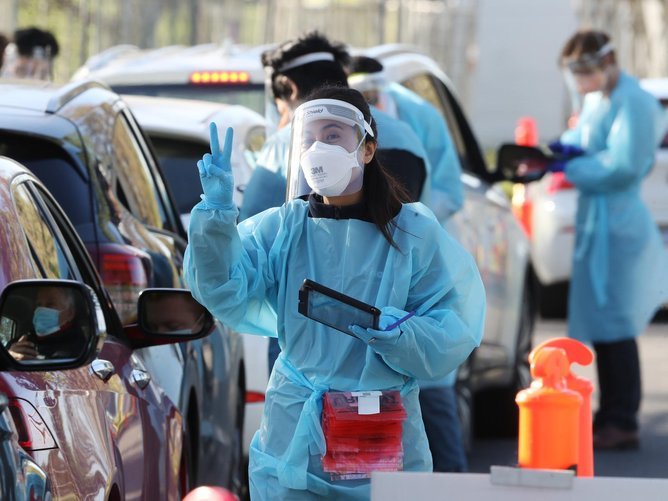
Source : Perth Now news
One of the scariest moments of Frances Rice’s decades working in healthcare was a martial artist withdrawing from drugs taking swings at nurses in the trauma ward.
He had a head injury, and after putting two black eyes on one of the nurses, he walked around the ward threatening to throw a chair he was carrying.
“Everyone felt scared. It was so difficult for everyone to be on the ward,” Ms Rice told NewsWire.
“I remember after the shift where he punched my colleague, it was a night shift and coming back on to days and him still being on the ward … the anxiety of leading the team on that shift, wondering what was gonna happen and how many staff I was gonna end up with or who would need to go to emergency because of the unknown explosiveness of this person. It’s so challenging.”
New national data released this month shows the number of healthcare workers hospitalised by assaults has increased by 157 per cent in a decade.
An assault is now the second most common reason a healthcare worker will end up in hospital compared with the seventh most common cause for the general public.
Assault-related hospitalisations among healthcare and social assistance workers stood at 49 in the 2015/16 year and have jumped to 126 in 2024/25, the latest Australian Institute of Health and Welfare data shows.
Slips, trips and falls are the most common cause of hospitalisation for healthcare workers (36 per cent of injuries), followed by assaults (15 per cent), and third is injuries from everyday or industrial objects such as machines, tools or knives (13 per cent).
Assaults were the fourth most common reason for a healthcare worker to be hospitalised a decade ago.
Broken down in detail, a worker tripping is the most common cause of serious injury, injury from overexertion or repetitive movements is second, assault by bodily force is third, slipping is fourth, and being hit, struck, twisted, bitten or scratched by another person is fifth.
Ms Rice is chief nursing officer at the Australian College of Nursing – an organisation that runs postgraduate and vocational courses.
Her run-in with the aggressive martial artist came in the early 2010s at a major Melbourne public hospital. She said at the time staff and managers often could not find the energy or time to report violent incidents.
“There wasn’t a strong culture of reporting on my ward, and I think that was detrimental in the end to the culture on that ward,” Ms Rice said.
The difficulty in pursuing criminal charges against a violent patient is often made harder when that person’s physical and mental state is truly taken into consideration.

Speaking about the man with martial arts training who assaulted a colleague, Ms Rice said even though he was too violent for the security guards to be able to restrain, the colleague never pressed charges.
“The head injury impacted his behaviour and so did his withdrawal from his marijuana use … was he of sound mind when this happened? No,” she said.
“He had a brain injury and he punched someone, so what are the outcomes of that? What are the ramifications? It’s really challenging.”
Pursuing criminal charges was a burden on the legal system, Ms Rice said, and more so on a health worker’s colleagues, as the worker involved needed to take time off to give statements.
“There are places that do it really well where they genuinely have zero tolerance and they have a good relationship with the police and the police attend and health staff charge people with assault,” Ms Rice said.
“But that is a significant burden on the legal system, on the hospital system for that nurse to then take time off.”
Illicit drugs and alcohol are common factors when healthcare workers are assaulted. More often than someone who’s drunk, high, or withdrawing getting aggressive is a patient in delirium because of an infection in their body, Ms Rice suspects.
“Delirium can significantly change people’s behaviour and it’s not only the elderly. It can happen to anyone, but it can cause a systemic effect and can dramatically change people’s behaviours and sometimes that includes violent outbursts,” she said.

The Australian Nursing and Midwifery Federation echoes the belief that general workforce shortages and pressures inhibit staff from reporting assaults to police.
“Nurses, midwives and personal care workers continue to be attacked, abused and intimidated in their workplaces,” federation federal secretary Annie Butler said.
“We also know that workplace violence and aggression is under-reported, so the true scale of the problem could be much worse.”
Every state and territory health department has de-escalation training and anti-violence campaigns in hospitals.
NSW Health is nearing the end of a two-year trial of security staff wearing bodycams at hospitals. The trial started at Royal North Shore in December 2024 and has been extended and expanded to 15 hospitals.
A department spokesperson told NewsWire that when it ends in November, the trial would be independently evaluated and fed into future decisions.
The South Australian health department said about 6 per cent of workers’ compensation claims last year were related to violence and harassment compared with 48 per cent for musculoskeletal injuries.
“SA Health takes a zero-tolerance approach to violence towards our staff, with significant work undertaken in security upgrades in metropolitan and regional hospitals as well as being incorporated into redevelopment works,” an SA Health spokesperson said.
“Key improvements include expanding and enhancing CCTV, increasing access controls and duress alarm systems, and installing security screens, security fencing, and additional external lighting.”
In Queensland, the health department has $8.7m earmarked over three years for more security and specialised de-escalation support staff.