Source : the age
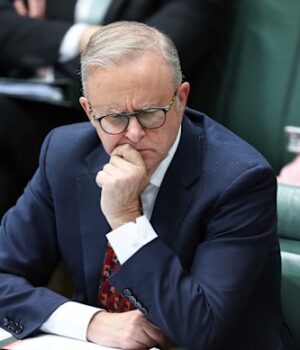
Prime Minister Anthony Albanese’s plan to force digital platforms could be killed in the Senate by the Greens and Coalition, casting doubt on a scheme condemned by the US as extortion despite changes made to satisfy tech giants’ demands.
Days after big Australian news outlets claimed Labor had weakened the news bargaining incentive, Greens senator Sarah Hanson-Young said she feared Labor was letting tech firms off the hook.
One of her chief concerns was a move to increase a levy on tech firms – designed to push Google, Microsoft and Meta to pay for news articles in their platforms – but restrict the charge to their revenue made from advertising. Previously, the law applied to their total revenue.
Nine, owner of this masthead, and News Corp have described this change as a gift to the big tech companies that protested against the draft policy.
“Why would the government want to reduce the baseline to deliver even less for Australian news?” Hanson-Young said. “Once we get the detail of the legislation, I’ll be kicking the tyres hard. I’m concerned the government is squibbing this opportunity.”
If the Greens and Coalition oppose the change, Labor will need to go back to the drawing board. Nine’s chief executive Matt Stanton urged a rethink on Tuesday in a sharply worded statement which said that Nine felt “deeply misled” by Labor’s last-minute change.
Coalition communications spokeswoman Sarah Henderson said media companies had warned the new code could mean fewer journalists, jeopardising political support for a policy that began as a bipartisan project under the Morrison government.
“The changes around the calculation of the penalty if tech giants refuse to play ball potentially excludes billions of dollars in revenue and weakens the incentive for digital platforms to strike fair commercial deals with Australian news outlet,” Henderson said.
“While we will consider the details of this scheme, Labor cannot claim to support Australian journalism while overseeing changes which media companies say will mean fewer journalists and less investment.”
Another change alarming media firms is one that caps at 16.7 per cent, rather than 25 per cent, the amount any one company can pay to a single firm out of its total liability. Larger media firms such as Nine argue privately that they contribute more than 16.7 per cent of a digital giant’s news content.
Companies such as News Corp and Nine now expect the total value of their deals with Google and Meta to be smaller than previously expected, though smaller media companies of the likes of SBS and Australian Community Media are believed to have lobbied for this change, having feared they may be left out of any deals at all.
The government’s view is that the amount of money that would flow to media firms will not be much less under the changes, and that any difference may be made up by the inclusion of LinkedIn and Tiktok.
The feud between media firms and the federal government demonstrates the difficulty of landing a deal for local media while managing the Trump administration’s concerns about punitive taxes on US firms.
Several sources in Labor said its change to how revenue would be collected, revealed on Monday, was driven partly by anxiety about the US response. The news levy has not attracted as much attention from US officials as Australia’s under-16 social media ban, according to government sources, but Albanese did hear concerns about the scheme on his trip to Washington last year.
Tech companies can offset the charge by striking individual, tax-deductible deals.
The Trump administration has strongly condemned digital services taxes – mostly in Europe.
“President Trump is committed to defending America’s leading technology sector from digital services taxes and other forms of foreign extortion,” the US State Department said on Wednesday. “The Trump administration will continue to address these issues with our trading partners.”
Mark Zuckerberg’s Meta, which owns Facebook and Instagram, and Google have so far declined to comment on the latest version of the policy. But their representatives in Washington signalled that the companies were prepared to fight it using the Trump administration.
The Computer & Communications Industry Association, which counts Meta and Google among its members, said the changes to the tax were “for the most part cosmetic” and “critically, do not alter the discriminatory nature of the proposal”.
“Targeting a select few foreign firms, mainly American, to fund Australian news businesses, remains a bad policy that is inconsistent with the Australia-US free trade agreement,” said the organisation’s vice president for digital trade, Jonathan McHale.
“Australia should abandon this misguided approach and if it chooses not to, US authorities should respond vigorously.”
The National Foreign Trade Council (NFTC), a US industry group with Meta, Google and Microsoft in its membership, said it was disappointed that Australia was sticking with the policy and that it now covered a broader spectrum of US companies.
Tiffany Smith, the group’s vice president for global trade, said the Trump administration was “committed to the fair treatment of American companies abroad”.
“We call on the Australian government to reconsider this measure, which adds to a broader deteriorating trend in the tax and investment climate in Australia,” she said.
Australia was also hit with a new 12.5 per cent tariff due to Canberra’s alleged failure to deal with imports produced with forced labour.
The jousting comes ahead of US visits by Albanese, who is expected to go to New York in September and attend the G20 in Miami in December, and Foreign Minister Penny Wong, who is due to attend a G20 meeting in Atlanta in October.
Albanese previously suggested he wouldn’t be swayed by pushback from the White House. “We’re a sovereign nation, and my government will make decisions based upon the Australian national interest,” he said in April. “We do that right across the board.”
Microsoft, which owns LinkedIn, said it shared the government’s objective of promoting a sustainable news ecosystem and appreciated the consultation.
Get a note directly from our foreign correspondents on what’s making headlines around the world. Sign up for our weekly What in the World newsletter.
 Paul Sakkal is Chief Political Correspondent. He previously covered Victorian politics and won a Walkley award and the 2025 Press Gallery Journalist of the Year. Contact him securely on Signal @paulsakkal.14.Connect via X or email.
 Michael Koziol is the North America correspondent for The Age and Sydney Morning Herald. He is a former Sydney editor, Sun-Herald deputy editor and a federal political reporter in Canberra.Connect via X or email.
 Calum Jaspan is a media writer for The Sydney Morning Herald and The Age, based in Melbourne. Reach him securely on Signal @calumjaspan.10Connect via X or email.