Source : the age
A few years ago, we had a small surge of films on a subject that was once thought too much of a downer to put on the screen: dementia. Julie Christie and Julianne Moore gently slipped into memory loss in Away from Her and Still Alice; Helen Mirren went on the road with a crumbling Donald Sutherland in The Leisure Seeker, followed by Colin Firth and Stanley Tucci in Supernova. And in one of the great films of this century, Anthony Hopkins lived through a whirl of confusion in Florian Zeller’s The Father.
A cynic might say that once ageing became a subject for the Boomer generation, it became a subject. That can’t be said, however, for the new spread of films that get behind the worsening statistics on mental health among the young. Adolescence is turbulent for every generation, but it’s worse now.
Bald figures tell their own gruesome story. Suicide is the leading cause of death among Australian youth; clinical depression among this age group doubled between 2011 and 2021. Experts point to factors ranging from the pandemic lockdowns to climate change anxiety. In 2021, The US surgeon general, described the situation in his country as “a youth mental health crisis”.
Of course, we don’t experience our lives as statistics. A spread of films at the Melbourne International Film Festival about young people grappling with a world that seems overwhelming – and at the same time, very often, far too small – get close to the individuals behind the soaring lines on the graph. The more we are invited into their lives, the less sense we have of their distress as a social phenomenon: each one is so palpably living out a unique drama.
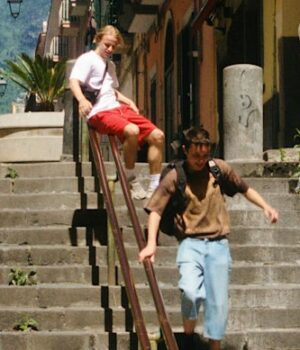
Marine Atlan’s La Gradiva, which won the top prize at the Cannes Film Festival’s Critics’ Week, is framed by a class trip to Pompeii, where the young French students grudgingly stand by while their teacher enthuses about mosaics and volcanoes. Their sex lives are their primary preoccupation, played out with the raw brutality of beginners. In some ways, they live in a kinder world than their parents did – nobody cares that class bad boy Tony is gay – but nobody notices how ravaged by abandonment and jealousy he is, either.
We might look at their agonised intrigues and think they will be forgotten in a year or two but, when you’re 15, a couple of years is an aeon. Atlan and her co-writer, Anne Brouillet, researched their story by going on a real school trip, listening carefully to conversations around them.
“I have the impression that they are already confused by post-COVID,” says Atlan. “I think that it has led to a sort of relationship where their bodies are far away; they seem a bit dirty.” Her impression is supported by numerous studies that suggest that many of the students who spent their last school years under lockdown still find social situations difficult.
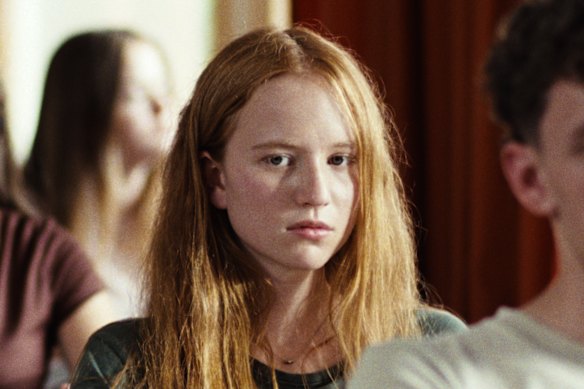
Also from France is Goodbye Cruel World, Felix de Givry’s romantic story of a bullied schoolboy who writes to everyone in his class before he jumps into the local river. Otto’s death should be counted as murder, he tells them; they are his killers. His melodramatic hyperbole is funny, of course, but de Givry’s achievement is to convey the very real torment underlying it.
Otto doesn’t drown, happily, but he can’t very well show up alive after such a grand farewell. Help comes from a girl from his school whose mother runs a cheap hotel. Lena finds him an empty room; locked inside, Otto gradually frees himself. Playful and sweet, the film also confronts the terrible desire to abandon life; Otto’s melancholy is so palpable that we understand intuitively, if not logically, how he got here.
In the excellent Canadian film Blue Heron, first shown last year at the Locarno Film Festival, Sophy Romvari’s focus is on the rippling effect of one boy’s volcanic “oppositional defiant disorder” – meaning disobedience, taken to the max – on the other children in a recently arrived immigrant family. The story, a fictionalising of the director’s own experience, is seen through the eyes of Jeremy’s half-sister Sasha, who watches and later will try to explain his rages, his threats to burn down the house, his reckless criminal sprees.
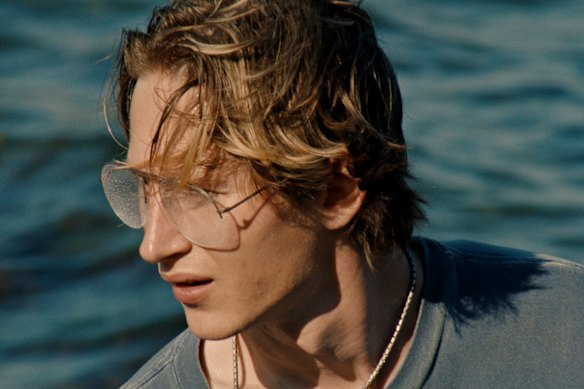
This is an apple-pie family, full of goodness. Why is this happening? You could blame it all on Jeremy’s being torn away from Hungary at a difficult age; you could blame the fact he’s the odd one out as the step-child. There are any number of pat answers, but his hostilities remain inexplicable. What remains for Sasha/Sophy is the dull thud of a blighted childhood; what kind of trauma Jeremy carries into adulthood can only be imagined.
Surely one of the best films at MIFF, Big Girls Don’t Cry by New Zealand filmmaker Paloma Schneideman – billed as a queer coming-of-age story, but much more layered and ambiguous than that sounds – centres on 14-year-old Sid, growing up in a beach town that comes alive for just a few weeks each summer. Sid just wants to hang with the cool kids; the humiliating choices and risky behaviours she pursues to that end will have any parent – and anyone who is or once was a teenage girl – watching through their fingers.
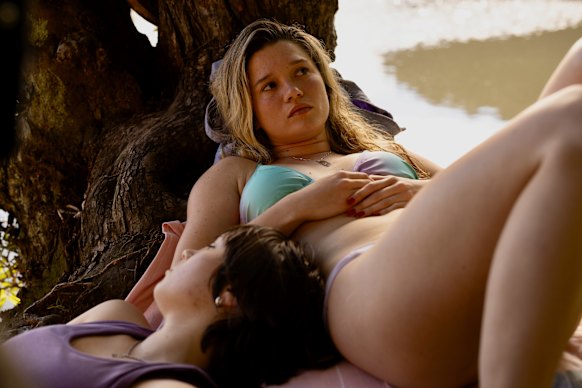
Sid isn’t suffering any kind of mental health disorder, except the oceanic one that is just being young, but she is walking a wire that traverses that territory. “I’m kind of obsessed with the tiny tragedies of day-to-day life,” Schneideman told PinkNews. Not to be asked to a party, for example, is a devastation. “What is happening to Sid is the most defining, tumultuous shit of her life to date – and yet life goes on.”
It’s not only fiction that can burrow inside these feelings. Ross McElwee, director of the landmark 1986 documentary Sherman’s March, spent 14 years making Remake, a film about his son Adrian, who died of a fentanyl overdose at the age of 27. McElwee filmed Adrian, along with everything else, all his life; he had a mountain of material showing an ebullient child with a big grin, transforming in front of us.
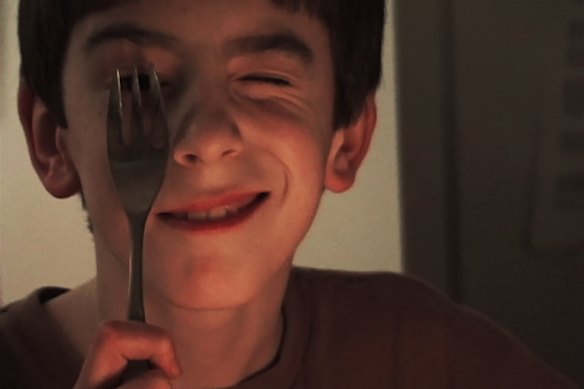
“It will forever be a deep mystery, how this happened,” says McElwee, 79. “Because he’s clearly a happy, very clever, good-natured boy for all of those years. And so how he became the person he ended up is a mystery to me. And I know that’s part of mental health issues and also the availability of these drugs in the US.” But how much can be blamed on opiates? “I mean, he got kicked out of schools, places where he thought he’d be quite happy. After he got into his teenage years he just didn’t like anything. And it was very troubling.”
McElwee acknowledges being a statistic; perhaps it is even a comfort. “In 2022, which was the last time we have figures … 72,000 people died in the US from fentanyl overdoses,” he says. “I’m not alone in any of this.” He reminds himself that whole communities in Ukraine or Gaza are wiped out at once, but facts can’t compete with his inner stew of emotions. “How that transition happened is just so cruel and enigmatic,” he says. “The film is like a truce for me.” It is also one of the stories of a generation.
The Melbourne International Film Festival runs August 6-23.