

Source : the age
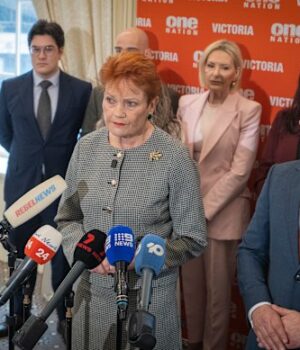
One Nation’s path to holding a significant bloc – or even the balance of power – in Victoria’s upper house has become easier, with the government passing legislation to make it harder for micro-parties and independents.
The legislation to end group voting tickets passed parliament’s upper house with support from both major parties on Tuesday night after fierce debate from parts of the crossbench, whose prospects of re-election have fallen.
Group voting tickets had allowed micro-parties to pool preferences from Victorians who vote above the line on the ballot paper for the upper house. That allowed candidates to leapfrog more popular parties through backroom preference deals and led to the election of candidates with a primary vote of less than 1 per cent.
Victoria was the last state in Australia to use the system, and there had been repeated calls for its abolition, including from two parliamentary inquiries this term.
One Nation, Labor, the Coalition and the Greens are all likely to win more upper house seats now the system is scrapped. It takes away the power of micro-parties to pool their votes, allowing Labor, Coalition, the Greens and One Nation to benefit from a more conventional flow of preferences.
Election analyst Antony Green said on his blog the group voting ticket system was distorting election results.
“The change favours parties that campaign for votes over parties that rely on preferences,” Green said.
“Based on past results, the big losers will be minor parties whose election from low votes has been achieved by ‘preference-harvesting’ tactics, something that is impossible with group voting tickets abolished.”
Green’s analysis found if group voting tickets had been abolished before the 2022 election, the Greens would have doubled their representation in the upper house to eight. Labor and the Coalition would have picked up another seat each and micro-parties, which picked up seven seats, would have won just a single seat collectively.
One Nation senator Rikkie-Lee Tyrrell said her party would “potentially” benefit from the change but it wouldn’t make a meaningful difference.
“Regardless if the [group voting tickets] were in or not, I think we’d still do really well,” said Tyrrell. “What does make a difference is that it’s putting the power of the vote back into the hands of Victorians.”
During debate over the bill on Tuesday night, Shooters, Fishers and Farmers MP Jeff Bourman told the upper house One Nation would get a massive boost from the changes.
“There’ll be more Greens – I’m pretty confident in that. But … One Nation will come here, and it is quite conceivable that they will be the largest party in this chamber.”
Legalise Cannabis MP David Ettershank said the reforms would make the upper house more conservative and “lock in a monopoly of the big parties”.
“It will remove the proportional representation and the diversity that currently exists, and that is in nobody’s interest,” he told reporters on Wednesday morning. “Democracy blooms when there are a range of contending ideas.”
During the debate over the bill on Tuesday night, Animal Justice Party MP Georgie Purcell said she agreed the group voting ticket system should be changed, but it needed to be done alongside wider reform that wouldn’t “just cancel out the minor parties”.
One of the reforms previously floated was replacing the upper house’s eight regions with a single statewide electorate similar to NSW and WA, but this would require a referendum and is not likely until the 2028 local government elections or the 2030 state election.
Purcell said parts of the crossbench had been asking the government for that referendum for eight years to give Victorians control over changing the system.
“Believe me, that’s never going to happen now because by putting … reform in place that will benefit other parties ahead of others, that is going to make working together to achieve the fairest model for everyone near impossible.”
Start the day with a summary of the day’s most important and interesting stories, analysis and insights. Sign up for our Morning Edition newsletter.
 Angus Delaney is a state political reporter at The Age. Email him at angus.delaney@theage.com.au or contact him securely on Signal at angusdelaney.31Connect via email.

