
Source : the age
When Virginia Jones moved to the Tweed Coast with her young family nearly a decade ago, saltwater flooding her home was not the type of sea change she had in mind.
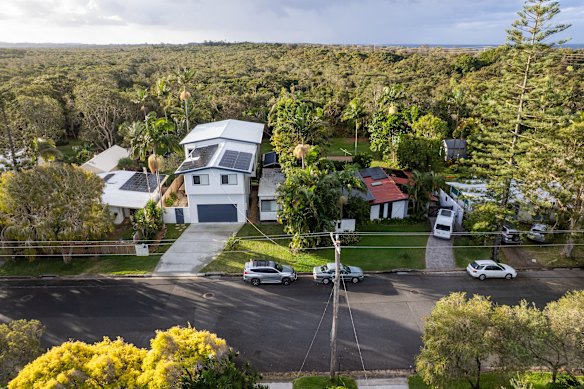
She knew her home at Bogangar near Cabarita Beach was on a floodplain, near the coastal lagoon and creeks, but it was built on piers and had never gone underwater since its construction in the 1970s.
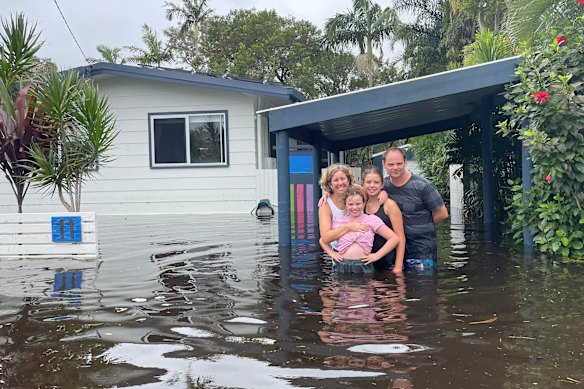
On the last day of February 2022, she went to bed to the drumbeat of heavy rain. She woke to find that one of the family’s two cars was inundated, the other was trapped, and the water was lapping at the bottom rungs of the eight steps to her front door.
The family – two adults, two children then aged nine and 12, and two dogs – evacuated in a neighbour’s kayak.
“The next day when we waded into our street and walked into our house, we realised that [the water] had come about 30 centimetres up the walls,” Jones says.
“At the time, I thought it just meant replacing some furniture and cleaning walls, but in actual fact, when your home floods, you have to rip the plaster off because otherwise mould grows underneath.”
It would be more than a year before the family returned home, and Jones says she and her husband, Tim Lawson, only came back at all because they could do radical flood-proofing.
Since the house was on piers, they decided to raise the entire structure. The front door is now above the flood line – more than twice as high as before, with enough space underneath the house for a full-size netball hoop – and they also added a second storey.
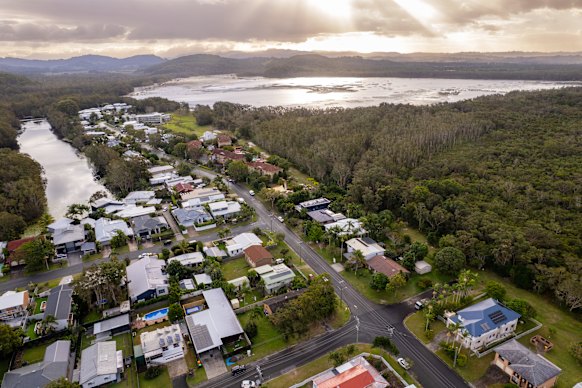
Coastal hazard is a key risk in NSW as sea levels rise and the upstream flooding risk worsens because of extreme rainfall events and urban development – and one that we have barely had to grapple with yet. Up and down the coast, our suburbs and townships are built on low-lying land around coastal lagoons, lakes and estuaries. Lake Illawarra alone – subject to flooding off the escarpment and inundation by the sea – has tens of thousands of people living around its shores. The same is true for Lake Tuggerah and Lake Macquarie, north of Sydney.
In Sydney, the northern beaches, home to about 273,000 people and surrounded on three sides by water, is one of the areas with the highest overall coastal risk both now and in the future. Hundreds of thousands of people also live in low-lying areas around Gamay-Botany Bay and the tidal zone of the Cooks River – and are already grappling with soaring insurance costs.
Coastal hazard is the biggest future risk to the built environment in the state because of sea level rises, according to the NSW State Disaster Mitigation Plan put out in February 2024. This could cause both coastal erosion of sandy beaches and shoreline and either permanent or tidal coastal inundation above the current high-tide mark. About 85 per cent of the state’s population lives within 50 kilometres of the coastline, making the state particularly vulnerable, the plan says.
In 2023, the local government areas with the highest coastal hazard were Shellharbour, Newcastle and Port Stephens but by 2060 this will change to Port Macquarie-Hastings followed by Clarence Valley and Tweed, the mitigation plan says. The LGAs with the greatest overall risk – factoring in the number of exposed properties and assets – were Central Coast, Northern Beaches and Tweed, but this will change to Northern Beaches, Byron and Central Coast.
CSIRO climate economist Russell Wise says there is an urgent need for a conversation about managed retreat from areas at high risk from sea-level rises.
“We’re talking about having to relocate entire communities because we cannot defend our entire coastline,” Wise says. “And we don’t want to defend our entire coastline because we’d lose our beaches and our dunes systems and our coastal ecosystems.”
Under a low-emissions scenario (known as Shared Socioeconomic Pathway1-2.6), sea levels at Port Kembla – as a reference point for the NSW coast – are expected to rise between 23 centimetres and 56 centimetres by 2100, Adapt NSW says. That’s compared with the 1995-2014 baseline.
Under a medium-emissions scenario (SSP2-4.5), which is closest to the current trajectory, it’s 37 centimetres to 73 centimetres by the end of the century. Under a high-emissions scenario (SSP3-7.0), it’s between half a metre and 91 centimetres.
Coastal erosion
High-profile examples of coastal erosion include Collaroy-Narrabeen on the northern beaches where a 1.3-kilometre hard sea wall was built to protect 49 multimillion-dollar properties built on the sand dunes. Now the same thing will happen at The Entrance North, after the NSW Land and Environment Court overturned the Central Coast Council’s refusal of a permanent 90-metre seawall designed to protect three beachfront apartment blocks.
In Collaroy-Narrabeen, landowners paid 80 per cent of the $25 million construction costs and state and local governments covered the remainder. There is already lobbying for future coastal protection works to be funded the same way.
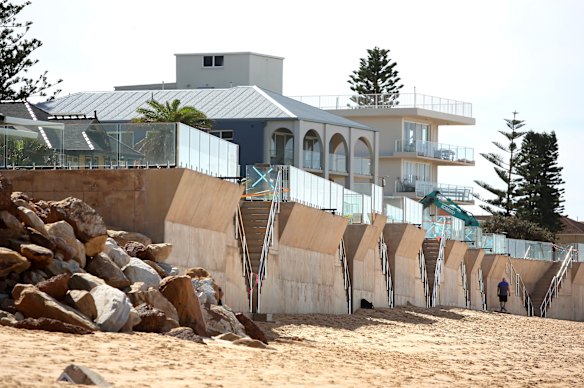
Taxpayers subsidising a seawall to protect private properties worth millions of dollars is controversial, and quite a different matter to taxpayers funding infrastructure to protect public land and assets. Even if private landowners stumped up for the entire cost, coastal erosion experts say a hard seawall can have detrimental effects on the beach below.
Research from the University of Sydney and the University of Wollongong suggests that beaches with natural dunes would be able to retreat inland, retaining their general shape, while those backed by hard coastal cliffs or seawalls, would have nowhere to go, so the expanse of sand would shrink and eventually drown.
In NSW, the emergency services levy, which funds fire services and the State Emergency Service, is applied to home insurance, though the state government is reviewing that. Former planning minister Rob Stokes, himself based on the northern beaches, says the levy should be applied to people’s rates so that people are paying for the risks the community bears based on where their properties are.
“It’s a really difficult thing to say and, of course, there have to be equity considerations and all the rest for people who can’t afford to pay, but at the end of the day, if you’re living in an inherently risky location, then that should be reflected in the value of your property,” Stokes says.
“Currently because those recurrent costs are not attached to your property value, you still will find a beachfront in Collaroy, for example, selling for $7 million or $10 million when fundamentally there’s a much higher risk associated with living there than living two streets further back from the beach.”
Coastal inundation
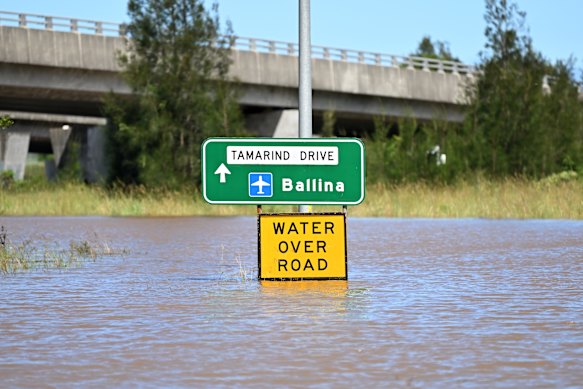
But coastal erosion is not the only coastal hazard. There’s also the sleeper issue of coastal inundation – where sea levels rise so that low-lying land is permanently underwater or inundated regularly at high tide.
Coastal flooding occurs more slowly than with rivers and is generally shallower and calmer – making it less dangerous to human life. Yet it is still highly damaging to people’s homes and, rather than an overnight disaster, it is a slow-burn problem affecting millions of NSW residents.
Stokes says coastal and estuarine inundation will affect more properties than coastal erosion. Many relatively affordable postwar homes were located around coastal lagoons because the land was flat and easy to subdivide, he said.
“A lot of the headlines get taken by coastal erosion because it’s so dramatic, but when you look at development around coastal lagoons, and also the relative values of properties around, for example, Woy Woy and Umina, or Lake Illawarra, or Ballina, or any of those coastal lagoons, there are thousands of properties and they might be lower value properties [than beachfront homes], but there’s a lot more of them and a small increase in sea level rise will affect a huge number of people,” Stokes said.
“The good news there is, there are engineered solutions to these problems such as revetment walls, but … you want to avoid doing that if at all possible because ultimately, you’re fighting against nature rather than working with it.”
Independent MP Zali Steggall, whose federal electorate of Warringah encompasses the northern beaches, has been banging the drum of climate adaptation for some time, and says coastal flooding is one of the issues that need more prominence.
“Coastal flooding as a risk keeps getting underestimated because people think it’s just about sea level rises,” Steggall says. “But the reality is, coastal flooding will occur in many ways and our infrastructure is not equipped to cope.
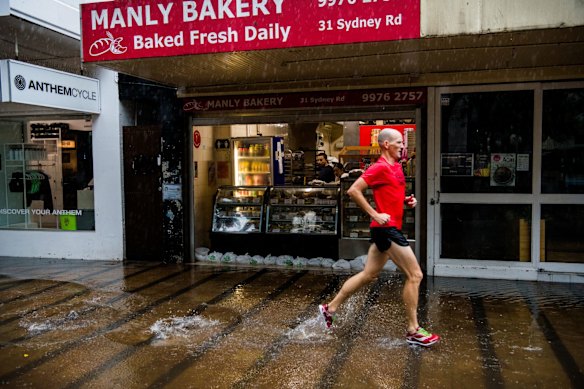
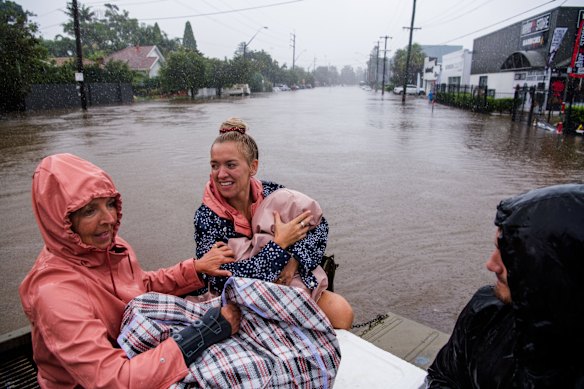
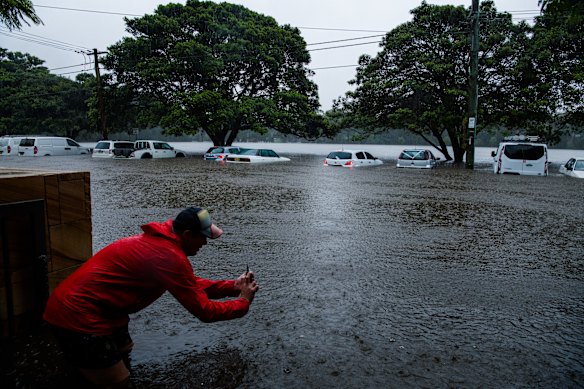
“For example, we had a rain event with maximum rainfall, maximum precipitation in a period of an hour back in 2022, and it coincided with a high tide event, which meant all of our stormwater infrastructure essentially failed, and we had flooding in vast areas of an urban environment – we had cars floating down streets, schools were closed, we had Manly Corso underwater.”
Steggall says sea level rises do not just affect the coast, but further upstream into estuaries where they affect the tides, river flows and stormwater capacity. She is excited by research into nature-based solutions such as mangroves to deal with floodwaters along an estuary.
Sponge cities
This plays into the idea of “sponge cities”, an urban design concept that arose in China and has been influential internationally. Dr Elisa Palazzo, a senior lecturer in urban design and landscape architecture at the University of NSW, says it builds on earlier work that Australia led in “water sensitive urban design” – but like everything to do with China, it’s on a grander scale with more central government control.
Rather than rigid infrastructure such as concrete storm drains, the city design might use porous roads and pavements to allow rainwater to seep into the soil, green roofs to allow vegetation to absorb water, rain gardens and vegetated ditches that filter and slow down run-off, and low-lying parks that become wetlands during severe storms to hold water before releasing it slowly.
However, Palazzo says sponge cities will be more useful for dealing with riverine flooding than coastal flooding.
“With sea level rise, the floods along the coastline will not be preventable,” Palazzo says. “Obviously, we can have mangroves, and we need to recreate that soft edge because even no wall will be enough to retain the force of an ocean. We already know this. But what is going to happen is that little by little cities will have to recede, and that is already happening.”
Palazzo says we will also need to look at architecture that can stand above the water level – architecture on stilts like Jones and Lawson’s home in Cabarita or floating buildings, which are starting to be used in The Netherlands.
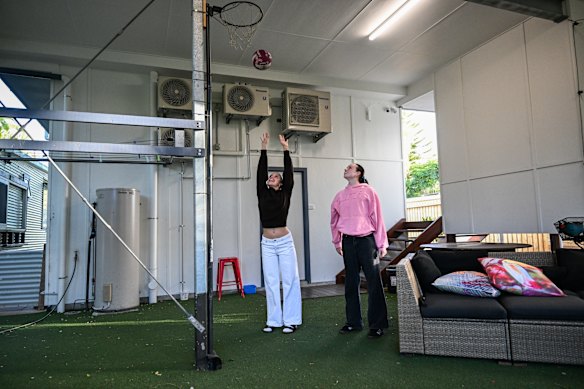
Jones refinanced to pay for the rebuild of her home because insurance only covered the cost of replacement, not of improvements to make a home more resilient. Once again, it raises that key question: who pays? Should it be individuals whose homes are vulnerable, or should taxpayers pay? Insurance is not always available or affordable – and it also generally does not cover “acts of the sea”.
The Australian Local Government Association wants the federal government to create a $400 million a year adaptation fund. The Make Big Polluters Pay alliance, backed by some local councils and environmental and social justice organisations such as Greenpeace, Oxfam and the Uniting Church, say that fossil fuel companies should contribute.
Managed retreat
CSIRO’s Wise favours some form of land swaps rather than buybacks. So far, he says, governments in both Queensland and NSW have paid the pre-disaster market rate for buybacks, setting an unsustainable precedent.
“We need to reconsider the approach of buying people out,” Wise says. “Instead, we could be saying ‘here’s a place that you can go to’, and it may be way cheaper to do that than actually pay a person out and then expect them to go and find a place in a market where there aren’t any places to go to because of the under supply.
“This would require strategically building places in receiving environments, in more affordable housing that’s actually safer as well, and then give people the option to move to those places.”
He notes that this would take time, so governments would need to manage the risks and impacts in the short term.
The NSW Reconstruction Authority is managing a buyback program in both the Northern Rivers and Central West following the devastating 2022 floods. Planning Minister Paul Scully says he is not aware of the government contemplating any further buybacks, adding that the topic needs to be treated sensitively.
“I’m an economist as well,” Scully says. “And I can appreciate a dispassionate analysis from a CSIRO economist, but they’re also people’s homes, right? People have built their lives in particular areas, and asking people to uproot themselves and move, even if you’re moving in the same area, is a big deal.”
The authority is developing a managed relocation policy to consider issues such as buybacks and land swaps. It is expected to be completed later this year, and included in the next version of the State Disaster Mitigation Plan.
Wise says the burden of coastal inundation is not just about private property, but also falls on local governments trying to provide infrastructure. Already, the costs of maintaining roads at a basic level has gone through the roof for both inland and coastal councils because of flooding and extreme temperatures.
“Sea level rise is a significant chronic risk that will start to really rear its head,” Wise says. “It’s the nuisance effect of continual or periodic inundation or flood events, which aren’t classified as disasters but wear infrastructure down.”
The Reconstruction Authority, which was established in 2022, has been working on more specific regional plans to follow the State Disaster Mitigation Plan. Work is well progressed on a multihazard plan for the Northern Rivers that will take in coastal hazard. The agency also did a pilot study in the Shoalhaven-Illawarra, testing out different methodologies for assessing risk and engaging with communities, but this is not publicly available.
Dan Peled
The authority’s acting executive director for disaster risk reduction, Louise Shepherd says the statewide plan makes it clear that floods and coastal hazard are the biggest future risks to the built environment. Her agency has been working carefully through possible responses, she says.
“Sea walls of various types, including rock revetments, are big infrastructure, and would need to go through a pretty technical process to see if it’s the right solution in a particular place,” Shepherd says. “Other examples of what we could do to mitigate coastal hazard include beach nourishment and dune planting.”
The feasibility and suitability of large-scale offshore sand reserves and other sources for beach nourishment has come under the microscope and this will form part of the Northern Rivers plan and also the updated statewide plan due by the middle of next year.
This work sits alongside the requirement for coastal councils to come up with coastal management plans, which was introduced in 2016 and took effect in 2018 but with no deadline to complete the work. A coastal management plan is a long-term, strategic document, and having a registered plan provides easier planning pathways than development applications and access to funding grants.
The NSW Audit Office reported in September last year that the coastal management framework was “not being effectively implemented” and needed more oversight from the state government. At the time, using figures from April last year, only 16 out of 55 coastal councils had at least one completed plan. More than a year later, it’s crept up to 18. This is despite the state government making 373 grants totalling $73.72 million since 2016 to help councils get the work done.
The government says it has accepted all the recommendations of the auditor-general either fully or in principle. There are now 27 coastal plans covering both open coast and estuarine environments across 55 councils. Some councils have more than one plan, and some plans have more than one council, but 37 councils are yet to complete at least one plan.
NSW Climate Change Minister Penny Sharpe says the issues are “challenging and complex” and both levels of government are working through them.
Retrofitting homes
Residents have had to take matters into their own hands. Back at Cabarita Beach, Jones and Lawson had better options than most of their neighbours, many of whom could not afford to do anything except replace and hope for the best. There were some federal government grants, but eligibility was too limited to be helpful, Jones says.
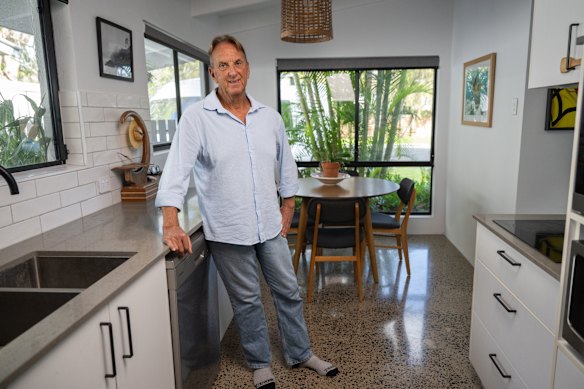
Her neighbour Bernie Zietlow also renovated to floodproof his home using his insurance payout and favours from his tradie mates.
His house was on the ground rather than piers, so raising it was not an option. Instead, he replaced the ruined carpets and tiles with polished concrete floors throughout most of the house and tiled the bathroom with waterproof materials, like a swimming pool.
The kitchen looks normal but is made out of a PVC material that can survive underwater, and stone tops. The oven is above the microwave because the microwave can be moved, but the oven cannot. All his power points and the air conditioner are now above the flood level.
It took him 12 months, but he says next time the floods come, he’ll be able to hose it out.
Zietlow knows that the coastal flooding will get worse as climate change progresses, but at 67, he thinks he won’t be around to see it. A keen surfer, he loves living near the beach, and assumes his children will bulldoze the home after he’s gone since it only has two bedrooms.
“I’m sure that we’ll get floods again, but I’m not going to worry about them,” Zietlow says. “It didn’t affect me emotionally as much as it did a lot of other people for a number of reasons, No.1 is that I lost a son in 2011, so I had a big, big lesson about what’s important in life. I wasn’t that concerned about losing things because I knew I could replace them.”
Additional reporting: Michael Bachelard and Gay Alcorn
Get to the heart of what’s happening with climate change and the environment. Sign up for our fortnightly Environment newsletter.