

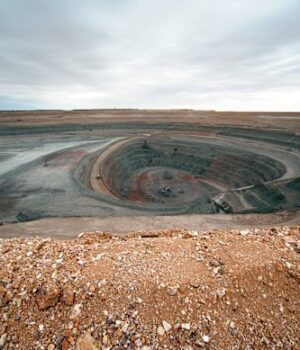
Source : the age
The world’s biggest miner will shower its Australian shareholders with a $12 billion dividend bonanza, as copper prices hit records amid soaring global demand for green energy, electric vehicles and AI data centres.
BHP has shrugged off heightened geopolitical tensions in the Middle East and rising diesel prices to declare a final dividend of US99¢ ($1.39) per share, taking its total payout for the year to $US1.72 a share, up from $US1.10 the previous year. The global resources giant’s full-year $US8.7 billion ($12.2 billion) return is the biggest payout for its shareholders in four years.
BHP has pivoted to copper as its future key commodity after China’s economic slowdown and fresh supply entering the market heralded the end of a decades-long iron ore boom, which had fuelled its profits in recent years. It’s now the world’s largest copper producer.
The move is paying off for the miner, with the price of copper, a metal essential to conducting electricity, near record highs – around $US6.70 per pound (454 grams) – as global demand for green energy and AI-driven data banks rockets. Shortages of copper concentrates and other feedstocks in China are crimping output from its smelters, adding to price pressures.
The red metal’s upward trajectory is also being underpinned by a slump in production from Chile’s state-owned miner, Codelco, a top producer. Copper traders, worried about US President Donald Trump slapping tariffs on copper, are also stockpiling the metal into US warehouses, pushing up demand.
And BHP is benefiting. Its shares rose 3.5 per cent in morning trade, giving it a market value of $325 billion and cementing its place as the biggest company on the ASX.
Releasing its latest full-year results on Tuesday morning, the mining giant said its net profit rose 9 per cent to $US9.8 billion, as revenues jumped 15 per cent to $US58.8 billion. More than half of those profits are now derived from its copper mines in Australia, Chile and Argentina.
“Copper is the engine that is driving BHP’s growth,” newly appointed chief executive Brandon Craig said. “For the first time, copper contributed more than half our underlying [earnings] and generated significant free cash flow, which means our copper growth is self-funding.”
The miner maintains a well-defined project pipeline of copper assets across Chile, Australia and Argentina that it said can potentially lift its copper production up to 40 per cent by 2035.
“Copper remains our biggest growth opportunity,” Craig said. “We are pursuing this growth from a position of strength. Our existing operations are performing very well, generating strong cash flows and supporting future investment. As these projects come online, they won’t just increase production; they will amplify our return, amplify our cash generation, and further strengthen the quality of our business for decades to come.”
BHP said it had managed to decrease costs across its operations by 6.1 per cent despite headwinds from inflation, higher diesel prices and global supply chain disruptions.
At the same time, Chinese demand for iron ore, a key ingredient of steelmaking, still remains resilient, it said. BHP’s iron ore mines in Australia’s remote Pilbara region produced a record 265 million tonnes of ore, generating about $US14 billion in underlying earnings for the company.
China’s steel production will plateau at around 1 billion tonnes per annum for the rest of this decade, BHP maintains. But the volumes of seaborne iron ore being shipped to China and other steelmaking centres are expected to rise as new capacity comes online, particularly from Rio Tinto’s major new Simandou mine in Guinea, a factor that is likely to keep a lid on future ore prices.
What BHP calls its “byproducts” – the gold, uranium and silver that are often found alongside copper – added $US4.5 billion to its bottom line.
Craig, who officially took the helm in July after succeeding Mike Henry, backed BHP’s coal mines in Queensland’s Bowen Basin. They were one of only a “handful” of high-quality metallurgical coal basins in the world, he said. “When you look at the fundamental supply-demand picture out to the mid-2030s, metallurgical coal actually looks very attractive to us in BHP,” he said.
The global economy and commodity markets had demonstrated considerable resilience in the face of geopolitical tensions confronting the world, trade policy uncertainty and shifting monetary and fiscal settings, BHP said in a statement to the ASX.
The Business Briefing newsletter delivers major stories, exclusive coverage and expert opinion. Sign up to get it every weekday morning.
 Simon Johanson is a business journalist at The Age and The Sydney Morning Herald.Connect via X or email.

