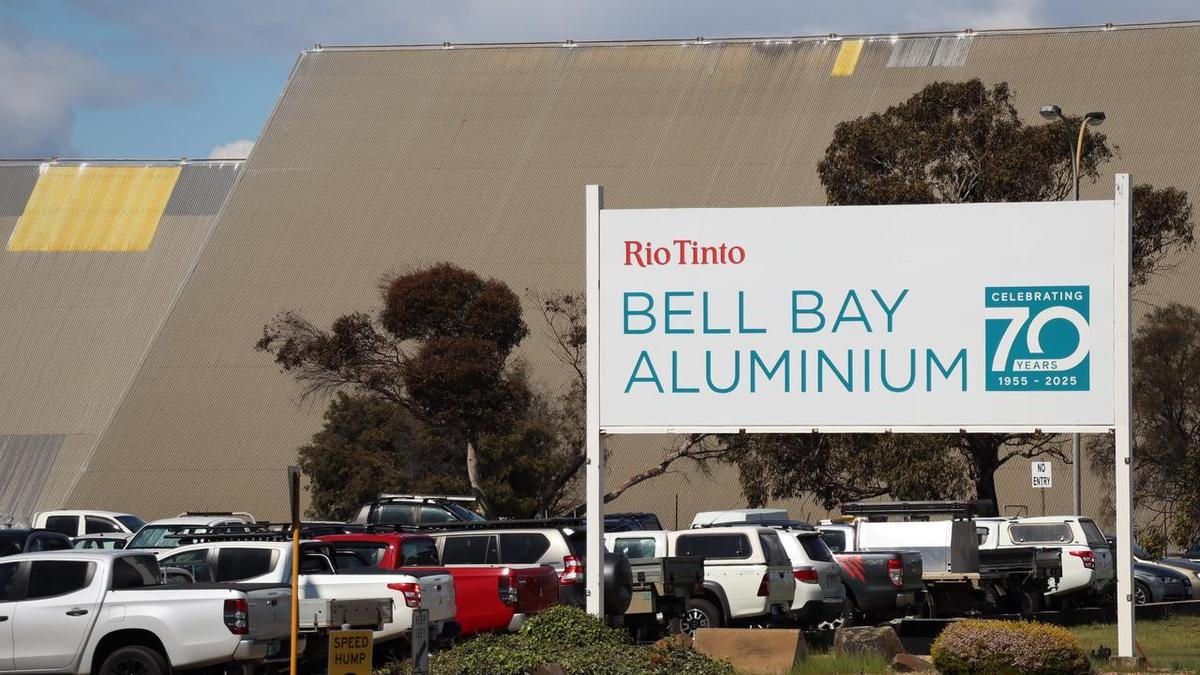
Source : Perth Now news
The closure of one of Australia’s big four aluminium smelters is a “very real prospect” amid stalled power negotiations and accusations the facility has been used as a political football.
Bell Bay Aluminium in Tasmania’s north is under a growing cloud, with its current electricity deal set to expire at the end of December.
The Rio Tinto-owned smelter, which employs about 550 people, is at loggerheads with state-owned Hydro Tasmania over a new contract.
There is a $60 million per year difference between Rio Tinto’s position and the price Hydro Tasmania can commercially offer, the state government has said.
Australian Manufacturing Workers’ Union Tasmania secretary Jacob Batt wants the state government to intervene to ensure a deal is secured.
The state government recently ramped up calls for federal government help, after the nation’s largest aluminium smelter at Tomago, in NSW’s Hunter region, received a $2.5 billion bailout from Canberra.
Mr Batt accused Tasmania’s government of using Bell Bay Aluminium as a “political football” and said the state should be the ones to sort out a deal.
“What we’re seeing now is effectively the state government saying that Tasmania is no longer able to be self-sufficient in our industry policy,” he told reporters on Tuesday.
“We’re just wanting to know why a power deal hasn’t been reached and why Hydro isn’t being used to support industry and these jobs.”
Bell Bay Aluminium began operations in 1955 and produces about 190,000 tonnes of aluminium annually, the majority for export.
Federal Industry Minister Tim Ayres hasn’t directly answered when asked if Canberra will provide funds to help secure a deal.
The Tomago bailout was different as the NSW smelter needed to shift away from coal power while Bell Bay Aluminium was already powered by renewables, he told ABC radio.
University of Technology Sydney special innovation advisor Roy Green said the saga raised questions about Hydro Tasmania’s efficiency and why it hasn’t offered a price Rio Tinto wants.
Bell Bay Aluminium produced high-quality aluminium despite being one of Australia’s smaller smelters, he said.
“It would be hard to understand why anyone would want to see it close. We certainly can’t afford to see it go,” Professor Green said.
Northern Tasmania is grappling with the closure of Australia’s only manganese smelter in July.
“We can’t take another hit … for 550 jobs to be under threat because a power deal hasn’t been done is unacceptable,” Bell Bay Advanced Manufacturing Zone chief executive Susie Bower said.
“(Closure) is certainly a huge concern. It’s a very real prospect.”
The state government has said Hydro Tasmania is abiding by its ministerial charter, which states it must support the lowest-possible power prices for Tasmanians and enable economic growth and job creation.
A Hydro Tasmania spokesperson said the price offered to Rio Tinto was as low the energy provider could go without the offer becoming uncommercial.