source : the age
For many Victorians, the humble Blue Light disco was a seminal part of the high school experience.
It featured crowded dance floors, eager teenagers and DJs spinning the era’s hottest hits. At the time, the events were considered the height of the local social scene – the place to be and be seen.
disco in the 1980s. Blue Light Victoria
But at its core was always more than just entertainment. The discos were created with a simple mission. In collaboration with Victoria Police, they were designed to be well-supervised, alcohol- and drug-free events that let officers and teens interact in a safe and casual setting.
This year, Blue Light Victoria is celebrating its 50th anniversary. The organisation has come a long way since its inaugural disco in Mooroolbark in 1976 – but is still managing to stay in touch with its roots on the dance floor.
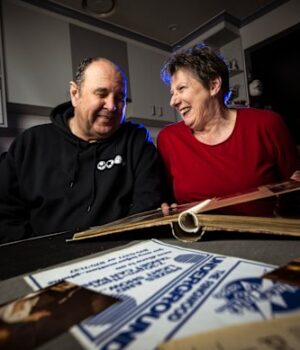
For Liz Martin, memories of the disco transport her to the underground car park near the Ringwood Square Target. She was a long-time Blue Light volunteer there, and in Wodonga, in northern Victoria, during the mid-80s.
After one disco in 1984, she offered a beer to the group of DJs who were busy packing up the sound equipment. The first taker was Robert, now Martin’s husband of 39 years.
“As he says, I picked him up with a six-pack at an underage disco,” Martin laughs.
The Ringwood events were known for their big turnouts. At one point, she and other volunteers were facilitating a monthly disco for more than 3500 local teens.
And memories from those years are plentiful. During one disco she took song requests for Graeme “Shirley” Strachan of Skyhooks fame while he DJed at a pool party.
On another occasion, Martin managed to diffuse a pre-planned fight before it broke out on the dance floor. Although the crowd was typically well behaved, there was always “the odd troublemaker”, she says.
Liz and Robert Martin now live in Mooroolbark, close to Ringwood, and their son works as a police officer. She still sees the value in an initiative like the disco.
“I think the kids of today, they need something like a Blue Light disco to release their energy … have a good time and not be on their phones,” Martin says.
Blue Light Victoria has evolved significantly since its dance-floor beginnings. While some discos are still held – particularly in suburban and regional parts of the state – the focus has shifted towards the organisation’s classroom and mentoring programs.
Chief executive Elissa Scott says the needs of the organisation have morphed in recent decades – much like the needs of teenagers.
Blue Light now runs school programs across the state which focus on improving the physical, mental and social wellbeing of young people. Sessions are generally run by a specialist facilitator, who is sometimes supported by police or other emergency service workers.
The organisation also runs a one-on-one mentoring program, targeted towards young people between 10 and 17 who may have already interacted with the justice system.
“Whenever we do programs or whenever we look at new initiatives, we’re always testing that with young people – so we’re using young people’s voices. We make sure that we evaluate everything that we’re doing,” Scott says.
Much like the original discos, Blue Light’s classroom sessions also provide a means through which young people interact with police, and vice versa.
The organisation maintains its strong connection with Victoria Police. The force is considered a founding partner of Blue Light Victoria and Chief Commissioner Mike Bush is its patron.
“We know that our work is really critical, particularly to police in terms of their prevention work … so we’re looking forward to strengthening that,” Scott says.
Blue Light program facilitator Paris has worked in the classroom and as a mentor with the organisation since March 2025. She hadn’t even heard about the famous discos before applying, but was interested in working in the youth mental health space.
The 26-year-old said that one of the most valuable parts of her role is watching children come out of their shells during the workshops, particularly in terms of growing confidence, and in their interaction with emergency service workers.
“[The program] does a really good job at breaking down the barrier between young people and police,” she says. “It’s really good for the young people to take away that anxiety that I think a lot of them might have.”
In the Victorian budget handed down in May, the government earmarked $9.5 million for the organisation’s early-intervention investment framework program.
Scott said this injection would help the organisation to strengthen and expand the reach of its in-school programs, with the ultimate goal of having a presence in every school in the state.
“We’re excited about the next 50 years and how we can keep growing and developing and really being that resource to young people … we know that our work is really critical,” Scott says
Although Blue Light has shifted some of its focus into the state’s classrooms, there are still communities where the disco format continues to thrive.
Charlotte Le Guier is the president of the Blue Light disco branch in Sunbury. The group runs five discos annually at the local memorial hall, which usually attract more than 200 children each.
The 21-year-old attended her first event before she can even remember. Her mother was a regular disco volunteer and Charlotte would often tag along.
“When I was there as a kid, I loved it. I thought it was the greatest thing ever,” she says. “Being able to give back to this next generation of young people … is really rewarding.”
She says that today’s discos – which feature dancing, prizes and plenty of lollies – were still an opportunity for local police officers to naturally interact with the community. It shows kids that the job isn’t just “violence and scary stuff”.
“It’s all about … fostering those relationships, and also getting the kids to do something,” she says. “Kids tend to just sit at home on their iPad or watching TV.
“It’s really cool that [the disco] is something that holds such a strong presence in our history in Victoria … It’s really cool that I get to be part of that.”
Start the day with a summary of the day’s most important and interesting stories, analysis and insights. Sign up for our Morning Edition newsletter.
 Gemma Grant is a city reporter at The Age. Contact her securely on Signal at gemmagrant.88Connect via email.