SOURCE :- THE AGE NEWS
London: A Russian businessman planning a luxury home on a beautiful Swedish island will have his property seized by the state in a dramatic move to protect a nearby naval base, highlighting European concerns about conflict with Moscow.
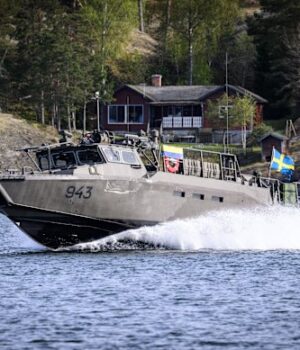
The Swedish Defence Ministry ordered the forced sale of the waterside holiday home to ensure the security of an underground base with docks, tunnels and a shipyard built into caverns on the Baltic Sea.
Once likened to a hidden lair from a James Bond film, the base at Musko Island is now the subject of serious debate about the risks to Sweden of “hybrid” attacks from Russia, including drone incursions near airports and military facilities.
German investigators have found three drones and suspected explosives near Leipzig airport in recent weeks, while Romanian forces destroyed a marine drone near a gas project in the Black Sea last Thursday, and Poland experienced two instances of sabotage on its rail lines last year.
‘We are in the most serious security situation since the end of World War II.’
Carl-Johan Edstrom, Swedish chief of defence staff
The concern about Musko Island, about 40 kilometres south of Stockholm, centres on the Russian businessman’s plan to build a prestige home, up to 600 square metres in size, for himself and his wife, who has Russian and Swedish citizenship. The Swedish government did not name the couple.
Swedish Defence Minister Pal Jonson said on Tuesday morning in Stockholm (late Tuesday night, AEST) that the National Fortifications Administration had taken steps to expropriate a property near the naval base.
“The Swedish Armed Forces state that they have an immediate need for this property for military defence purposes,” he said.
“The security situation has deteriorated in recent years, and the threat landscape facing Sweden and Swedish interests has become increasingly complex. Consequently, a massive expansion of the total defence system is under way.
“This also entails an increased need for access to sites where operations can be conducted during peacetime and which offer strategic advantages in the event of war.”
Jonson said the state had the power to compulsorily acquire property for military defence, although he did not elaborate on how the purchase price might be decided.
The base on Musko Island was built in the 1960s and used at the height of the Cold War, but it was decommissioned after the fall of the Berlin Wall and was only put to military use again in a major construction project over the past nine years.
Swedish newspaper Expressen reported on Tuesday that the property was owned by Stanislav Aleshchenko, a businessman with ties to the regime of Russian President Vladimir Putin.
It said the property was purchased in 2017 for 18 million Swedish kronor (about $2.6 million), and the new home was being partly dug into the rock.
The newspaper said the Russian’s wife, Tatiana Sazonova, was the formal owner of the property. She had previously denied knowing the site was near a military base, telling Expressen: “I didn’t know that when I bought it. I was looking everywhere. And it just turned out that way by chance. An unfortunate, unfortunate coincidence.”
Russian incursions increase
Sweden began rebuilding the Musko Island base after Russian forces seized control of the Crimea in 2014 and a series of incidents around that time, including the sighting of a Russian mini-submarine in Swedish waters that year.
Sweden joined NATO two years ago and has confirmed an increase in Russian incursions near its coastline in recent years. Last December, a Swedish officer said the navy encountered Russian submarines in the Baltic Sea on an “almost weekly” basis.
In February, Swedish forces disrupted a drone launched from a Russian ship near a visiting French aircraft carrier in Swedish waters.
Sweden’s chief of defence staff, Carl-Johan Edstrom, said in a statement that the island base needed to be protected from threats such as aerial and marine drones.
“We are in the most serious security situation since the end of World War II, and the threat to Sweden and the alliance is real,” he said.
Get a note directly from our foreign correspondents on what’s making headlines around the world. Sign up for our weekly What in the World newsletter.
 David Crowe is Europe correspondent for The Sydney Morning Herald and The Age.Connect via X or email.