Source : the age
The nation’s peak housing bodies have issued a dire warning that the state government will fall well short of its target to build 800,000 homes in a decade if it doesn’t improve its relationship with the property industry.
Three years ago, the government unveiled its plan to rapidly increase the supply of homes across the state to combat the housing affordability crisis, in what then-premier Daniel Andrews called “the most comprehensive shake-up” in decades.
But since the government released its housing statement, 145,000 homes have been built – about 55,000 fewer than the benchmark required to meet the target. This is the most of any state and territory in Australia.
The construction industry groups that agreed to work in partnership with the government to hit the target said on Wednesday excessive red tape and taxes had hogtied the sector and contributed to the shortfall.
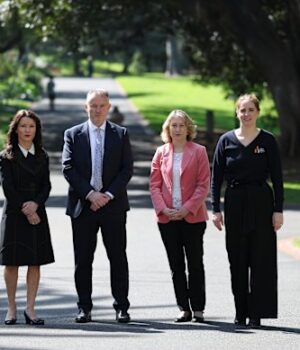
In a joint statement, the industry groups – including the Housing Industry Association, Master Builders Victoria, Property Council of Australia and the Urban Development Institute of Australia – said a new partnership with revised accountability measures was needed.
They want a renegotiated partnership to include a commitment for reduced property taxes and red tape on development; accurate data publishing to identify where housing delays occur; a government pledge to align infrastructure spending with the fastest-growing communities; and securing a workforce pipeline.
They also want the government to commit to “genuine consultation” with industry, reform social procurement requirements to cut costs and improve planning processes.
The housing industry’s demands for a refreshed partnership with government
- A commitment to no new taxes or charges and a plan to reduce the volume and rate of existing property taxes and charges;
- A commitment to publishing accurate data across housing sectors that identifies where delays are occurring to improve transparency and accountability;
- A plan that aligns government infrastructure spending with the fastest-growing areas in Victoria;
- A pledge to continue improving planning processes, including the rollout of the changes made to the Planning & Environment Act;
- Reduce the red tape and costs for builders including one registration, one fee for practitioners working across multiple registration categories;
- Reform social-procurement requirements to reduce costs and deliver better value on projects;
- Securing a workforce pipeline through initiatives such as financial support to apprentices, students and employers to attract and retain the skills the industry needs;
- Securing a stable and ongoing pipeline for modern methods of construction;
- A commitment to genuine consultation on any further policy reform impacting the industry.
Masters Builders chief executive Michaela Lihou said the industry needed revised policy settings to speed up the delivery of new homes.
“There have been almost two dozen new pieces of legislation imposed on the industry over the past three years, stifling small businesses, which make up the majority of the industry. We need to let our builders do what they do best – build homes.”
The Property Council’s Victoria executive director Cath Evans said the sector urgently needed a road map out of the “crushing taxes” imposed on developers.
The industry singled out the windfall-gains tax – a charge on property value increases caused by government rezoning which was introduced in mid-2023 – and increases to land tax levied by the government to restore the state’s finances after the COVID-19 pandemic.
“There is a range of taxes where Victoria is completely out of whack with our interstate counterparts,” Evans said.
The government has been contacted for a response.
The groups also said Labor’s pledge to build 70 per cent of new Melbourne homes in established suburbs to reduce urban sprawl was restrictive on developers and buyers. The Age revealed this month just 52 per cent of new homes were being built in metropolitan suburbs, with the remainder in outer growth corridors.
“We need to respect the choice of Victorians about where they want to live and the type of housing they want to live in,” said UDIA Victoria chief Linda Allison.
Asked how the government’s policies and tax regime could truly be so punitive if Victoria continued to lead the nation in home building, the group said other states were catching up and had healthier growth rates.
“The cruel reality is that whilst we are still the biggest market, that’s as much a result of geography and the fact that we’ve got the capacity to build more greenfield [developments], despite the government’s own shackles, but that is going to slow down,” said Keith Ryan, Victorian executive director of the Housing Industry Association.
The Coalition has thrown its support behind the industry groups, and pledged to cut property taxes, including stamp duty, land tax and the emergency services levy. The Coalition will also scrap the government’s target for 70 per cent in-fill housing and activity centres which would see high-density apartments built in established suburbs near transport links.
The opposition would expand high-density zoning in the CBD to inner-city suburbs allowing for higher apartment towers in the area. The expanded zoning would impact seats held by Labor and the Greens.
“Labor’s Housing Statement has proven to be a total failure – it’s time for a fresh start, a new government and a new approach,” said opposition housing spokesman David Southwick.
“A Jess Wilson-led government will reduce property taxes, restore confidence and build with communities, not over them.”
Start the day with a summary of the day’s most important and interesting stories, analysis and insights. Sign up for our Morning Edition newsletter.
 Angus Delaney is a state political reporter at The Age. Email him at angus.delaney@theage.com.au or contact him securely on Signal at angusdelaney.31Connect via email.