Source : Perth Now news
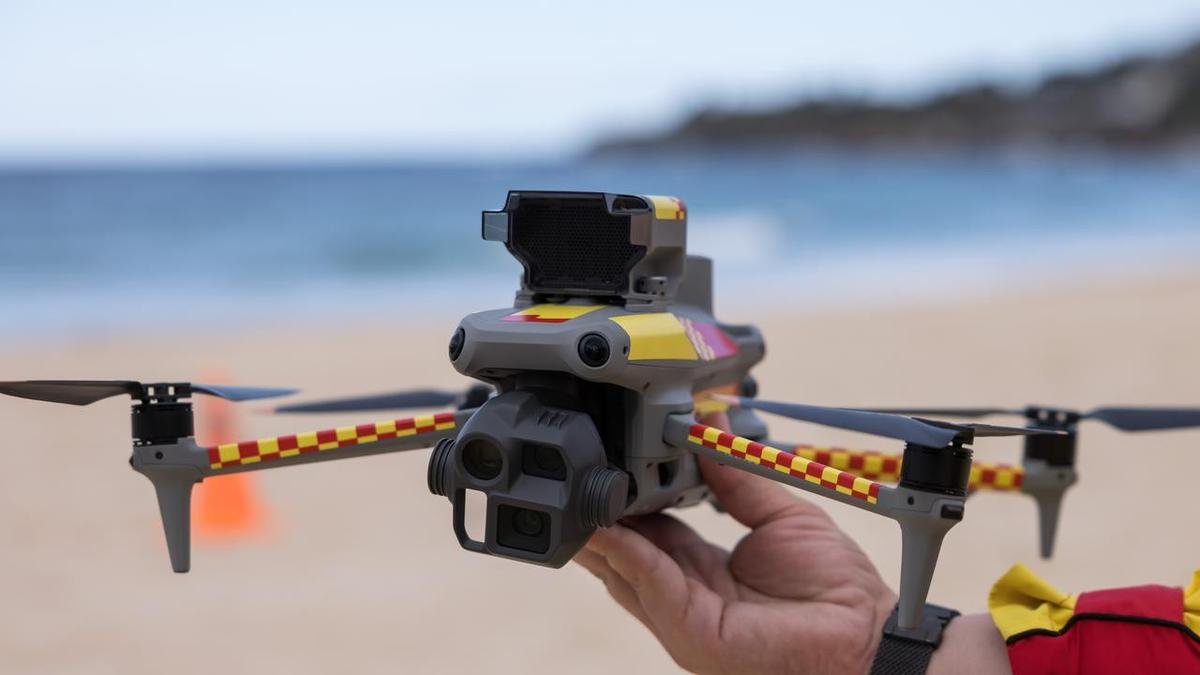
Drones patrols have picked up an average of 20 sharks a day at patrolled beaches over winter as aerial surveillance is ramped up for the school holidays.
Drone operators across NSW detected 1225 sharks from July 1 to August 31, fresh data has revealed.
The number of sharks spotted prompted 360 shark safety measures to be taken including evacuations from the water, sounding alarms to alert swimmers and surfers and deploying inflatable boats and jet skis.
The statewide drone operations conducted by Surf Life Saving NSW recorded 49,000 flights which logged 16,150 flight hours and covered 343,000km.
The NSW government released the figures on Sunday as it rolled out “the world’s largest and most advanced aerial shark surveillance program” in time for the state’s school holidays.
“Our pilots are flying more often, covering more coastline and providing real-time intelligence that helps safeguard swimmers, surfers and other beach users,” Surf Life Saving NSW head Steve Pearce said.
“Scientists are currently tracking more than 1700 white sharks, nearly 950 tiger sharks and nearly 380 bull sharks,” he said.
The $120 million scaled-up intervention, including drone-in-a-box technology and artificial intelligence analysis, came after a spate of shark attacks, including two fatal incidents and several other serious maulings in Sydney waters.
The most recent involved mother Leah Stewart, who barely escaped with her life after she was attacked while swimming between the flags at Coogee Beach in June.
The 35-year-old furiously tried to fend off a four-metre great white but was mauled viciously, resulting in the amputation of her left arm.
In January, 12-year-old Nico Antic was fatally attacked by a suspected bull shark while swimming at Vaucluse, in the city’s eastern suburbs, while 57-year-old surfer Mercury Psillakis was killed in September 2025 at Dee Why, on the northern beaches.
The shark mitigation program will be enhanced by extended drone surveillance hours, 305 smart drumlines and two new shark listening stations tracking tagged sharks in Sydney Harbour for the first time.
The new drone-in-a-box technology to be deployed allows for an off-site pilot to manage several flight operations remotely “to get more eyes in the sky”.
Artificial intelligence is also being used to guide drone pilots with real-time detection of sharks spotted and species identification.
The upcoming summer could be one of the worst, according to experts, with bull sharks preferring warmer water, made more likely by an El Niño climate pattern.