

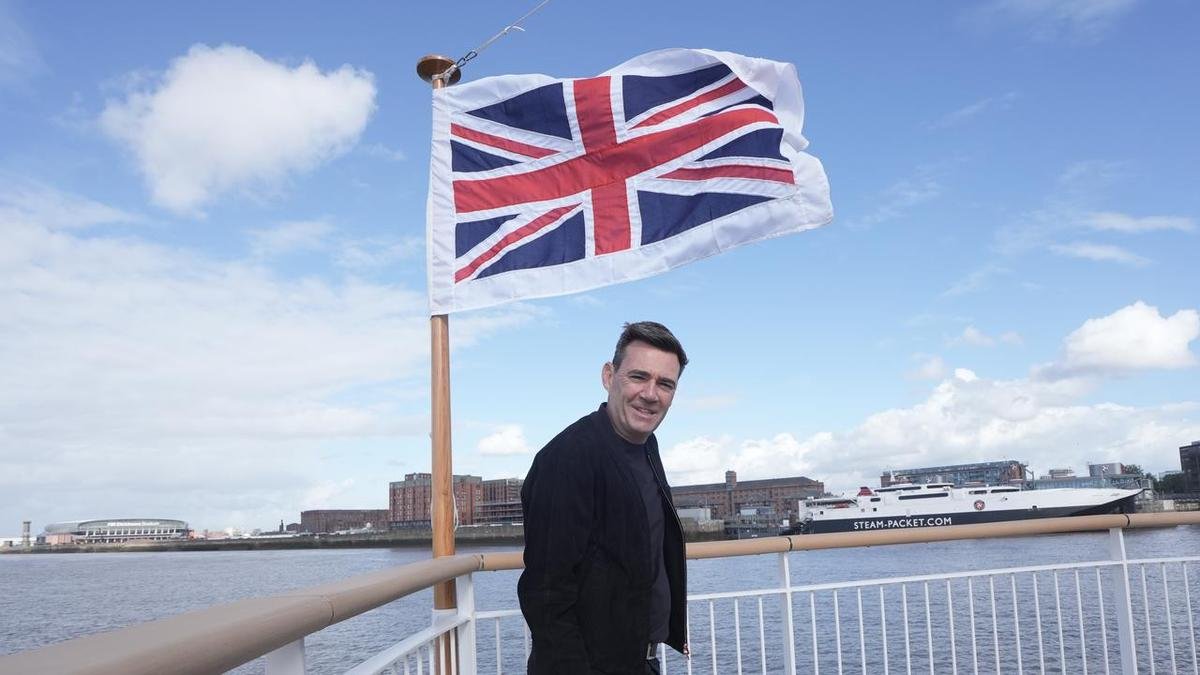
Source : Perth Now news
British Prime Minister Andy Burnham has been in the job for two months, and so far his party hasn’t demanded his head.
The governing Labour Party opens its annual conference beside the River Mersey in Liverpool on Sunday, with Burnham pledging to turn the page on a decade of economic and political turmoil that has made him the UK’s seventh prime minister since its 2016 vote to leave the European Union.
He says his message in a keynote speech on Tuesday will be: “It’s time for Britain to have hope again.”
“We’ve had a decade since Brexit and it’s been a decade of too much drift, too much division, and we need to draw a line on that,” Burnham said as he arrived in Liverpool on Saturday.
His message is aimed at both the British public and a hopeful but nervous centre-left party ready to embrace his promise of better times, but worried about economic damage rippling out from conflict in the Middle East.
University of Manchester political science professor Rob Ford said Burnham’s difficult task would be to win over “a sceptical electorate” eager for change within the constraints of “a very difficult economic and fiscal situation”.
“How do you serve people a bowl of cold porridge and convince them it’s a pepperoni pizza?” Ford said.
Britain’s main political parties hold conferences in September and October, a mix of pep rally, social gathering and policy forum that set the political tone and agenda for the year ahead.
Labour’s 2025 gathering was gloomy, as members despaired about then prime minister Keir Starmer’s deep unpopularity little more than a year after winning power in a landslide, and the seemingly unstoppable rise of the anti-immigration opposition party Reform UK.
Burnham, then the popular mayor of Greater Manchester, was followed around Liverpool by journalists as speculation grew he would challenge Starmer.
Events came to a head months later when a panicky party forced Starmer’s resignation and replaced him with Burnham as party leader and prime minister in July.
Now, Labour is seeing a “Burnham bounce” driven by the new leader’s upbeat talk and modest moves to put money in voters’ pocketbooks by cutting tax on electricity bills and capping bus fares.
Burnham has already set out some priorities, including handing more power to local leaders to generate “good growth in every postcode”.
He says he’ll reform Britain’s privatised utilities, especially the expensive, leaky and polluting water network.
While the party is relatively united behind Burnham, he faces a divisive decision on whether to approve new oil drilling in the North Sea – opposed by environmentalists but backed by trade unions – and pushback over plans agreed under Starmer to make it harder for immigrants to settle permanently in Britain.
The next general election does not have to be called until 2029, but Labour’s revival has sparked talk of a snap election – something Burnham denies he’s considering.
“All of this speculation on an early election, I can knock that dead,” he told broadcaster ITV on Friday.
But no matter how upbeat Burnham is, economic pain is coming.
Burnham must explain to party members and voters how he will deal with economic turbulence from the on-off US-Iran war, which has severely restricted the movement of oil tankers through the Strait of Hormuz.
Treasury chief John Healey is set to deliver the Burnham government’s first budget on October 28 as rising energy prices tighten a cost-of-living squeeze.
Like other countries, Britain also needs to find money to increase defence spending to counter threats from Russia.
That means tax rises, spending cuts or both could be on the cards.
One thing that might boost the economy is to ease some of the trade barriers erected by Brexit.
Burnham has pledged closer ties with the European Union, but it’s unclear how close.
Under Starmer, Labour was elected in 2024 on a promise not to seek to rejoin the bloc or enter its single market for goods, services and employment.
Many Labour members would like to break that pledge, including former prime minister Tony Blair, who said last week the UK and EU should start negotiations “where everything is on the table”.
Burnham has said that’s a discussion for another time.


