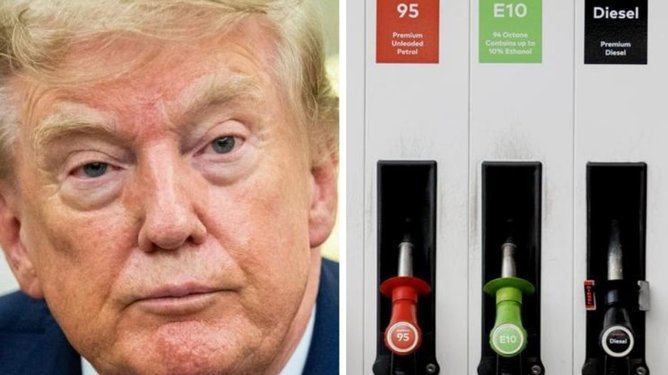
Source : Perth Now news
Motorists could soon pay less at the bowser after the G7 agreed to release 100 million barrels of diesel and crude oil over the next four months, aimed at driving prices down.
In welcome news, overnight leaders from Canada, France, Germany, Italy, Japan, the UK and the US struck the deal during a video conference chaired by French President Emmanuel Macron, after US President Donald Trump pushed for the reserves to be tapped.
Australian Energy Minister Chris Bowen told reporters on Saturday he welcomed the move but wouldn’t stipulate how much motorists will save.
“I welcome the actions taken overnight by the G7 to release more fuel,” he said.
“I don’t think we should get ahead of ourselves, more supply puts downward pressure on prices, but I am not ready to make any predictions.”
Mr Bowen also welcomed the US decision to scrap plans for a diesel export ban, even though Australia sources just 2 per cent of its diesel from America.
He pointed out that global diesel prices still flow through to the local browser.
Prior to the G7 deal, Trump had threatened to cut diesel supply to Europe unless it did more to ease prices.
This ban will no longer happen.
“Europe has just agreed to release a massive amount of their heavily stocked Diesel Oil. The process will begin immediately,” Mr Trump said on social media.
Mr Bowen also dismissed concerns that Australia would have to ration diesel, even if the United States would cut supply.
Before Saturday’s announcement MST Marquee’s head of energy research Saul Kavonic said a ban on US diesel exports could impact prices at the pump in Australia and even lead to rationing or even prices soaring to $4 a barrel.
His argument was even though Australia doesn’t directly buy from the US, there are flow on impacts including a bidding war.
When asked about Mr Kavonic’s views, Mr Bowen dismissed the concerns about fuel, saying it did not need to happen in Australia.

Meanwhile Mr Trump Treasury Secretary Scott Bessent said American farmers, truckers and businesses “should not be left carrying the burden” as global prices soared.
Diesel is heavily used by the transportation industry and in agriculture.
This means any increase in costs that businesses have to pass onto consumers adds to inflationary pressures, particularly in essential goods such as food.
The export ban is now off the table, and gas oil or diesel as it is known in Australia dropped $US8 a barrel overnight on the news.
Every $1 shift in the barrel price moves pump prices by about 1 cent a litre.
Even with falling prices NRMA spokesman Peter Khoury told NewsWire motorists could get a better deal if they looked around for the best deal.
“Still, you should shop around before you fuel up. If you’re taking a road trip we especially encourage people to do that because there is every possibility that you will drive through somewhere that is cheaper.”
Mr Khoury said towns often had spreads of about 35 cents when comparing the cheapest and most expensive oil prices.
“Don’t just fuel up at the first place you see because there is every possibility around the corner there is somewhere cheaper,” he said.