Source : INDIA TODAY NEWS
On October 7, 2023, Israel suffered one of the darkest days in its history. The scars of that morning remain deep. Thousands of Hamas-led militants broke through the Gaza border, killing 1,205 people and taking 251 hostages into the Gaza Strip. Israel responded with a massive military campaign in Gaza that has killed at least 74,347 people, according to the enclave’s Hamas-run health ministry.
advertisement
Three years later, the shock of that day still hangs over Israel. The attack exposed profound failures in the country’s security system and triggered a war that has changed the equations in the Middle East.
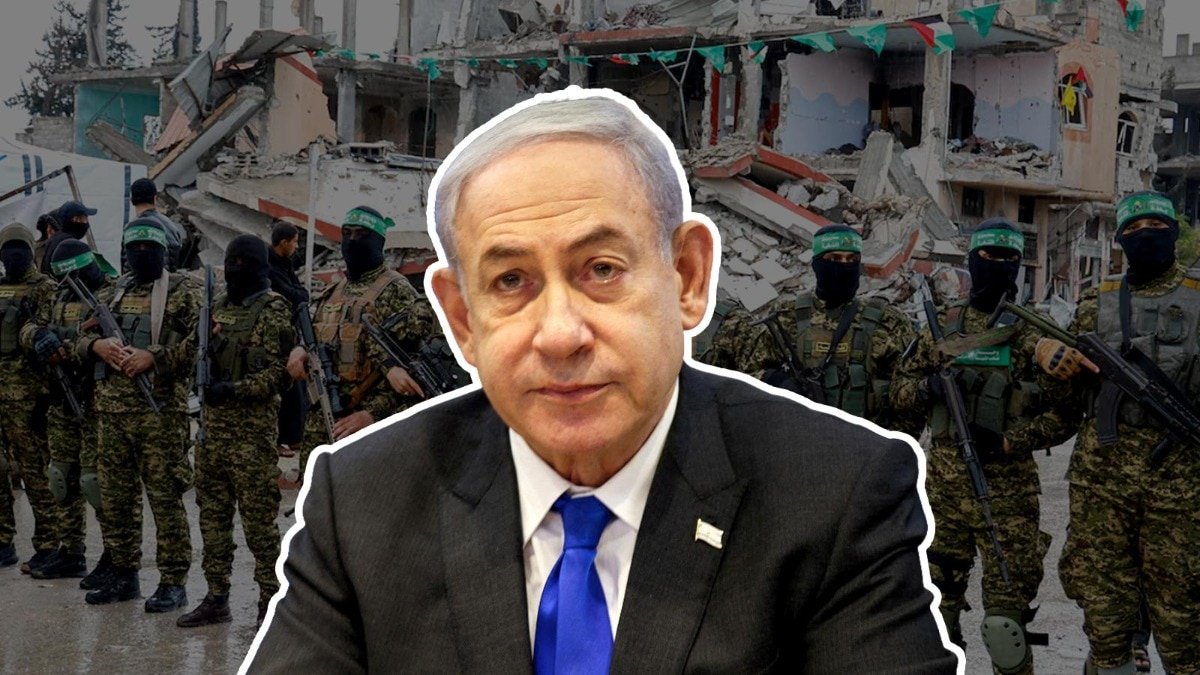
The trail of questions from that day leads, again and again, to Israeli Prime Minister Benjamin Netanyahu, who was in charge when Hamas breached the border. The scale of the failure might have been expected to end his political career. Instead, Israel’s longest-serving prime minister is once again seeking a mandate from voters.
With Israelis due to vote in parliamentary elections on October 27, fresh reports about warnings allegedly given to Netanyahu before the attack have revived the question that has followed him for three years: how did he survive the political fallout?
WARNINGS BEFORE OCTOBER 7
Fresh questions have emerged over an alleged phone call from UAE President Mohammed bin Zayed al-Nahyan to Netanyahu roughly 10 days before the Hamas attack. According to reports, bin Zayed warned Netanyahu that former Hamas leader Yahya Sinwar was preparing a major operation that could result in “bloodshed” and potentially “destabilise the region”.
The account, based on senior sources and a Palestinian adviser to bin Zayed, was published in extracts of a book by Israeli journalists Shlomi Eldar and Ruth Yuval in Haaretz on September 8.
The reported conversation lasted about 45 minutes. According to the report, Netanyahu appeared calm and told the Emirati president that “Israel was prepared for any scenario”. It also alleged that bin Zayed later told then-CIA director William J. Burns about the conversation.
If the account is accurate, the most consequential part of the warning was what allegedly happened next: Netanyahu is said not to have passed it on to Shin Bet, Mossad or his army chief of staff.
His office has rejected the allegations, calling the report a “wicked fabrication with clear political timing” and accusing left-wing Israeli officials of trying to use the issue against him. Netanyahu has sued Haaretz for defamation. The newspaper, however, has stood by its reporting, while The New York Times subsequently confirmed and added details to the account.
The controversy has grown further after The Atlantic and The Wall Street Journal reported that Egyptian intelligence chief Abbas Kamel also warned Netanyahu days before Hamas breached the border.
The UAE has not directly addressed the allegations but has said that “when necessary, all relevant intelligence has been and continues to be communicated” since Abu Dhabi restored relations with Israel in 2020.
Netanyahu himself made a secret trip to Abu Dhabi on September 27 and met bin Zayed for about an hour, according to Israel’s Channel 12. Several reports claimed that the alleged warnings were discussed and that Netanyahu asked the Emirati leader to deny he had warned him about an impending attack.
His office dismissed that account as “fake news”. The official Emirates News Agency said the meeting focused on “bilateral relations”.
SECURITY FAILURE TO POLITICAL SURVIVAL
The question of who failed Israel before October 7 has produced a sharp divide between Netanyahu and senior members of the country’s security establishment.
Former military chief of staff Herzi Halevi accepted responsibility for the failure and resigned in January 2025. An internal Israeli Defence Forces investigation later described the October 7 attack as one of its “greatest failures”.
Ronen Bar, the former head of Shin Bet, was also dismissed by the government. Netanyahu cited an ongoing “lack of trust” in Bar, while the decision was partly linked to an internal investigation into the October 7 failures.
Bar hit back, saying Netanyahu’s claims were “unsubstantiated accusations” and accusing the prime minister of seeking to “prevent investigations into the events leading up to October 7”.
On September 28, Bar threatened to sue Netanyahu for defamation, according to The Times of Israel. Maintaining that his security chiefs deliberately delayed waking him, Netanyahu has said they feared he would immediately put the military on high alert.
“If they would have woken me up, everything would have looked different,” he said in a campaign video posted on X.
But a schedule released by Netanyahu’s office says he was informed at 6:29am about an attack from the Gaza Strip.
That contradiction has done little to end the debate.
THREE YEARS ON, NO STATE INQUIRY
One of the most persistent demands following October 7 has been for an independent state commission of inquiry.
Three years on, Israel still does not have one.
Netanyahu has repeatedly rejected calls for such a commission, arguing that a full investigation should wait until the war is over. The military and intelligence agencies have conducted their own inquiries, but critics say those investigations cannot substitute for an independent examination of the political and security failures that preceded the attack.
He claimed last November that most Israelis did not support such a commission and instead proposed a separate committee established by the prime minister.
His opponents have promised to reverse that position. Gadi Eisenkot, a former military chief and one of Netanyahu’s principal challengers, has accused him of evading responsibility. He dismissed Netanyahu’s explanations, including his claim that he was not woken early enough, as weak excuses.
In a post on X, Eisenkot said Netanyahu had “ignored” dozens of warnings before October 7 and declared him “unfit” to lead.
The opposition has pledged to establish an independent commission if elected. However, accountability has proved more complicated than public anger alone might suggest.
THE FEAR FACTOR
Netanyahu’s greatest political achievement after October 7 may simply be that he survived it.
The attack created a crisis that could have consumed his government. But instead of allowing the debate to remain solely focused on the failures that preceded October 7, Netanyahu repeatedly shifted the conversation towards the threats Israel continued to face — Hamas, Hezbollah and Iran.
Security became the centre of the argument.
That worked to Netanyahu’s advantage because October 7 did not erase Israelis’ fear of their enemies. It intensified it. For his supporters, the attack was not necessarily proof that Netanyahu’s security-first approach had failed; it became an argument for an even harder response and stronger leadership.
At the same time, Netanyahu’s opponents have struggled to turn public anger over October 7 into a political alternative capable of dislodging him.
Their campaign has had to compete with a political environment dominated by security, war and the perceived need to confront regional threats. That has allowed Netanyahu to present the election not simply as a verdict on what went wrong before October 7, but as a choice over who should lead Israel through what comes next.
Recent polling has nevertheless shown Eisenkot slightly ahead of Netanyahu, with 54 Knesset seats compared with 49 for the current prime minister’s coalition.
THE COST OF TOTAL VICTORY
Netanyahu promised Israelis “total victory”. In one crucial respect, he has come close to delivering it: political survival. If the October 2026 election goes ahead as scheduled, remaining in power three years after the October 7 catastrophe would reflect a significant political feat.
But the record is far more complicated.
Israel’s security establishment — the IDF, Mossad and Shin Bet — has inflicted severe blows on Hamas, Hezbollah and Iran. Their capabilities have been significantly weakened compared with the period before October 7.
But that does not mean the underlying threats have disappeared. Hamas has not been completely uprooted. Hezbollah has not been disarmed. Iran remains a major regional threat. Israel’s wider strategic position has also become more difficult.
Netanyahu has repeatedly used the language of “total victory”, but the phrase has also served a political purpose. A war without a clearly defined endpoint can postpone the political reckoning that follows it.
The question remains how Israel, with its powerful military, intelligence services and technological capabilities, reached a point at which its citizens could be subjected to mass slaughter.
ISRAEL’S POSITION HAS CHANGED
The consequences extend beyond Gaza.
Israel’s regional isolation has grown as new relationships and alignments take shape among Riyadh, Doha and Ankara. Its traditionally crucial relationship with Washington, meanwhile, can no longer simply be assumed to guarantee Israel’s strategic position indefinitely.
The war may have reduced the immediate military threat facing Israel, but it has also exposed weaknesses in the country’s security doctrine and regional strategy.
Even now, Netanyahu’s statements can be difficult to reconcile. He has said Iran already possessed nuclear bombs while simultaneously insisting that Iran would not acquire nuclear weapons as long as he remained prime minister.
The regional picture is also more complicated than the promise of “total victory” suggests. Hamas remains a factor. Hezbollah remains a threat. Iran remains a regional power. And Israel’s relationships with key Arab states are being shaped by the continuing consequences of the Gaza war.
Netanyahu’s survival has been shaped by a shift in the debate from accountability for October 7 towards the continuing question of Israel’s security and who can best protect the country from its enemies. Three years on, the contradiction remains striking: the prime minister who was in office when Israel suffered its worst security failure in decades is still asking voters to trust him with their security.
Wars eventually end. National reckonings rarely do. Israel has fought to survive its enemies. Now it must decide how honestly it is prepared to confront the failures within its own system.
– Ends
SOURCE :- TIMES OF INDIA