SOURCE :- SIASAT NEWS
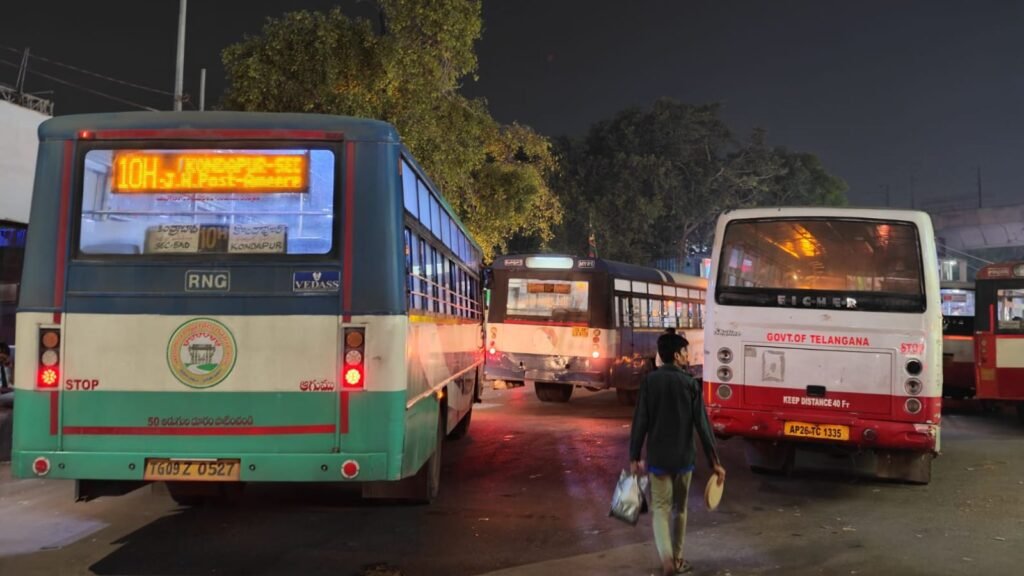
Hyderabad: “Kondapur, Hitech… Kondapur, Hitech” – Balaiah has been calling out the two names for a while, his voice carrying across the Secunderabad bus station. The 50-year-old conductor of the Telangana State Road Transport Corporation (TGSRTC) is trying to fill the 10H, one of the corporation’s new night buses. With him is the driver, Ramalingam Swami. Neither of them is in a hurry, as they wait for the next train.
When it pulls into Secunderabad Railway Station, the passengers who step out walk towards the bus station, and some of them climb aboard. Within five minutes, the 10H is full. It is 11.25 pm.
The 10H runs between Secunderabad and Kondapur. It passes through the Begumpet-Ameerpet stretch and goes into the IT corridor around HITEC City. It is one of six routes on which TGSRTC began running buses between 10 pm and 5 am on September 1, under the “Third Shift” banner.


The corporation said it chose the routes after studying passenger demand late at night and early in the morning, with night-shift employees in the Greater Hyderabad region in mind. Fifteen buses were put on the six routes. Two of them run on the 10H, roughly 50 minutes apart.
Rising number of users
The numbers have been modest, but they are rising. During the Monsoon Session of the Telangana Legislative Assembly, Transport Minister Ponnam Prabhakar told the House that 9,286 passengers had used the night buses in the first week.
An RTC official told Siasat.com that the count has since crossed 60,000. “We can see a 30 to 40 per cent occupancy rate. It is slowly picking up steam, and it is encouraging,” the official said.

The TGSRTC has reason to watch these figures. It ran night buses once before, as “Night Riders,” and withdrew them because too few people used them.

At this hour, the roads are almost empty. The 10H crosses some of the city’s busiest junctions, the ones that stay choked through the morning and evening rush. Most drivers would welcome a clear road. Swami is wary of it.
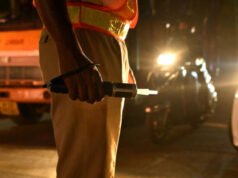
Late at night, he said, people who have been drinking get behind the wheel and drive rashly. “The chances of accidents increase. Hence, I have to be very careful while driving,” he tells Siasat.com.
Even with the roads clear, the bus takes almost an hour to reach Kondapur. Swami turns it around for Secunderabad. This time it is nearly empty.
A few passengers get on along the way. Some are coming back from a late show at the movies and others are on their way home from work. One of them is Ravi Kumar Yadav, a chef at Bawarchi hotel, who is from Bihar.
“Earlier, I used to spend nearly Rs 200 on cabs. Now I spend just Rs 45,” he said.
By 4.30 am, the bus has made six trips up and down the route. Only the first and the last were full. In the hours in between, it ran mostly empty, with a passenger getting on here and there.
The last run, from Kondapur to Secunderabad, fills up again. The passengers are younger this time. They are IT and non-IT professionals who have just finished work and are heading home.

Will the demand last?
One night on one route cannot tell us whether the service will last this time. It does show where the demand is. People use the bus at the two ends of the night, when trains come in and shifts change.
For them, a Rs 45 ticket instead of a Rs 200 cab fare makes a real difference. Through the quietest hours, the buses run largely empty. TGSRTC officials have said they will review the routes and change the number of buses and the timings to match demand.
The Minister has said commuters are already asking for night services on more routes.
SOURCE : SIASAT