

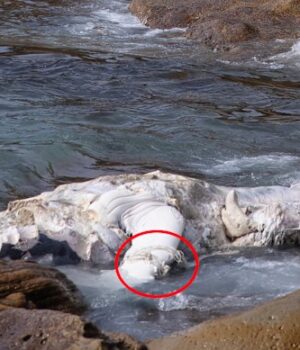
source : the age
Authorities are hoping high tide removes a washed-up whale carcass that has closed two Sydney beaches and triggered warnings of increased shark activity in the eastern suburbs.
Lifeguards reported the decomposing whale floating in Lurline Bay, a rocky enclave between Coogee and Maroubra, just before 8am on Thursday.
The council has closed Maroubra and Coogee beaches until further notice and has restricted access to the surrounding rock shelf.
“So that the community is kept as safe as possible, we have cordoned off the area to leave this creature in peace,” said Randwick Mayor Dr Clare Willington.
“Occasionally, a carcass … can attract the interest of predators in the water, particularly sharks,” she said. “We are hoping that the community will be respectful of those closures and understand that we will be reopening the beaches as soon as we feel it is reasonable and safe to do that.”
Willington thanked the Gamay Rangers, the NSW Department of Primary Industries and national parks staff for managing the “sad and unusual” situation while being culturally respectful.
“The whale is an important totem animal to the local Bidjigal people,” Willington said.
Senior Gamay ranger Robert Cooley said the location and conditions surrounding the carcass were a challenge, with swell and north-easterly wind pushing the whale onto the rocks and no easy way to get machinery into the bay.
“Our preference is to let nature take its course,” Cooley said.
“The option that has been used in recent years is to take [whale carcasses] to landfill, which causes distress to our community. So we want to avoid a situation like that where possible.”
The whale appears to be an adult or subadult humpback, and its body is too rotted to take a sample for bird flu testing.
“The state of decomposition is too advanced to be able to do testing that is reliable, but we have to regard all dead animals as potentially infected with H5N1,” Willington said. “So we would strongly advise the community to keep a very good distance.”
The whale has rope around one of the pectoral fins, which Cooley said related to an attempt to haul the carcass further out to sea on the northern beaches on Wednesday.
“It looks like it could have been dead for a while and washed in,” whale scientist Dr Vanessa Pirotta said. “I would strongly advise against swimming.”
The washed-up carcass coincides with the likely return of bull sharks to Sydney’s waters.
The sharks migrate north to Queensland during the cooler months and swim back towards Sydney when coastal temperatures reach 19 or 20 degrees.
While the sharks prefer temperatures of 22 degrees, and peak in activity during January and February, research has shown the first sharks are arriving earlier in October each year – and staying around Sydney about a fortnight longer than they used to – as water temperatures climb under climate change.
In April, a 25-tonne sperm whale washed up near Era Beach and forced the closure of all beaches in the Royal National Park due to the risk posed by scavenging sharks.
An estimated 50,000 humpbacks are migrating south to the Antarctic after travelling to warm tropical waters near the Great Barrier Reef to breed and give birth.
Once back in polar waters the whales will gorge on krill, building up blubber over summer to prepare for their next hemisphere-spanning migration in winter. Coles and Woolworths recently stopped selling krill oil supplements amid a global campaign drawing attention to the industry’s effect on wildlife including whales.
Humpbacks were hunted to near-extinction but have staged a spectacular recovery since whaling stopped in the 1960s, increasing their population by 10 per cent each year.
Be the first to know when major news happens. Sign up for breaking news alerts on email or turn on notifications in the app.
 Angus Dalton is the science reporter for The Sydney Morning Herald.Connect via X or email.


