Source : the age
DANCE
The Nutcracker ★★★★
The Australian Ballet, Ian Potter State Theatre, Arts Centre Melbourne, until October 31
The State Theatre has reopened after 2½ years of renovations, and Arts Centre Melbourne is keen to reassure audiences that its familiar character survives. The Australian Ballet has taken the hint, returning home with Peter Wright’s The Nutcracker, created for Birmingham Royal Ballet in 1990: an old favourite offering reassurance on a suitably extravagant scale.
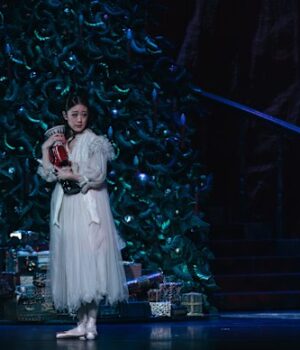
John F. Macfarlane’s gigantic, dreamy designs seem almost to have grown out of the theatre. The Stahlbaums’ drawing room, swathed in dark red curtains, extends the auditorium’s crimson plush into the family Christmas party. With festive decorations glistering like seams of emerald in the shadows, the whole experience feels deliciously subterranean: a theatre and a household tucked into the same deep burrow. We’re all here underground together.
Yuumi Yamada supplies the youthful enthusiasm this cosy fantasy needs. Her Clara, a ballet student dreaming herself into a ballerina, is eager, unguarded and winsomely adolescent, and her delight in everything has an attractive freedom. Jarryd Madden’s fatherly Drosselmeyer offers a steadying presence.
The finest enchantment in this version remains Wright’s reimagined version of the Dance of the Snowflakes at the end of the first act, led here by Isobelle Dashwood’s graceful Snow Fairy.
On Saturday night, the second act sometimes felt rushed. The national dances were briskly dispatched, and the Waltz of the Flowers grew a little unruly, the ensemble’s lines scattering beneath Macfarlane’s overhead tangle of streamers. Intentional or otherwise, the visual rhyme was actually quite enjoyable: the flowers and their consorts seemed to have caught the delirium of the decoration. But the entrance of Sharni Spencer’s queenly Sugar Plum Fairy soon restored order.
The theatre itself still smells new. The seats are a considerable improvement, although the space between rows feels even more miserly than before. The additional aisles do, however, offer more accessibility. The gridlock in the stalls after the curtain comes down is now, I hope, a thing of the past. The acoustics require a more cautious verdict after one visit, but, still, Orchestra Victoria – led by Jonathan Lo – sounded very good to me, with a notably crisp brass section.
Familiarity has its attractions and there is still plenty in this production – such as the battle beneath the Christmas tree – that impresses. On the other hand, after nearly two decades and five seasons in The Australian Ballet’s repertoire, this Nutcracker is starting to feel a little old-fashioned. The building has had its renovation – now for the ballet?
Reviewed by Andrew Fuhrmann
JAZZ
Melbourne International Jazz Festival
Closing weekend, October 23–25
When Tigran Hamasyan was a child, he dreamed of playing guitar in a heavy-metal band. On stage last Friday, he was playing piano in a recital hall rather than shredding on electric guitar for a moshpit full of metalheads, but his incendiary concert left us in no doubt that his childhood ambition was still lodged firmly in his heart and hands.
Volume, velocity and virtuosity were the hallmarks of his quartet’s performance on the closing weekend of this year’s Melbourne International Jazz Festival. The delicacy and ethereal beauty that defined Hamasyan’s solo show at the festival in 2017 surfaced occasionally, via hushed melodies and haunting echoes of Armenian folk music. But for every glimpse of light and nuance, there were a hundred frantic runs and pummelling chords, with thundering drums and a bass sound so penetrating that its vibrations were felt more than heard.
This was music as extreme sport, the players executing mind-bending rhythmic puzzles and building elaborate, interlocking motifs with astonishing synchronicity as they expanded on the bold vision of Hamasyan’s album Manifeste. Often using his piano as a percussion instrument, Hamasyan pounded the keys with visceral intensity as he sparred with Yessaï Karapetian’s churning keyboards or locked in tight with the jagged momentum of Marc Karapetian’s bass and Arman Mnatsakanyan’s drums.
Witnessing the band at full force felt like riding bareback on a runaway stallion while clinging on for dear life, or being tossed about in a dark, roiling ocean filled with unpredictable currents. It was gripping and immersive, exhilarating and exhausting – a fascinating window into the ever-mutating world of this unique artist.
One of the festival’s biggest names, Dee Dee Bridgewater, was scheduled to perform on Saturday, but the US singer withdrew from the festival just days before her concert due to ill health. Losing an international headliner will undoubtedly have left a sizeable dent in the festival’s coffers, but there was still plenty of exceptional music on offer that day.
The morning drizzle cleared and the clouds parted just in time for Mandisi Dyantyis’ outdoor show in Prahran Square. The South African trumpeter and singer fronted a superb nine-piece local band – Afrospace Interchange – that helped bring Dyantyis’ vibrant music to life. Warm and impassioned, Dyantyis roamed the stage or used gestures to communicate the story of each song, buoyed by the band’s exuberant rhythms, majestic horns and uplifting vocal harmonies.
Later that night, American cellist-composer Tomeka Reid and her quartet gave a riveting performance in the newly opened second room at JazzLab – a seriously impressive venue that’s twice the size of the original room while still retaining an air of intimacy.
Drawing on their latest album, dance! skip! hop!, Reid and her remarkable colleagues (guitarist Mary Halvorson, bassist Jason Roebke and drummer Tomas Fujiwara) navigated the leader’s intricate compositions with supreme precision, though the arrangements still left room for spontaneous interplay.
This was a highly collaborative affair, with all four instruments given equal prominence. Roles were fluid, too: Reid’s cello could mimic sonorous basslines, pluck deft harmonies or maintain an earthy pulse as her colleagues darted nimbly around her. Her interactions with Halvorson were especially vivid, the pair moving in deft unison or harmony, or conversing in improvised spurts as Halvorson added pitch-bending slides and expressive smears.
On Sunday night, bassist and composer Dave Holland – a seminal figure in jazz for more than half a century – took to the stage with three contemporary masters of the genre: saxophonist Chris Potter, guitarist Lionel Loueke and drummer Eric Harland. Reuniting to celebrate the 10th anniversary of their album Aziza, the quartet revisited the repertoire from that album with thrilling vitality.
Holland’s agile basslines anchored each piece with effortless authority, underlining the funky swagger of Aziza Dance, the airy calypso shuffle of Summer 15 and the complex metric variations of Blue Sufi.
The final number was infused with an upbeat Afro-Latin feel, Loueke trading animated phrases with Potter’s muscular tenor over the rhythm section’s bustling propulsion. The tune? Sleepless Nights – an apt title for patrons who’ve filled their past ten days and nights with memorable music, and a fitting way to farewell this year’s festival.
Reviewed by Jessica Nicholas
NOTE: No star rating has been applied to the above review
MUSIC
Twilight Dialogues ★★★★
Melbourne Chamber Orchestra, 75 Reid St, October 25
Frequent reminders we live in the country with the oldest continuous music practice in the world have hopefully set stale notions about “old world” and “new world” art on their head.
This polished and engaging program of clarinet quintets in which Brahms’ beloved work in the genre was preceded by Songs from the Bush written by Melbourne-born pianist and composer Ian Munro, explored subtle connections between European and Australian art music.
Dating from 2009, Munro’s three-movement score reveals a masterly grasp of classic chamber music writing, offering intriguing changes of mood and texture. Incorporating folk tunes collected mid last century and an adapted Walmajarri children’s song, he creates a uniquely Australian soundscape.
Country Dance incorporates an unnamed Irish jig while Campfire and Night Sky reimagines classic night music with a freewheeling clarinet over gentle pulsing, muted strings. A Drover’s Lament summons up the pathos of the lonely immigrant before final percussive string effects suggest a ticking clock and the reminiscence of celebrations long ago, whether Indigenous or colonial.
David Griffiths’ mellifluous and multi-hued clarinet eloquently voiced the music’s emotional flow, enjoying a fine rapport with the string quartet formed of principals from the Melbourne Chamber Orchestra, especially first violin Sophie Rowell.
Together with the other members of the ensemble (violinist Kathryn Taylor, violist Merewyn Bramble and cellist Blair Harris), the Brahms was given a vivid, nuanced performance.
The opening tension between restive drama and questing lyricism was well established, while Griffiths excelled in releasing the passionate heartache of the Adagio, muted strings recalling Munro’s use of the same effect. Highly characterised, the sunnier Andantino and the finale’s set of variations demonstrated the players’ tightly knit synergy.
Part of the dynamic artistic leadership Rowell brings to the entire MCO enterprise, thought-provoking chamber music concerts such as this are a welcome bonus.
Reviewed by Tony Way
MUSIC
Louis Tomlinson ★★★★
John Cain Arena, October 20
The screams that greet Louis Tomlinson give me a contact high. Die-hard fans have legged it to the barrier and thrust stage. The word “Lemonade” flashes on-screen, towering over Tomlinson and his five-piece band. He cuts an amiable, Gallagher-type figure in a puffy red jacket and jeans. Until he’s briefly engulfed in a confetti explosion.
Music videos are composed live, faces projected dystopia-large with film effects, high-contrast overlays or psychedelic sunflowers, with colour-saturated stage lights and even a synth-laser show for Broken Bones.
It’s a leap from the opening act, Rum Jungle, the kind of Aussie indie group you play driving to the beach on P-plates with your mates.
Tomlinson gets somewhat swallowed in the production. The mixing does no favours, his piping, Arctic Monkeys-style vocals no match for thundering drums in songs like The Spark. He’s often lost in backing harmonies and the word-faithful crowd, unless it’s the pared-back cover of the Foo Fighters’ My Hero.
But Tomlinson’s impeccable band shines. Oozing rock, they unify eclectic leaps from funk pop and acoustic ballads to nostalgic indie/Britpop like the Oasis-esque Saturdays and Franz Ferdinand-style dance riffs in Out of my System. Keyboard skips between plinking piano and glimmering synth as the guitarists and bassist pace like tigers to tumbling, chest-shaking beats and rip blistering solos.
Tomlinson performs a pop persona perfectly. Gracious and grateful. Hand on heart, pointing to swooning fans. His grinning, Yorkshire-accented commentary is lightly peppered with profanities: “Loud as you fooken’ can!”
In return, the One Direction star is utterly adored. For One Direction’s Night Changes, a sea of phones rise, recording intently. Tomlinson’s grim-faced guards have to pull him back from the barrier when ladies get grabby in the encore. I only wonder if he regretted the jacket in the fervent, feminine body heat filling John Cain Arena.
Reviewed by Kosa Monteith
The Booklist is a weekly newsletter for book lovers from Jason Steger. Get it delivered every Friday.
 Jessica Nicholas is an arts and music writer, specialising in contemporary jazz and world music.