

source : the age
NSW Police officers have pursued more drivers than ever on the state’s roads, resulting in the force’s deadliest year and an overhaul of its controversial driving policy.
New data reveals the force undertook 5042 pursuits in the 2025-26 financial year, resulting in 536 collisions, 73 injuries and nine deaths. It’s the equivalent to 14 pursuits a day, 10 collisions a week and a death every six weeks.
The revelation triggered calls for tighter restrictions on high-speed driving by police to better protect public safety.
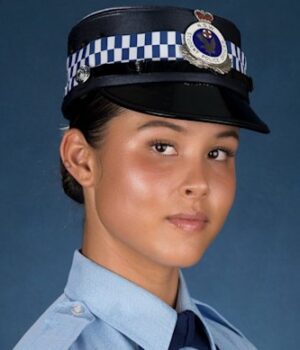
The NSW Police Safe Driving Policy came into question following the death of Constable Mia Lay in a crash at Redfern in September. The 20-year-old was the passenger in a marked patrol car driven under lights and sirens by Constable Brandon Torrisi in response to a reported vehicle theft when they crashed into a tree at high speed in a 50km/h zone. The incident is under investigation.
NSW Police told this masthead a new driving policy with a focus on safety came into effect at the beginning of November, following a review of its previous guidelines. The new policy, which is not publicly available, does not specify the criteria for which a pursuit can be undertaken but is more prescriptive on risk assessment and external oversight.
More than half of NSW Police pursuits in 2025-26 were for traffic offences and a quarter were for failing to stop for random breath testing. Police in neighbouring states are only permitted to carry out pursuits for serious offences or where there’s an imminent risk to life or public safety.
Former NSW deputy state coroner Hugh Dillon, who has been calling for reform since 2014, said pursuits are dangerous and should be considered a use of force, like a weapon. “If police fired warning shots 5000 times a year and some people were killed as a result, there would be a massive outcry,” he said. “I think that’s exactly how we should look at it.”
Dillon said he accepted police want to reduce the road toll and need to enforce the law but argued high-speed pursuits should be reserved for preventing more serious danger than the pursuit itself.
November 26 would have been the 61st birthday of Harri Jokinen, who was killed when a driver in a stolen car crashed into his van during a pursuit on the Monaro Highway south of Canberra five years ago.
His partner Elisabeth Adamson said she was horrified by the latest data.
“We’re not trying to ban pursuits,” she said. “But I wholly support bringing NSW’s policy in line with Queensland, Victoria, Tasmania, South Australia and the ACT so you only chase for serious crime or if there’s a life at risk – not for minor traffic offences. All that does is amplify the risk to the community.”
Adamson is advocating for change, despite the significant trauma it brings up, but is not convinced NSW Police will meaningfully alter its approach. “Tell me if your stolen vehicle was worth the life of someone?” she said. “I can tell you it’s not.”
She is concerned police officers would find it difficult to make appropriate and calculated decisions amid the adrenaline of a pursuit or high-speed driving.
Alternative methods that can be deployed to catch drivers who fail to stop for police include automatic number plate recognition, drones, road cameras, GPS tracking, road spikes and helicopters.
Assistant Commissioner David Driver, commander of the Traffic and Highway Patrol, co-chaired the driving policy review with Deputy Commissioner Paul Pisanos.
“The changes implemented within the NSW [Police Force] Driving Policy are intended to give police clear operational guidance while re-enforcing that safety, professional judgement, continuous risk assessment and proportionality remain central to all police driving decisions,” Driver said.
NSW Police reported seven pursuit deaths in its 2025-26 annual report, which is the highest number since it began releasing statistics 11 years ago.
However, that tally did not include two women who died after a pursuit was terminated in south-west Sydney in February.
Maureen Crosland, 84, and Lee Casuscelli, 60, were killed when a driver in a stolen car who had been pursued by police by road and air crashed into the vehicle they were travelling in. The pair had been on their way to pick up a wedding dress for Crosland’s granddaughter.
Following questions from this masthead, NSW Police confirmed their deaths have been reclassified as pursuit-related, bringing the death toll to nine.
A spokesperson said the total number of pursuits carried out in the year to date has fallen compared to the same period last year.
Traffic offences were the main driver for pursuits in 2025-26, accounting for 2709 cases. Failing to stop at RBTs was the reason for 1251, while 826 were for a stolen vehicle and 584 were for criminal offences.
“It’s a very dangerous way of enforcing laws for which the penalty if someone just stopped would have been a fine,” said Dillon.
Horse racing identity Bert Vieira believed he and his wife Gai would be travelling the world, playing golf and enjoying retirement.
Instead, she requires 24/7 care and is unable to walk. Mrs Vieira was left with permanent injuries after a police officer crashed into the side of her car at speed in Cronulla in 2018. He had been pursuing a driver suspected of using his mobile phone while driving.
Vieira has campaigned for stricter rules but has lost hope that anything will change. “Unless you are chasing a killer, you are going to cause a lot more death around the place with pursuits,” he said.
He fought unsuccessfully to have the officer, who was convicted of negligent driving occasioning grievous bodily harm, jailed. He was also unable to sue police for compensation.
“Gai is such a beautiful person and it’s not only her who has been impacted – it’s her family and other people too,” he said. “The police have destroyed a lot of lives.”
NSW Police Minister Yasmin Catley acknowledged the devastating impact of pursuit deaths and injuries, which are subject to critical incident investigations overseen by the Law Enforcement Conduct Commission.
“Decisions around whether to engage in a pursuit are operational matters made by police on the ground and the potential risks of doing so must always be considered,” she said.
The new policy recognises that pursuits are high-risk and prioritises safety, she added.
It can be challenging to get public support for action on pursuits, according to Adamson, as most victims are the alleged offenders. “But as one of my lawyer friends says, we actually don’t have the death penalty in this country,” she said.
Since 2014-15, when NSW Police began publishing pursuit data as a result of a coronial inquiry and recommendations by Dillon, there have been 39,298 pursuits, 3324 collisions, 659 injuries and 33 deaths.
Start the day with a summary of the day’s most important and interesting stories, analysis and insights. Sign up for our Morning Edition newsletter./
 Clair Weaver is a senior writer at The Sydney Morning Herald.


