

source : the age
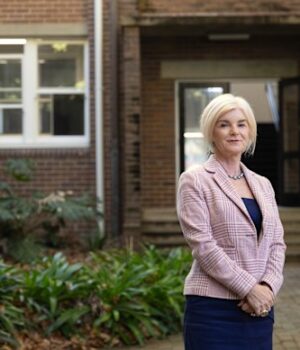
When Rachel Powell took the helm of the esteemed 143-year-old Sydney Girls High, the veteran principal had some changes in mind that she thought might prove difficult to implement.
After all, it is not uncommon among Sydney’s sandstone schools for some in the community to have big opinions about minor decisions.
“I’m coming in with a big change agenda, and all leaders know that change is a very difficult thing to manage,” Powell said.
Powell is part of a new generation of leaders across Sydney’s top-performing schools. King’s, Wenona, Ravenswood, Cranbrook, Sydney Grammar, SCEGGS, Shore, James Ruse and Sydney Girls High all appointed new leaders over the past two years.
The head of Knox Grammar and principal of The Scots College will also depart next year.
Principal tenures at some sandstone schools can extend beyond a quarter of a century. For others, the prestigious job can blow up spectacularly a few years into a contract, such as when the former Kambala head faced a vote of no confidence before resigning and later launching defamation action that was settled out of court.
For Powell, at Sydney Girls, an initial task was to meet every staff member of the school.
“Everybody had 15 minutes of my time, and that was really helpful for me as a starting point,” she said.
She embarked on weeks of fact-finding, surveying students and observing classes, before implementing such changes as introducing shorts to the uniform, in consultation with the school’s alumni. “A leader should be a good listener first and foremost,” Powell said.
To that end, she held a staff vote to decide whether to shorten lessons from 80 minutes to 60 minutes. It passed.
She put her own stamp, too, with the introduction of daily 15-minute wellbeing sessions.
“If the wellbeing isn’t right, you’re never going to get academic results,” she said.
At SCEGGS Darlinghurst, one of the state’s top-performing girls’ schools, Holly Gyton took over from Jenny Allum at the start of this year, making her the sixth head of school since it opened in 1895.
“You’re building on the legacy of five extraordinarily strong, independent women leaders,” she said.
So rather than walking into the principal’s office with a change agenda, the long term deputy principal at the school brought an approach that focused more on mindset.
“With such a long-standing history, to imagine I would change anything radically in one year would be conceited and arrogant,” Gyton said.
Her disposition stems from a deeper belief that within the education landscape, there is far too much “lurching and trying to take on the next fad” rather than continuous, thoughtful evolution of a quality education.
“We don’t just leap on board instantly because kids are far too precious to just be experimented with,” she said.
Gyton describes the school’s culture of academic excellence with a feminist streak – and a sense of fun.
“I think we know how to have a laugh,” she said. From time to time, in assembly, she will show students an episode of Bluey.
During her first year, she taught each year 7 mathematics class for a week to get to know them. She wants teachers to feel like they have a voice in the process. She told a school assembly after becoming principal that she, like everyone else, was not perfect the first time she did something.
“It’s a little bit like when you take the training wheels off the bike,” she said. “You will wobble a bit, and I will wobble this year, and I hope I don’t fall over and completely crash,” she said. “When you’re learning something new, no one is perfect the first time. And that’s OK.”
There are plenty of things to get your head around as principal.
For Shore head Dr Peter Miller, it was not his “first rodeo”, having led schools in Victoria for 18 years before taking up the top spot at the North Sydney school.
“Probably the surprise … is just the scale of the operation of a school like this,” he said. There are boarding, facilities, staff and students to manage and a lot of stakeholder care. Amid what might be a dizzying number of daily decisions, his guiding north star is always student experience.
“[A leader has] to have clarity about what is informing the decisions you make because there’ll be different views and different objectives and different imperatives,” he said.
Miller defines Shore’s culture as placing importance on everything, spanning academics, sport and extracurricular, and fostering a sense of curiosity, wonder and a genuine interest in learning.
He is aware that the school must also model what it talks about when it comes to respect for women. He aims to instil in students what he calls “confident humility”.
“The emphasis is on humility, not confidence. I see confident humility as being the flipside of lazy arrogance.”
But he says that change goes beyond language and extends to action.
“The students are watching,” he said. “They’re sponges, and the best indicators for injustice or hypocrisy are your students at your school.”
After leading two other schools, there have been some surprises at Shore.
“The buy-in from the boys and the commitment to the place has been quite delightful.”
It has been a similar experience for incoming Ravenswood principal Sue Floro, who previously led the preparatory school at Knox.
Her first year has been about “listening, observing and understanding Ravenswood”.
But plans are afoot, building upon its Positive Education program, it will become the first school globally to introduce The Human Being School, developed with mindset coach Ben Crowe.
The goal is to equip the girls with an “adaptable mindset” and to navigate the future with optimism.
She said the greatest challenge was that Ravenswood was a big place with many talented girls involved in a range of pursuits.
“[W]e are incredibly fortunate to have such dedicated staff who show up for our girls every day, supporting and celebrating them in everything they do,” she said.
Start the day with a summary of the day’s most important and interesting stories, analysis and insights. Sign up for our Morning Edition newsletter.


