

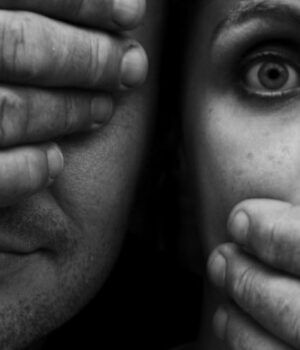
source : the age
No one asked Alice* how she felt about the man charged with covertly filming her showering at a public pool, being kept a secret.
She didn’t know his name or what he looked like; only that he was a 49-year-old doctor who lived in Hawthorn – the same suburb where Alice worked.
After the man was charged, 25-year-old Alice says she spent her lunch breaks glancing around at every man who walked by, contemplating if any of these people could be the one who allegedly filmed her under a stall door without her consent while showering at the Harold Holt Swim Centre in Glen Iris earlier this year.
“I had to watch and read that he was out there, but I did not know his face.”
For more than three months, the identity of the man was banned from being published due to a suppression order being sought to protect the psychological safety of his child, who was unaware of the investigation.
Following his arrest, the court heard that Alice had been showering in one of the pool’s private cubicles when she allegedly noticed a phone camera lens facing her from a locked stall next to hers.
After she called out to the centre’s lifeguards for help, Victoria Police attended and the man was arrested at the scene.
Police allege that when the man unlocked his phone and showed it to them, multiple images and videos were found in a deleted folder depicting unknown females and a child, believed to be aged about three, at the pool and other unknown locations dating back to 2024.
The alleged perpetrator’s right to privacy, Alice says, made her angry. “It made me wish that I’d kicked down the door [of the shower stall] that day myself. I felt the system was not protecting the people it’s meant to protect,” she says.
“Transparency feels important. Whose privacy are we protecting?”
Alice, who has asked not to be named due to the nature of the alleged crimes, has hit out at what she fears is the “weaponising” of Victoria’s suppression system and the proliferation of gag orders growing – largely among the state’s rich and powerful.
At no time, Alice says, was she asked how she felt about the man being granted anonymity or given the option to challenge the magistrate’s decision.
It was only after sustained legal objections by this masthead that the suppression order issued in May was overturned.
The man accused of filming Alice that day can now be named as Thanh-Thuan Nguyen – a 49-year-old family GP who tried to hide his face by holding up a sign with a Bible verse and the word “sorry” on it when he recently left the Melbourne Magistrates’ Court.
Grounds for a proceeding suppression order, s18 of the Open Courts Act 2013, include:
A court or tribunal other than the Coroners Court may make a proceeding suppression order if satisfied as to one or more of the following grounds:
(a) the order is necessary to prevent a real and substantial risk of prejudice to the proper administration of justice that cannot be prevented by other reasonably available means
(b) the order is necessary to prevent prejudice to the interests of the Commonwealth or a State or Territory in relation to national or international security
(c) the order is necessary to protect the safety of any person
(d) the order is necessary to avoid causing undue distress or embarrassment to a complainant or witness in any criminal proceeding involving a sexual offence or a family violence offence
(e) the order is necessary to avoid causing undue distress or embarrassment to a child who is a witness in any criminal proceeding.
With police still analysing more than 20 electronic devices seized from his home following his arrest, Nguyen is yet to enter a plea. He has been charged with five offences – including the production of child abuse material.
Following his arrest, Nguyen was the second Victorian doctor to be granted a suppression order over their identity in a matter of weeks, with another charged with raping a woman in his home also granted anonymity after citing mental health concerns.
Alice acknowledges that the criminal proceedings remain in the early stages of what could take years to resolve, including the possibility of Nguyen being found not guilty.
But she says the public generally has a right to know who is accused of what crimes in the community, particularly if a doctor is at the centre of the allegations. People should be able to scrutinise the system, and make risk-based decisions on what they find.
Alice says the temporary suppression order prolonged her traumatic experience, leaving her to deal with the system, and allowing rumour and speculation to run rife.
An analysis conducted by The Age found that across Victoria in 2025, almost 500 suppression orders were issued. The most common reason for an order being issued was on safety grounds, including for mental health reasons.
In August, former celebrity agent Ralph Carr was finally named as the man found guilty of rape on July 28, after a suppression order that had been in place for more than three years on pyschological safety grounds was lifted.
Tom Silvagni, the son of former footballer Stephen Silvagni, also had his proceedings suppressed for 18 months before he was found guilty of two counts of rape in late 2025.
As community disquiet about “psychological safety”-based secrecy orders grows, senior psychiatrists publicly stated in August there is no way to reliably predict the risk to an accused’s mental health from media reporting of their cases.
But leading barristers say suppression orders more broadly are often necessary to secure a fair trial for an accused person – who is still by law presumed innocent.
Alice recalls reading about the Silvagni case and the suppression orders that loomed over it, which she believes harmed the community.
She says she is not an angry person, and understands many suppression orders are necessary. But scrutiny, she says, is important around rich and powerful people who have the resources to keep their cases a secret.
Open justice, Alice says, can also encourage other potential victims to come forward.
“I felt grief for the [Tom Silvagni] victim. Powerful people – the world is really in their favour. But being too rich and powerful in these circumstances feels dangerous,” she says.
“I reported what I thought I saw, and I’m proud of myself for making that report.”
In her workplace, Alice facilitates group therapy. She says that there, they often speak about a shared responsibility to protect the room over an individual, with hard conversations and support in place.
“A mum doesn’t get to decide when and where she is when she gets that call from the police telling her her child may have been filmed. Victims, they have no choice in that. I did not have a choice,” Alice says.
“Sometimes you have to protect the greater good.”
*Alice is not her real name.
Start the day with a summary of the day’s most important and interesting stories, analysis and insights. Sign up for our Morning Edition newsletter.


