source : the age
To submit a letter to The Age, email letters@theage.com.au. Please include your home address and telephone number. No attachments, please include your letter in the body of the email. See here for our rules and tips on getting your letter published.
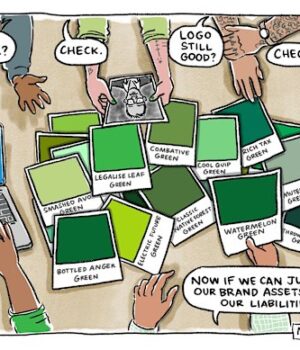
As one involved in their formation, I must say that the Australian Greens were not started to supplant a party of the left, as the new leader has stated (″New Greens leader sends a shot across the bow of Labor″, 1/10). The original concept was to move from the destructive narrow-minded left-right economically based spectrum of politics ie, socialists v capitalists. The idea was to replace this decrepit self-serving notion with one based fundamentally on a healthy environment. Without environmental protection and nature conservation as a foundation principle, society was perceived, as the evidence of the past 50 years has shown, to be spiralling into economic and social chaos. Unfortunately, the election of yet another NSW-based leader in love with politics rather than outcomes means that many of us electors are left with voting at the next election for the least worst party. What a sorry outcome for anyone deeply concerned about the natural environment in Australia – the fundamental basis for a healthy, fair and just society.
Geoff Wescott, Northcote
Die may already be cast for next election
Waleed Aly is surely correct when he identifies the potential for a Greens resurgence under new leader David Shoebridge (Comment, 2/10). But the key electoral movers for 2028 are already locked in. A combined One Nation/Coalition vote has more potential to replace Labor, based purely on the numbers. Our preferential system creates immense advantages to parties that preference each other, and at present the biggest bloc of votes sits on the right. It’s true that Greens voters generally follow the card, meaning their votes eventually find their way to Labor. But we’ve never had a situation where the Liberal vote is going to flow, en masse, to another party, due to its woeful primary position. Liberal voters, like Greens voters, follow the card ensuring a swag of seats can fall to One Nation. This doesn’t require a formal preference deal, but does anyone believe that the Coalition will preference Labor over One Nation? I think not.
Greg Gardiner, Brunswick
The new idea is the new radicalism
Now is the time for a leader to inspire us with a vision of a better Australia. Their speeches will be about how to re-energise the economy and to ameliorate climate change. It will not be about bagging the other parties. One wonders whether someone like David Shoebridge is such a person. His opening salvo is about radicalism. His burden is to defeat the perception that the past Greens history under Adam Bandt was about seeking the perfect over the good. In devising policies to increase Australia’s productivity, which is much needed, and to show leadership on dealing with climate change, perhaps we need a bigger vision. This may involve working with parties because it is doubtful any one party will have an outright majority. Concentration on original and new ideas is the true radicalism.
Jan Marshall, Brighton
THE FORUM
The cost of business
I was left scratching my head recently after hearing a retailer complain about the negative impact of removing card surcharges. He argued that people paying cash would now be subsidising card users, who would no longer pay the typical 1.6 per cent fee. This overlooks a few important points. First, it was the banks and financial institutions that steered us away from cash, closing branches and removing ATMs. Second, legitimate dealings in cash are not cost-free. There are labour and other costs involved in counting, sorting, bagging, securing and transporting cash to an ever-diminishing number of deposit facilities, where it must then be processed again and credited to the merchant’s account. Cards and computers are convenient, but they reduce many of the costs and inconveniences associated with handling cash. People should not have to pay an additional fee simply for paying for a product or service. The cost of accepting payment, by whatever reasonable means, is simply part of the cost of doing business and should be reflected in the price. Profit takes care of the rest.
David Fox, Beaumaris
Transport priorities
My husband recently had to take the airport bus from Southern Cross to Tullamarine and was very impressed. A bus left every 10 minutes and they all seemed to be full. It was easy to catch a train to Southern Cross and connect with the bus. We fail to see how a very expensive train line to the airport is going to improve on this experience. Surely there are far more important public transport projects that are needed in our outer suburban areas?
Anne Maki, Alphington
E-bike risks
My sympathy to Margaret Throsby (″Throsby faces new injuries after e-bike collision″, 2/10). As a now elderly pedestrian, I’m far more concerned about e-bikes and scooters than I am about cars for the risk to my safety. A long time ago, to ride my slower and noisier moped in London, I had to be at least 17, have a licence, the moped had to be registered with a number plate, and I had insurance.
It’s not unreasonable to require the same for these electric projectiles.
Adam Thomson, Collingwood
A botched killing
If the botched execution attempt of Christa Pike in the US doesn’t have us comprehend what a grisly practice state-sanctioned murder is, nothing will.
John Rawson, Mernda
Ideas of entitlement
And I thought I was the only one fed up with noisy children disrupting the quiet of a public library (Letters, 1/10). Yes, they’re just being children, but their behaviour is the responsibility of the parent. The problem is another example of people believing they’re ″entitled″. They’re entitled to let their children ″just be children″ in a library. Dog owners are entitled to leave their dogs tied up outside the supermarket where they can ″just be a dog″, barking intrusively.
Brian Thorpe, Northcote
Climate blind spot
Recent Treasury modelling of the cost of no further action on net zero found that Australia’s GDP could be 14 per cent lower by 2050, equivalent to an estimated $6.8 trillion reduction in GDP over the next 25 years. Yet the Coalition wants to scrap net zero.
We also learn it wants to scrap the trade deal with Europe because it could ″lock Australia into legally binding action on climate change″ (″European envoy warns of $10 billion hit if trade deal fails″, 2/10). Even former Coalition finance minister Mathias Cormann, now in his second term as Secretary-General of the OECD, warns against scrapping the deal. It seems the self-labelled best economic managers still have a blind spot when it comes to climate.
Ray Peck, Hawthorn
Out of control
I welcome columnist Cherie Gilmour’s timely reminder to “Beware lifestyle creep turning little luxuries into staples″ (30/9). This comfort or ″lifestyle creep″ quietly emerges with oat lattes,Uber eats and streaming services as an increasing number of small comforts ″now feel like entitlements″. Perhaps like governments, we barely notice that ″our discretionary spending had gotten out of control″?
Kevin Burke, Sandringham
Recognising reality
Josh Burns accuses David Shoebridge of causing social division between Australian Jews because he acknowledges that many fervently support Israel, in spite of its genocidal actions in Gaza, while others strongly oppose its policies. That is not causing division, or being prejudiced, it is recognising reality when it stares you in the face. The government’s reluctance to sanction Israel for war crimes and to continue sitting on the fence while international law is continually flouted, does not help matters. Shoebridge has the courage of his convictions, would that Anthony Albanese had.
Lorel Thomas, Blackburn
Why no Green wave?
Like Waleed Aly, I have been trying to understand why there has not been a Green wave in Australia (Comment, 2/10). It may be that the Greens receive relatively little media attention. In an era of growing distrust of institutions, it may also be that voters perceive the Greens to be part of the political establishment.
Yet the Greens could hardly be more different from the major parties. Uninfluenced by corporate lobbyists, they consistently argue that public policy should put people ahead of large multinationals. Whether on housing, healthcare, inequality or climate action, they seek to make Australia fairer and more sustainable for all.
Perhaps the real question is not why there hasn’t been a Green wave, but why so many Australians have overlooked the party most committed to confronting the challenges ahead.
Amy Hiller, Kew
Services and spending
Calls for the government to cut spending to control inflation are not new, but there seems to be a public disconnect between government spending and services. Necessary cuts to the NDIS to control spending were met with protest. Cuts to veterans’ access to allied health had to be reversed. Removal of tax breaks for investors was subject to a concerted campaign of misinformation.
Instead of spending cuts, people want more government spending – higher pay (deserved) for nurses, teachers, doctors, more police, more public transport, more hospitals, better schools etc. There are areas in which I think the government can cut spending – stop funding rich private schools with their multi-million-dollar sports centres being one – but many would disagree with me.
Higher taxes on companies and extremely wealthy individuals may take some heat out of the economy if banked, not spent, but the resulting protests would be vicious.
The arithmetical impossibility of cutting spending and at the same time maintaining or increasing services is rarely recognised.
Louise Kloot, Doncaster
Rise of the machine
As I read of our fears of AI, I am reminded of The Sorcerer’s Apprentice, whose moral is “never invoke powers or tools that you do not fully understand or cannot control”. That it was written in the 2nd centur, reminds us that the weakness in the AI revolution is not the technology, but humans who have changed very little since Lucian’s time. For Donald Trump to suggest that we should now refer to the technology as super intelligence rather than artificial intelligence, is implying that it is no longer a tool, but already its own entity.
Kevan Porter, Alphington
Perambulation shock
Your correspondent (Letters, 2/10) writes about prams left outside shops in England. We all did it, the prams were big, beautiful, bulky and impossible to get into or out of shops. As a new (very tired) mother, I once forgot my baby in the pram and walked away, until I almost had a heart attack and went back to get her. I still shudder at the memory.
Myra Fisher, Brighton East
AND ANOTHER THING
Artificial intelligence
Is Donald Trump calling himself a very stable genius an indication of the presence of artificial intelligence?
Gerry Lonergan, Reservoir
Does AI have the potential to cause more chaos than Donald Trump?
Peter Carlin, Frankston South
Perhaps we have forgotten Asimov’s three laws of robotics. A robot cannot injure a human or allow one to come to harm through inaction. A robot must obey human orders unless they conflict with the First Law. A robot must protect its own existence, provided it doesn’t conflict with the first two laws. He wrote them in 1942.
Lesley Taskis, Kingsbury
Is there any AI programmed to give the greatest good to the greatest number of people?
Chonyi Taylor, Inverloch
Furthermore
Your correspondent (Letters, 1/10) was lucky, my bank manager rang me and said mine was going to 19.5 per cent!
Peter Thomas, Barwon Heads
China’s push for electrification looks stronger than ever as Donald Trump sinks into a swamp of his own making.
Paul Chivers, Box Hill North
What about the staff of the facilities and airlines at Tullamarine? A train line would help provide public transport to their work. It’s not just about going on a holiday.
Ruth Berkowitz, Kew East
Re annoying kids and dogs (Letters, 1/10), why have them?
Margaret Skeen, Ocean Grove
Is Greens leader David Shoebridge calling out genocide in Gaza antisemitic?
Hans Paas, Castlemaine
Did the Greens just clone Adam Bandt? Perhaps leadership is also part of their recycling policy.
Don Phillips, Fitzroy
Finally
I have a new idea (Letters, 30/9). Put the letters on the front page; they’re enlightening, sometimes amusing and food for thought. Add the brilliant cartoons and we’ve intellectual stimulation for the day.
Jane Ross, San Remo