

source : the age
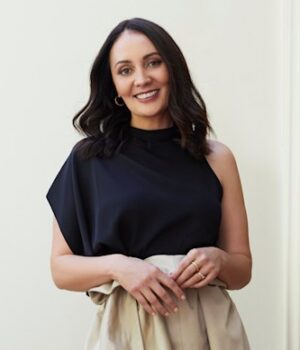
Each week, Benjamin Law asks public figures to discuss the subjects we’re told to keep private by getting them to roll a die. The numbers they land on are the topics they’re given. This week, he talks to Bridget Brennan. The award-winning journalist and presenter, 40, is a Yorta Yorta and Dja Dja Wurrung woman, and the newsreader and co-host of ABC TV’s News Breakfast.
POLITICS
You’re a trailblazer in many ways, including being the first Aboriginal foreign correspondent for the ABC. How much of that is an honour and how much is it a source of frustration that it took so long? Other First Nations people really celebrate it with you: it means so much to them. When I meet elders who watch ABC, they tell me there were never any – or very few – Aboriginal people on screen unless it was in a negative context. A lot of people didn’t see an Aboriginal journalist until Stan Grant and Karla Grant. Now I see all these amazing young black journalists – especially women – coming up. But why was I the first, in 2018? It shouldn’t have taken that long.
How have the internal politics of newsrooms changed over the course of your career, especially when it comes to coverage of Indigenous affairs? When I started out as a young Aboriginal journalist in the newsroom, I’d hear out-and-out racism. It was also standard for an Aboriginal story to belong at the back of the bulletin, behind the sport or weather. And because these stories had been covered by white journalists for so long, they were also often done so badly.
There has since been an acknowledgement within the ABC – and in some other media organisations – that these stories deserve high prominence. When some stories are deemed “controversial”, though, one question I have is, “Who gets to be the arbiter of what’s considered controversial?” In media organisations, those arbiters are predominantly white people. We probably need to have a deeper discussion about that.
You interview politicians of all stripes. Which ones surprise you – for better or worse? Barnaby Joyce is interesting. He’s such a practised media performer, but not guarded in the way many other ministers are. Malarndirri McCarthy is someone who shows up for a lot of media interviews, despite the very heavy content of what she does, day in and day out. It’s also been important for us to acknowledge that we’re two black women, often speaking about very heavy topics. I ask her tough questions – I know my stuff in the policy area – but it’s a contrast to how, so often, Aboriginal people are talked about [rather than engaged with].
What about Australia makes you cringe? We are very defensive. That hasn’t helped us have a mature, compassionate discussion about our history and its legacy.
And what do you think we get right? Our appreciation of incredible natural beauty and love of Country.
DEATH
When was the last time you grieved over someone or something? I lost my grandma last year – my mum’s mum.
Oh, I’m sorry to hear that. She was 95, a devoutly Catholic woman and the amazing matriarch of our family. She was so beautiful and glamorous, right to the end – just a force – and our life revolved around her. It’s been devastating, but she got to know my boys and she knew her [other] great-grandchildren. Last Christmas, we all felt a bit lost because she wasn’t in the centre of the room. Also, my dad, who died in his 60s.
Gee, that’s young. It is young. And it was the day after my son was born. That’s the fate of a black man in this country: so many of them die in their 60s. Black women die too young as well. I would’ve loved my kids to have known my dad, and they won’t. But I’m a little bit woo-woo and I swear my dad’s spirit went straight into my son – they’ve got the exact same eyes, and my son can be super-cheeky like my dad.
If you were to die today, what would you regret not having done? I want to jump out of a plane.
What would you be most proud of? I’m proud of my relationships: my strong relationships with my siblings; with who my kids are becoming; my relationship with my husband.
Any funeral requests? Do not come in colour. I want people to wear black. I want reverence!
Solemnity! She’s dead, people! Show some respect! Put your black on. Give me all the music and hymns – none of this modern funeral stuff. Find a cathedral in Italy.
You want a production! I do. I want people weeping in the streets.
MONEY
What was money like growing up? It was tight. My mum works in government, but when you’re a single mum with a lot of kids [Brennan has six siblings], it’s spread thin. So we rented around Melbourne and we didn’t have very much money. But we had a lot of love. It sounds naff, but I had a very, very loving upbringing. My mum’s the best.
What was your arbitrary yardstick of whether someone else was rich? When I was a teenager, the yardstick was: could you invite people over to your house? I remember thinking, “Oh, a lot of my friends have these beautiful houses and cohesive families” – which is something that I didn’t really have. Or they had cars that didn’t break down, or they went on holidays.
What have you learnt about money as an adult? Early on in my career, there were points where I should’ve pushed for more money – a better salary – and I didn’t ever really know how to do that. That was a conversation I was completely ill-equipped for.
And now? I’m much better now. As you get older, you get a better sense of your worth and you’ve got fewer f—s to give.
What constitutes money well-spent for you now? Something delicious. Or something I’ll have for a really long time.
Any money advice that you’d give to a younger version of yourself? Don’t go travelling with $20 in your bank account because you’ll only have to call your younger brothers to ask for money.
diceytopics@goodweekend.com.au
Read more from Good Weekend magazine:
Get the best of Good Weekend delivered to your inbox every Saturday morning. Sign up for our newsletter.