Source : INDIA TODAY NEWS
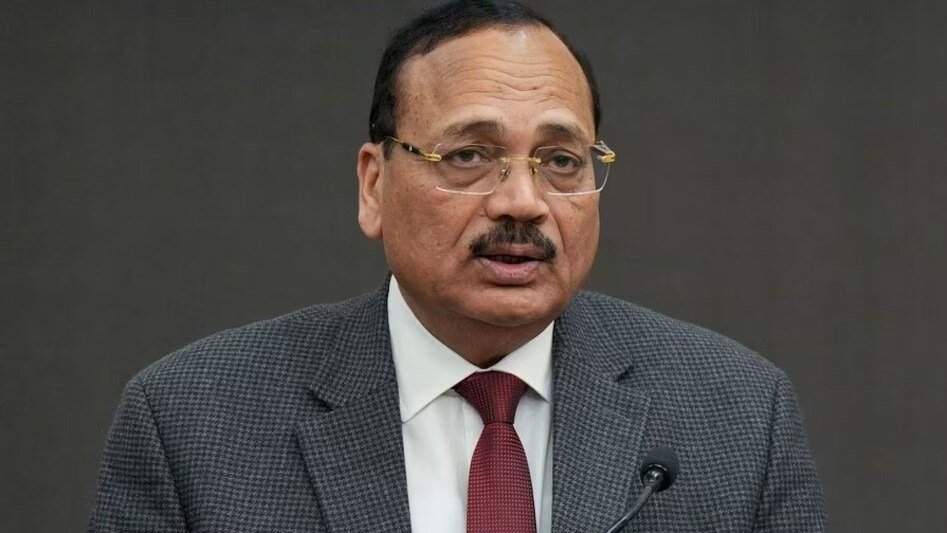
Chief Justice of India Surya Kant on Wednesday said artificial intelligence may augment judicial reasoning but cannot replace judicial conscience, stressing that the technology must support, rather than determine, judicial decision-making.
Speaking at a bilateral meeting with Ulrich Herrmann, presiding judge of the Federal Court of Justice in Karlsruhe, Germany, CJI Kant said the Indian judiciary is using AI for certain defined support functions, including legal research, translating judgments into 16 languages and providing citizens with a conversational interface to access information on case status and procedures.
advertisement
He said these tools are intended to reduce repetitive work and improve access to justice, but do not determine judicial outcomes.
“Artificial intelligence may augment judicial reasoning, but it cannot substitute judicial conscience,” Kant said. He added that draft regulations prepared by the Supreme Court’s AI Committee allow administrative uses of AI for functions such as scheduling, transcription and translation, while prohibiting its use to assess witness credibility, flight risk, recidivism or bail eligibility.
A permanent apex body has also been proposed to oversee the adoption of AI and ensure accountability, he said.
“Our two judiciaries share the same underlying responsibility: to preserve judicial independence and public confidence while adapting our institutions to new forms of litigation and new expectations of access,” Kant said.
“Technology and administrative reform can support this responsibility, but neither can replace careful adjudication, human judgment and fidelity to law,” he added.
Kant said institutional mediation centres, Lok Adalats and digital Lok Adalats, including the Supreme Court’s recent special Lok Adalat, Samadhan Samaroh, have made dispute settlement accessible to people beyond major cities. These initiatives are supported by trained professionals, case managers and secure digital systems.
He said India and Germany, as major trading partners, could benefit from greater judicial cooperation on cross-border commercial mediation, recognition and enforcement of mediated settlements, and joint training for mediators handling India-Germany commercial disputes.
At the outset of the meeting, Kant noted that India and Germany have different judicial structures and legal traditions. India follows the common-law tradition with an integrated judicial hierarchy, while Germany follows a civil-law system with separate branches of federal jurisdiction.
“These differences make the exchange particularly useful. They allow us to compare how our institutions deal with the same practical concerns, including appellate workload, consistency of case law, timely disposal, judicial administration and access to justice,” he said.
Kant identified three key areas for cooperation: harnessing technology and AI in the administration of justice, strengthening cross-border mediation and other dispute resolution mechanisms, and deepening institutional cooperation through a memorandum of understanding (MoU).
He also proposed identifying areas where courts, judges, registries and judicial academies of the two countries could continue their engagement through a structured and reciprocal programme.
The CJI said any proposed MoU could focus on technology and AI in court administration, cross-border mediation and dispute resolution, commercial and business law, and digitalisation of judicial processes.
“I propose that each side identify one institutional point of contact so that today’s discussion can be converted into a workable programme, with the MoU or another suitable arrangement to follow once the appropriate authorities on both sides have considered its scope, frequency, participants, confidentiality requirements and working language,” he said.
Giving an overview of India’s judicial system, Kant noted that the country does not have a separate constitutional court.
“The Supreme Court is simultaneously the final appellate court in civil and criminal matters and the country’s highest constitutional court, with original jurisdiction under Article 32 to enforce fundamental rights,” he said.
Kant said India’s approach to judicial technology has focused not merely on making courts more digital, but also on making them more accessible, transparent and responsive to all stakeholders in the justice delivery system.
He noted that Germany’s electronic case files, e-Justice Council, Bund-Laender Commission and proposed Federal Justice Cloud similarly reflect a focus on building a secure digital foundation for justice delivery.
“Both our judiciaries agree that judicial decisions must remain with judges and legally authorised judicial officers, whatever the degree of digital transformation,” he said.
Kant also emphasised the importance of mediation as an alternative dispute resolution mechanism, saying it has remained among his key priorities since taking charge as Chief Justice of India.
The CJI is on a four-day visit to Germany and the UK, during which he is scheduled to address several programmes.
– Ends
SOURCE :- TIMES OF INDIA