
Source : the age
James Rosling felt relief rather than excitement when, after a near-three-year search, he bought his first home in early August.
The 33-year-old software engineer said he was lucky to have signed the contract for a $635,000 property in the northern Melbourne suburb of Northcote.
“I think naively I thought that it would be a lot easier than it was,” he said. “But I certainly found it really difficult to find somewhere that I thought would be a good place to live at the price point that I was looking at.”
Rosling had a few requirements for his first foray into a national property market that, by most measures, is the second most expensive in the world. He wanted to avoid a place that had a laundry in the bathroom, a small living space or bedroom, or faced west and got too hot in the afternoon.
That ruled out most properties in his price range, which started at $550,000 and grew to $750,000 over time. And, while fewer homes had been on the market since the May federal budget, he still faced stiff competition from couples and downsizers.
But Rosling is hopeful the budget’s changes to negative gearing and the capital gains tax concession will make it easier for other first home buyers to get into the market.
“It’s a positive that the changes the government has made have disincentivised investors. I think that housing is a human right, and I think it’s been a huge failure in government that we have commodified our housing market,” he said. “In the long run [the changes] will probably have a positive impact. But at the moment, I don’t think it has quite yet.”
Rosling, by finally buying a home, has jumped into an extraordinarily Australian parlour game that’s been going on for the past 30 years; one the May budget is now upending.
Five capital cities – Sydney, Brisbane, Melbourne, Adelaide and Perth – are among the 25 most expensive in the world. Canberra would be on that list if the city were a little larger.
Housing filters into every nook and cranny, from declining home-ownership rates among people in their 20s, 30s and 40s, its impact on everything from fertility rates to job mobility, the surge in the size of mortgages needed to buy into the market to the unusually large proportion of Australians who are landlords.
Less than a third of Americans’ total household wealth is in property. In this country, it’s closer to two-thirds.
So ingrained is the property market in the nation’s psyche that auction clearance rates are now reported like football games. This week, attention turned to another match: financial updates from the nation’s four biggest banks.
The largest home lender of them all, the Commonwealth Bank, this week reported a 15 per cent drop in loan applications since the budget, led by a 28 per cent plunge in applications from investors.
Westpac revealed investor mortgage applications had fallen almost 30 per cent since the May budget. NAB reported a 15 per cent slide in mortgage applications and the ANZ a 12 per cent dip.
While a fall in loans had been expected ever since the Reserve Bank started lifting interest rates earlier this year, in a deliberate effort to slow the economy, the size of the declines was surprising.
It reinforced the turmoil across the entire property market. Dwelling values, as measured by Cotality, have fallen by 2 per cent nationally since their peak in March.
ANZ’s economics team believes prices in Sydney could slip by 14.5 per cent by the end of next year, with Melbourne not far behind with a 12.8 per cent drop before a modest recovery in 2028.
Commonwealth Bank chief executive Matt Comyn said that applications had stabilised in recent weeks, emphasising the slowdown had followed very strong growth in lending last year.
He paints a glass half-full view of the property market.
Comyn was asked by this masthead if now looked like a “buying opportunity” if he hypothetically had a child of first-home-buying age.
He indicated he would “certainly be looking”. Demand for property had softened but “there’s actually not a huge amount of supply that’s come onto the market”.
“I would think over the next 12 months is not a bad time to be looking at purchasing a home,” Comyn said.
However, Westpac chief executive Anthony Miller told this masthead that mortgage applications from first home buyers had dropped by 32 per cent, more steeply those from investors. He said three increases in official interest rates, the general lift in the cost of living and the government’s budget changes had added to the uncertainty felt by first home buyers looking to make a substantial investment.
“I think first home buyers looking at the market are saying ‘should I buy, is it the right time to buy when it might be a little cheaper in six months?’,” he said. “That has to be having some impact on people.”
Miller is comfortable with what’s occurring currently across the property market, dismissing some suggestions the country is heading for a “collapse”.
Reserve Bank data released this week didn’t aid the cause of those looking to catastrophise what’s occurring.
Despite the pain caused by higher interest rates, borrowers are still well ahead on their repayments.
The repayment buffer among the bottom quarter of borrowers – those most likely to be first home buyers – is more than 10 months. Before COVID, this group were about eight months in front.
The most indebted, and the ones who’ve experienced the biggest fall in the value of their home, are about 20 months ahead.
Miller’s biggest concern is the nation’s long-running failure to build affordable housing.
The country had to find a way to build more homes at lower costs, adding that it was an issue all levels of government, the building industry, unions and even banks had to confront.
“I think there’s definitely more we have to do to build more houses at the right price point,” he said.
News about auction rates and mortgage applications overshadowed a development that normally is central to the housing debate in this country – interest rate settings by the Reserve Bank.
On Tuesday, it held the cash rate steady for a second successive meeting. Although the bank’s economic forecasts suggest rates won’t climb any further, governor Michele Bullock made clear further pain may have to be inflicted on borrowers if inflation fails to ease as expected.
But the governor was particularly keen to also address the growing “negative equity is going to consume us all” bandwagon.
Asked about financial stability, Bullock went out of her way to assuage concerns and commentary that every home buyer was underwater on their loan.
“Housing prices have risen a lot. If you look at the percentage of households who are in negative equity, it’s under 1 per cent,” she said.
“If property prices, I think we’ve done some scenarios, if property prices fell by 20 per cent still only about 5 per cent of households would be in negative equity.”
While the bank does not target house prices, it keeps an eagle eye on how the property market is performing and the effect interest rates have on it.
As Reserve Bank assistant governor Christopher Kent noted on Thursday, falling house values – all things being equal – reduces the pressure to lift interest rates.
The combination of previous rate hikes, the four-year run-up in house prices and the government’s tax changes was all slowing the market.
“All else equal, these changes will tend to reduce the extent to which monetary policy needs to constrain the growth in aggregate demand to help bring inflation back to the RBA’s target,” he told a conference in Sydney.
Numbers released by the Australian Bureau of Statistics on Friday provided some insight into how the budget’s tax changes – many of which are yet to start – are already affecting the market.
Loans taken out by investors tumbled by 8.6 per cent. Among loans taken out by investors on existing homes, the drop was much larger – almost 15 per cent – but offset by an increase in loans for the construction of new homes.
Independent economist Saul Eslake, a supporter of the government’s changes to property taxation, said the whole point of the changes was to depress demand from investors for existing properties.
“Frankly, I think that’s the point of the measures, although the government seems curiously reluctant to acknowledge and embrace that,” he said.
“If you think, as I do, that the fact that housing has become increasingly unaffordable for a growing share of the population is a problem, then surely things that result in housing becoming cheaper should be welcomed.”
All of this is playing out as potential buyers look for a home.
Toby Raban, 33, who works in digital media and is renting, says the tax changes have had a mixed effect on his search for his first property in North Bondi.
“The market has dipped because of the tax changes, but it’s an enticing time to buy, and I’m confident that a suburb like Bondi … will bounce back,” he says.
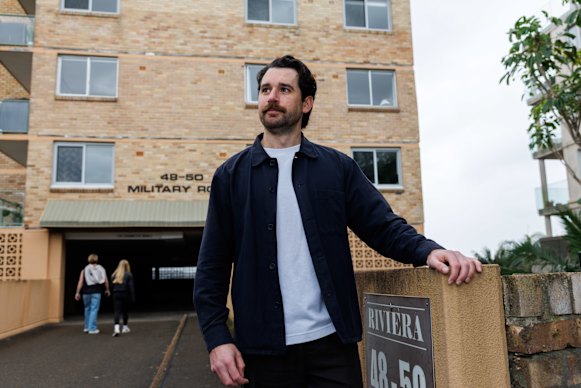
The aspiring rent-vester says he will personally continue renting because he enjoys the flexibility of being able to move suburbs, but that he is keen to find a two-bedroom apartment he can rent out.
Raban says the tax changes have limited his options because they prevent him from negatively gearing the property, which would not be a new build.
“I might move into it one day, but I’m looking to buy it as a long-term investment,” he says.
The Australian housing parlour game could be upended yet again.
Get the best of Good Weekend delivered to your inbox every Saturday morning. Sign up for our newsletter.